

Author
Jiayao Lin
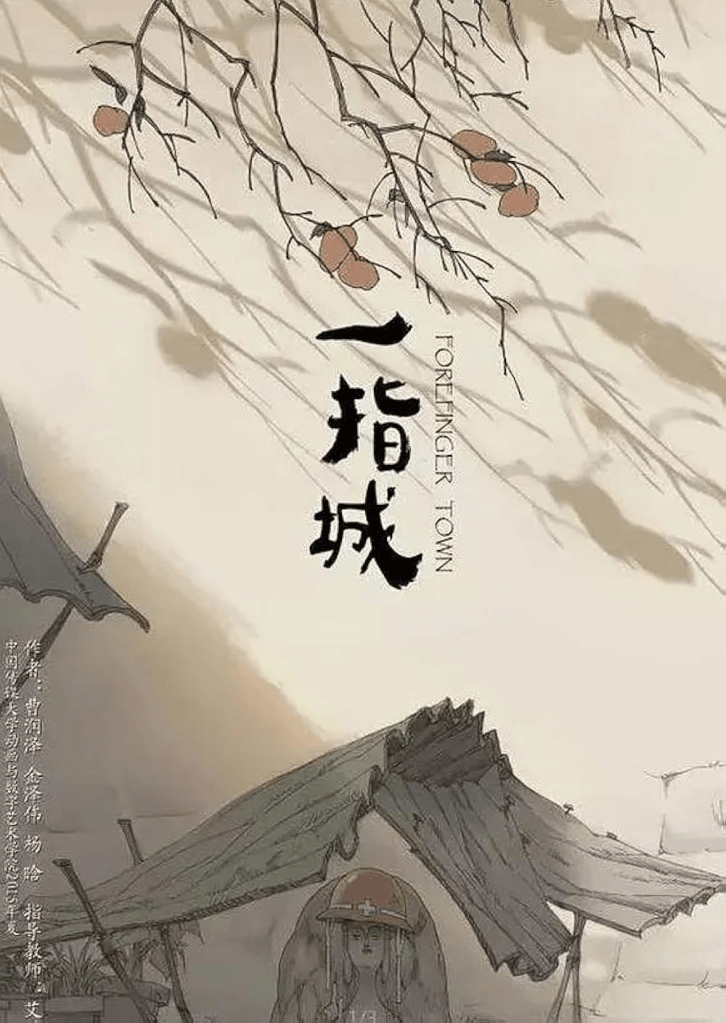
When tradition collides with modernity, what will happen? Directed by the students Runze Cao, Zewei Jin, and Han Yang from Communication University of China as part of their graduation project, the 2016 wordless animated short film Forefinger Town is a powerful fable about growing and persevering in the Anthropocene. It got high praise, both domestically and internationally, receiving many major awards, such as the Golden Panda Award, Panam Anim, the Golden Rooster and Hundred Flowers Academy Award, and the Grand Jury Prize at the Roanne International Animation Festival in France. Such achievements are more than impressive for a novice film production team.
I came across Forefinger Town when I searched for films on the theme of Anthropocene. I watched it with surprise and pleasure. I believe it is a very good animation that reflects on the golden age of real estate in China from around 2000 to 2015. Driven by the rapid urbanisation movement, many high-rise residential buildings were planned and constructed in both big cities and small towns. Contrastingly, the low-rise traditional dwellings and self-built houses were ordered to be demolished on short notice. Most young people were happy to relocate, supported by a huge compensation paid by the government, yet many old people were reluctant to move. I think the story of Forefinger Town was composed in response to this phenomenon.
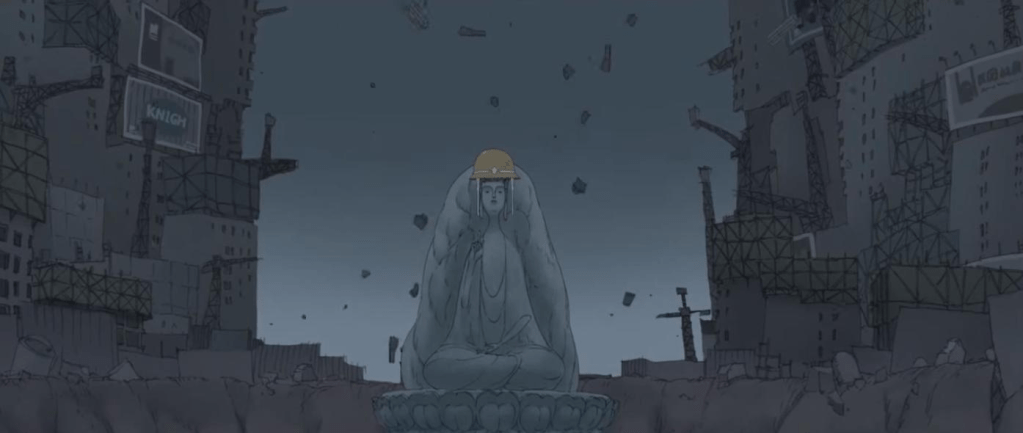
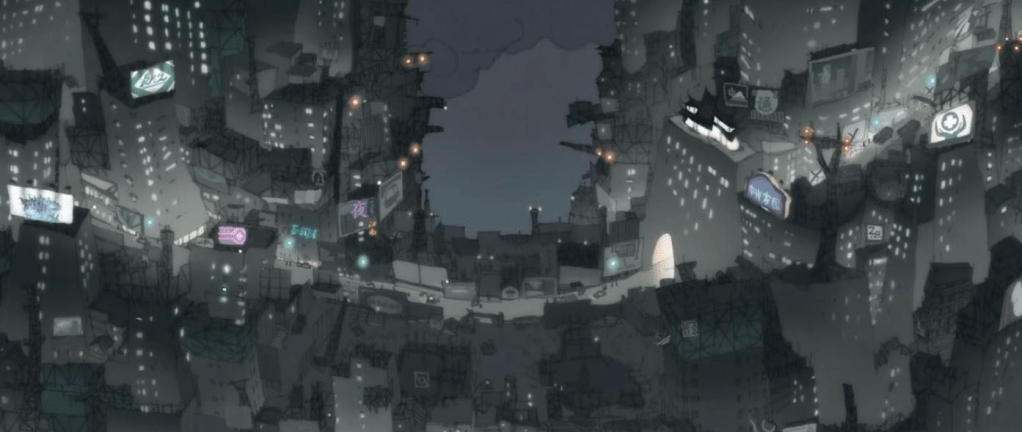
The film’s premise is a surrealist world. In a town that has become a never-ending construction site, people live in a towering vertical metropolis that is constantly growing. The protagonist is an old woman who lives in a small traditional cottage located at the base of the tremendous construction. While the world around her keeps ambitiously growing upwards, she is satisfied with her simple life, relaxing on a lounge chair in the courtyard and sunbathing while listening to operas. However, the debris from the high-rise construction keeps falling and landing in her courtyard, shattering the peaceful and quiet life she refuses to give up.
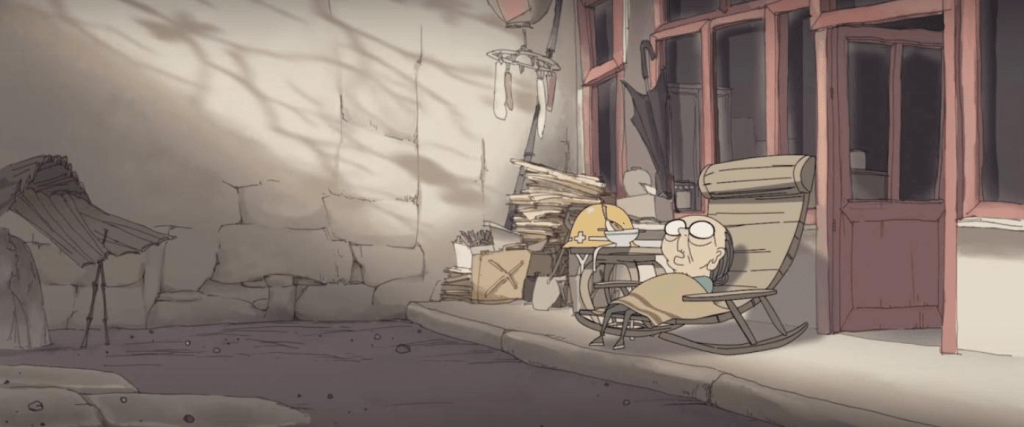
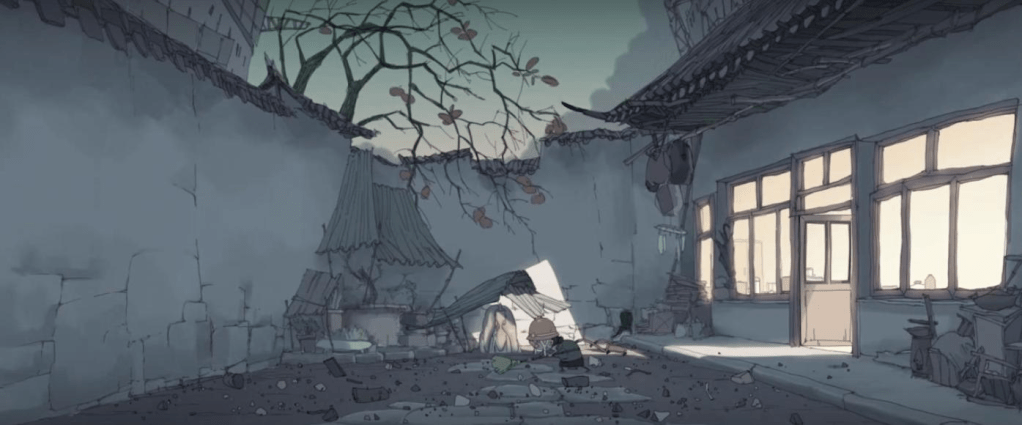
Forefinger Town adopts a 2D digital style that mimics the look of traditional Chinese ink and wash paintings mixed with industrial grit. The colours are muted, mostly greys and browns, which makes the vibrant orange of a single persimmon on the tree or the golden glow that shines on the Buddha statue feel particularly precious. The music design is equally visceral. From the slow, heavy, and melancholy melody of the opening to the quick and sharp tune of the climax, the music wordlessly supports the story of the excessive growth of a town and the lament for forgotten traditions.
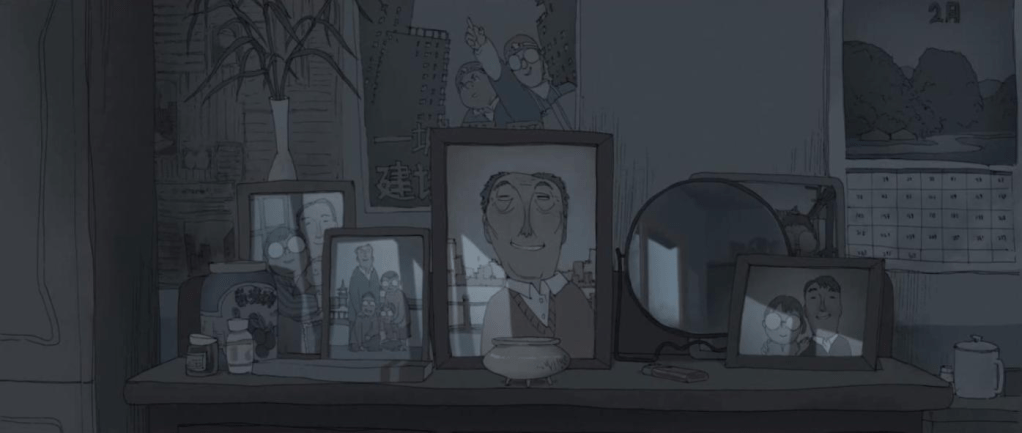
The animation also stands out regarding its attention to details. Within its brief nine-minute runtime, a wealth of implicit information is conveyed through close-up shots, leaving ample room for the audience’s own interpretation. For instance, the framed photos in the old woman’s house reveal her son’s identity; advertisements on the walls respond to the non-stop skyscraper construction; and the pedestrians in uniforms and helmets symbolize the public’s silent acquiescence to the negative impacts of development. These details provide more depth to the film’s narrative and make the story’s underlying message even more thought-provoking.
From my perspective, Forefinger Town is suitable for audiences aged above 15, especially in an educational setting such as in a school or in the family. The cultural relevance of this film, for its viewers to reflect on the relationship between human and nature, and the balance between modernity and tradition, is significant. It illustrates the dilemma of society’s rapid development and urbanisation: Should tradition give way to modernisation? This film can function as a powerful educational tool to inspire audiences to think for themselves instead of directly lecturing them. Teachers and parents who watch it with young viewers could provide background information about its composition, such as the property crisis and the issue of left-behind elders in China and in other parts of the world alike, eliciting key questions to help them understand the educational purposes of this film.
What works so well in Forefinger Town is its lack of cynicism. As a non-commercial production written and directed by three university students, it represents the critical insights and creative vision of today’s youth. If I were to name a flaw, it might be that the metaphor of “desertion of tradition leads to self-destruction” is a bit too heavy for a casual afternoon watch. It is a film that invites viewers to watch once and once again to decode the underlying motives with caution and earnestness. However, in a media landscape that is saturated with shallow TikToks, the weight of this film is a gift.
Forefinger Town is available to watch on YouTube.
 SLIDING MAGAZINE
Leave a comment