


Author
Dominika Augustyniak
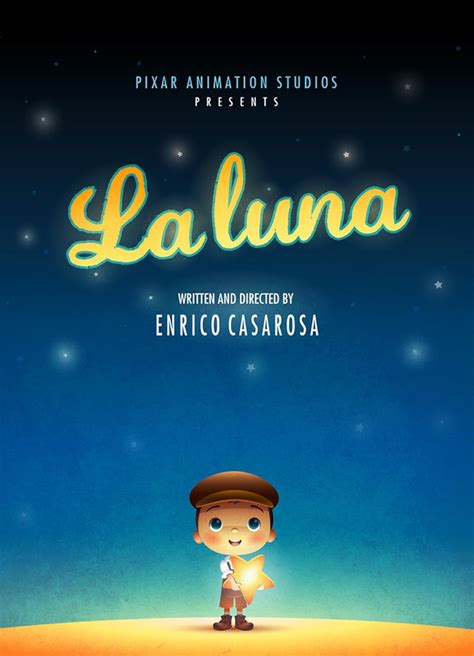
La Luna (2011), an animated short-film by Enrico Casarosa, is only seven minutes long but it manages to feel both magical and deeply touching. The story follows a little boy on his very first night at work with his father and grandfather. His job is to sweep stars off the moon. What amazed me about this story is that it is told almost entirely without words, relying on gestures, facial expressions, and music.
La Luna stands out for how it balances humour, emotion, and visuals. The boy’s attempts to follow his father’s careful demeanour while also dealing with his grandfather’s chaotic style are genuinely funny and very relatable. I especially enjoyed the small humorous moments, such as the boy imitating his father by adjusting his beard and copying his grandfather by sticking his finger in his ear. When they land on the moon and the adults begin to argue over the cleaning equipment, the boy notices the resemblance between the brooms they choose and their beards. This subtle humor enhances the enjoyment of the film while still allowing its emotional depth to shine through.
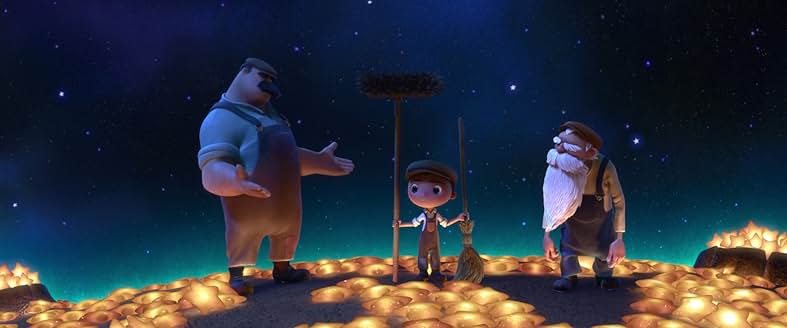
The key themes explored in La Luna are growing up and learning from others while finding your own way. The boy is accompanying his family on the boat and, in this way, he learns from them. He learns responsibility, patience, and respect for tradition from his father, while his grandfather teaches him confidence, creativity, and the courage to do things differently. In the end, he understands that growing up means combining these influences and finding your own path rather than simply copying the adults.
The movie tells the story without any dialogue, emphasising instead the facial expressions, gestures and actions of the characters. I watched it multiple times and each time I noticed something I had missed the previous time, such as the looks on the characters’ faces. It is a very beautiful way of telling a story only through visual and auditory means. Sound plays a quiet but powerful role in this film.
The soft musical score and carefully chosen sound effects create atmosphere and emotion, allowing the story and characters’ feelings to be understood without a spoken dialogue.
The combination of visual storytelling and music is what makes the short-film so effective. Casarosa uses a soft colour palette that makes the moonlight feel gentle and magical. The delicate colours made a peaceful impression, especially when coupled with the film’s music. Together, they create an atmosphere of innocence and beauty. As I was watching the film for the second time, it occurred to me that the reality portrayed in the animation felt almost like a fairy-like world. The stars sparkle, the water reflects the moonlight, and small details, as the boy carefully balancing on the ladder, bring the story to life. Music was there not only to make the atmosphere more pleasant, but it also provided an extra context for what the characters were experiencing.
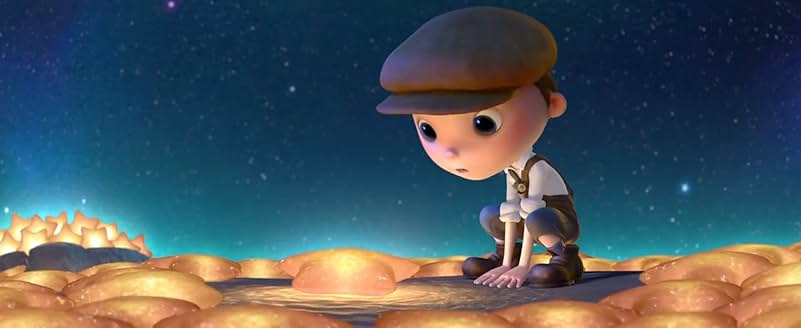
La Luna is a great example of a family film. Its themes – including family bonds, patience, and letting children find their own path – are universal and quite relatable. The magical setting – the ocean, the moon, and millions of stars – makes it accessible to viewers everywhere. Telling a powerful story without dialogue also demonstrates how much animation can achieve in conveying emotions and ideas. Children will be interested in the story of the little boy, and adults can appreciate the family dynamics shown there and the boy’s journey toward independence. The film could also be useful in educational settings because it encourages discussions about how the boy learns from his father and grandfather and how he finds his own way of accomplishing the tasks. Because the film relies so much on actions and expressions rather than words, it may teach children to observe and interpret emotions, which is a valuable skill.
La Luna made me think about our role as teachers or parents in educating and raising our children. How much do our actions matter? Even small, everyday choices, such as whether we speak up when something feels wrong, show kindness to someone who is struggling or remain passive in difficult situations, can significantly shape both our own development and the lives of the children around us. Finally, La Luna can also be a useful conversation starter to talk with students about discovering your path, seeking independence, and navigating family relationships.
La Luna is available to watch on YouTube.
 SLIDING MAGAZINE
Leave a comment