

Author
Monika Miedziak

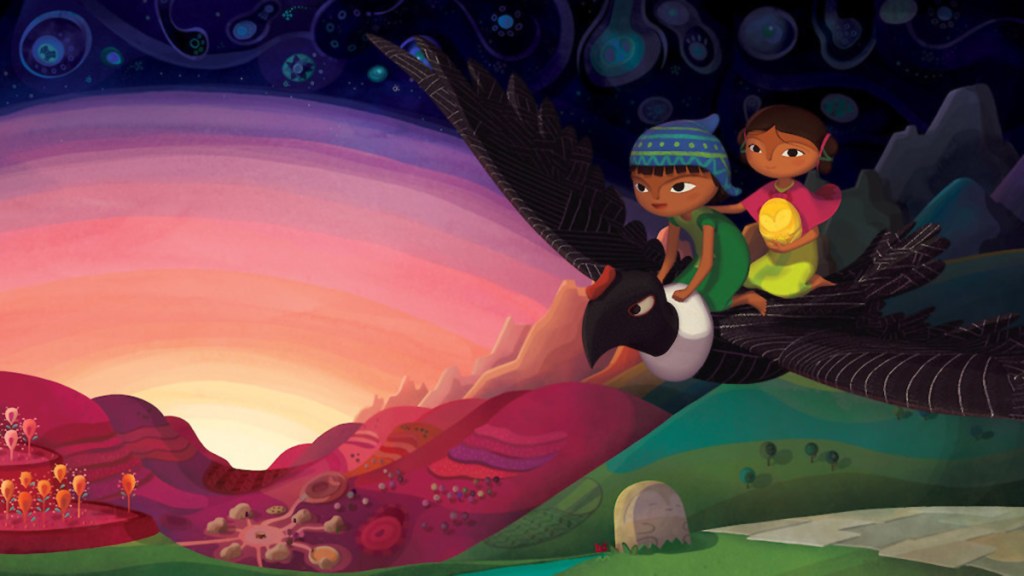
Pachamama is a 2018 animated adventure film directed by Argentinian producer Juan Antin. Set in the Andes during the Inca Empire, the award-winning film follows a young Native American boy’s quest to return stolen treasure to his community. The plot begins in an Indigenous South American village a day before the ceremony devoted to Mother Earth (Pachamama). The main character, Tepulpai, and his friend Naira excitedly await the ceremony because they want to become “Great Ones.” However, when Tepulpai cannot bear to sacrifice his most precious belonging – the Great Condor’s feather – he is rejected from the position. The following day a delegation from the Sun City arrives at the village to collect tributes. They take most villagers’ crops and the Huaca, a golden statuette with an unknown treasure inside. Disobeying the Shaman’s decision, Tepulpai sets on a journey to the Sun City to retrieve the stolen Huaca. He is accompanied by his friend Naira and two animals: her llama, Lamita, and an anteater, Kirkincho.
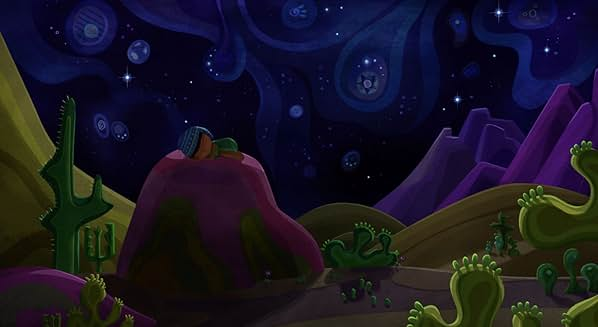
The imagery used in the animation is both breathtaking and pleasurable. The drawings are detailed, which especially highlights the different characters. The animators used bright colors to depict the idyllic and peaceful life in the village. However, when the characters encounter an obstacle on their journey, the colors change. For instance, the sky becomes red and the fields are a mixture of grey and black. Music influences the mood of the scenes. At the beginning, when the villagers are joyful and carefree, Indigenous flute music plays in the background. Contrastingly, when the true enemy arrives at the Sun City, the music intensifies and foretells the upcoming attack. Altogether, I find the art of the film amazing and appreciate how it conveys and emphasizes the mood of particular moments.
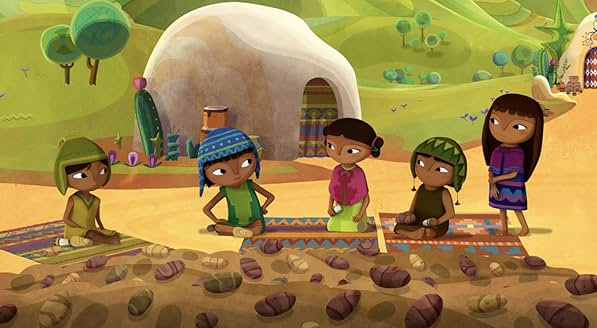
I believe that Pachamama exhibits significant historical, cultural, and educational values. Firstly, it depicts the early European colonization of the Native American tribes. It shows the forceful entry of Spanish colonizers through theft and arson. For young children, this is an accurate representation of atrocities committed. While it lacks brutal imagery or depictions of slavery, it nevertheless emphasizes the sense of injustice and the immorality of the colonial endeavor. Secondly, there are many references to the traditions and beliefs of Andean peoples in Latin America. The film contains religious rituals, such as offering gifts to the gods of nature (especially to Mother Earth) and worshipping the tribe’s ancestors. It also depicts the crucial role of the Shaman, who prays for the abundance of crops, dances to summon rain, and cares for wounded and sick villagers.
Lastly, Pachamama centers the theme of self-discovery, emphasizing close relationships with friends and one’s community. The protagonist undergoes both a literal and symbolic journey. At the beginning of the movie, Tepulpai is unwilling to offer Pachamama his most valuable possession. Moreover, he is jealous of Naira, who was ready to make the sacrifice and receive the title of “Great One.” Initially, Tepulpaie is portrayed as immature and selfish, as a free spirit who does not respect the community’s rules. However, he is very determined to regain the Huaca and bring pride to his village. During his journey, he discovers his strengths and persistence. Furthermore, he also deepens his friendship with Naira. Their shared adventures develop Tepulpai’s empathy and sense of responsibility towards others. At the end of the film, he does not hesitate to give away the only possession he has left, which completes his transformation.
Pachamama is suitable for children between 7 and 12 years old. I enjoyed the plot of this story, the natural dialogue between the characters, and the visual and aural portrayals. It is not surprising that in 2019 Pachamama was nominated for the French Cesar Award for the best animated film. Nevertheless, the best aspect of this movie is the meaning it conveys. It demonstrates the crucial role of nature in our lives, the importance of environmental protection, and spirituality. It is also a helpful educational tool teachers can use to introduce children to cultural diversity and to propagate social values. The film’s representation of Indigenous cultures is particularly important to young viewers, both for children who identify with these cultures and for those encountering them from an outside perspective. Pachamama shows child and adult viewers the importance of community, perseverance, and fighting for what you believe in.
Pachamama is available to watch on Netflix.
 SLIDING MAGAZINE
Leave a comment