
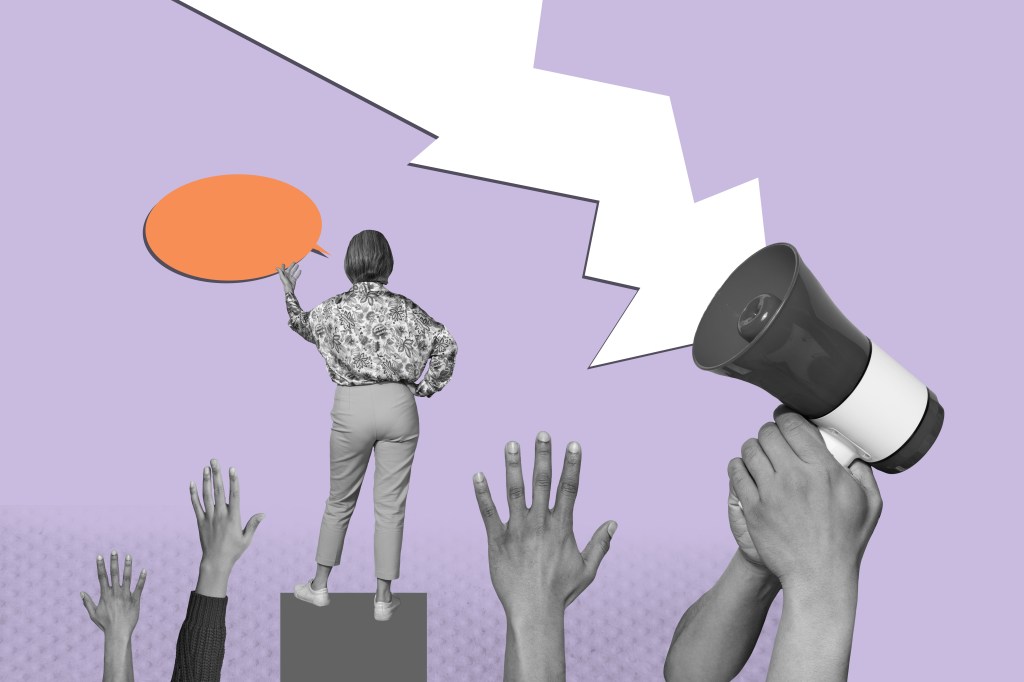

This month, we are SLIDING into different aspects of the lives of women and girls. What does that mean for us? In this editorial, we discuss some of the concepts and our team’s positionality.
Girlhood, womanhood and different ideas of femininity such as when, how, and who is allowed to embody these identities under a positive or negative perception have always been intriguing to me. It serves as a reflective exercise not only on my own experiences growing up, but an examination of my position today, and how I relate to women and girls around me. As a friend, a teacher, a daughter, a partner, a companion.
When it comes to childhood and young people studies, education fields, and so on, they are often led by women (or women are often the majority within the field. Gender bias is still an issue). Therefore, as March commemorates International Women’s Day, it seemed relevant for us, as a women-led project, to address different perspectives on the presence of women and girls within children and young people’s media. Especially when considering that the name for SLIDING comes from Bishop’s idea of mirrors, windows, and sliding glass doors, where she addresses the importance of representation, and states that:
When children cannot find themselves in the books they read, or when the images they see are distorted, negative, or laughable, they learn a powerful lesson about how they are devalued in the society in which they are a part (1990, p.1).
This same critique has been raised by authors like Alison Bechdel, famous for her autobiographical comic novel Fun Home: A Family Tragicomedy (2006), where they have expressed that ‘Seeing ourselves reflected accurately in the world is crucial to a sense of well-being, to feeling whole and real’ (as cited in Halsall, 2023, p. 19). Through exposure to media, and multiple socialisation processes that can carry ambiguous, judgemental, empowering, and often contradictory ideas of what it means to be a girl/woman, girls negotiate these judgements to build their self-perception and what it means to be a girl. It could be said, that because of this, feminist studies (in this case of media and culture) tend to highlight the importance of voice, self-expression, and agency (Pursall & Van de Wiele, 2023).
After all, inhabiting a gendered body implies a complex relationship between the self, the environment, and societal norms and expectations. Girlhood is a deeply subjective and complex experience that, regardless of the context, is both determined and tensed by self-representation, societal expectations, and the performance of gender (Butler, 1999). Meaning that girlhood, becoming and being a woman are processes of constant personal negotiation. More so when taking a stand and advocating for themselves during the process of amplifying women and girl’s voices and widening the scope of what is perceived as “girl culture”.
However, it would be reductive to only focus on girl culture. As I mentioned earlier, fields focused on children and young people are often directly linked to women; therefore, it is only logical for us to question how and when we see women and girls in children and young people’s media. So, dear reader, please join us as we explore these depictions and ideas in this new issue.
Bibliography
- Bishop, R.S. (1990) ‘Mirrors-Windows-and-Sliding-Glass-Doors’, Perspectives: Choosing and Using Books for the Classroom, 6(3).
- Butler, J. (1999). Gender trouble: Feminism and the subversion of identity (10th anniversary ed.). Routledge. https://doi.org/10.4324/9780203824979
- Halsall, A. (2023). Growing up graphic: the comics of children in crisis (First edition.). The Ohio State University Press.
- Pursall, D., & Van de Wiele, E. (2023). Introduction. In D. Pursall & E. Van de Wiele (Eds.), Sugar, Spice, and the Not So Nice: Comics Picturing Girlhood (pp. 11–28). Leuven University Press. https://doi.org/10.2307/j.ctv32r02hv.4
 SLIDING MAGAZINE
Leave a comment