

The words “raves” and “children” are not usually used in the same sentence. However, the concept of “Family Raves”, or “Baby Raves” has changed that by building a considerable fanbase with its high-intensity techno music, often enjoyed in colourful, playful parties for young ones.
EDM, or Electronic Dance Music, is the umbrella term that refers to music created in computers using synthetisers, with repetitive beats, and usually for dancing at night clubs, festivals and raves. Musical sub-genres include techno, electro, house, hard tekno, breakcore, acid house, and more.
Though electronic music is not new (its popularity traces back to the counterculture in the 1980s), it has usually been linked to specific young adult sub-cultures, not to a mainstream audience. Its original underground character, associated with a recreative drug use (Fanjul, 2023), have deterred the inclusion of children in the scene, until recently.
In September 2019, the German group TiRiLi Kinderlieder released the song “Wo ist meine Mama?” [“Where is my mom?”], which quickly became a hit in social media… among Millennials and older Gen Z. The song depicts a duckling looking for its mother, encountering several animals that reply “Nein, du musst weiter gehn’!” [“No, you have to keep looking!”] in a repetitive fashion. At the end –spoiler– the duckling finds its mom, and everyone is happy.
Its electronic and repetitive bass, plus the simple circular narrative formula, caused a boom among people who enjoyed the rave culture in the previous decades (it even led to the release of a sequel called “Wo ist mein Papa?” in March 2025). Now, even adults with children in their families could enjoy the rhythms that they once danced until the early morning in an intergenerational activity.
What are raves?
The term rave refers to all-night dance parties, originally in clandestine venues, where electronic music is played by DJs. In them, drug consumption (mainly ecstasy, cannabis, amphetamines, tobacco and LSD) is common, often to seek sensory amplification (Weir, 2000). Darkness, flashing lights and colourful paraphernalia are also recurrent elements in raves, though they can change depending on the characteristics of the party and its attendants.
Ravers, or people who attend raves, could be categorised in two main groups in the early 90s; not by gender, class, ethnicity or sexuality, but by age: 15-19 years old and 20-24 years old. Later studies have extended the age parameters, including late twenties and early thirties as a new category, as well as people in their forties and early fifties (Armour, 2019).
Even though nowadays it is possible to attend raves in legal clubs and discotheques, the concept was born in the 80s as an alternative to the rules imposed by society on the youth. In fact, the current commercialization of the term and its inclusion in the permanent night scene is widely frowned upon by older ravers (Fanjul, 2023).
Originally, raves were held under the acronym PLUR (Peace, Love, Unity and Respect), which quickly built a sub-culture of diversity and collective enjoyment among electronic beats. It is from this feature (and not the contemporary exclusive, glammed up versions) that the idea of Family Raves, also known as Baby Raves, was born.
Family raves: “It’s great that people don’t have to stop raving when they have kids”
Families that rave together stay together. Or so was said by one of the interviewees in a BBC article about Family Raves (Ketibuah-Foley, 2025). Amid arguments of entertainment and high-intensity activity for children, parents highlighted the special memories built between members of the family while dancing together to synthetised beats.
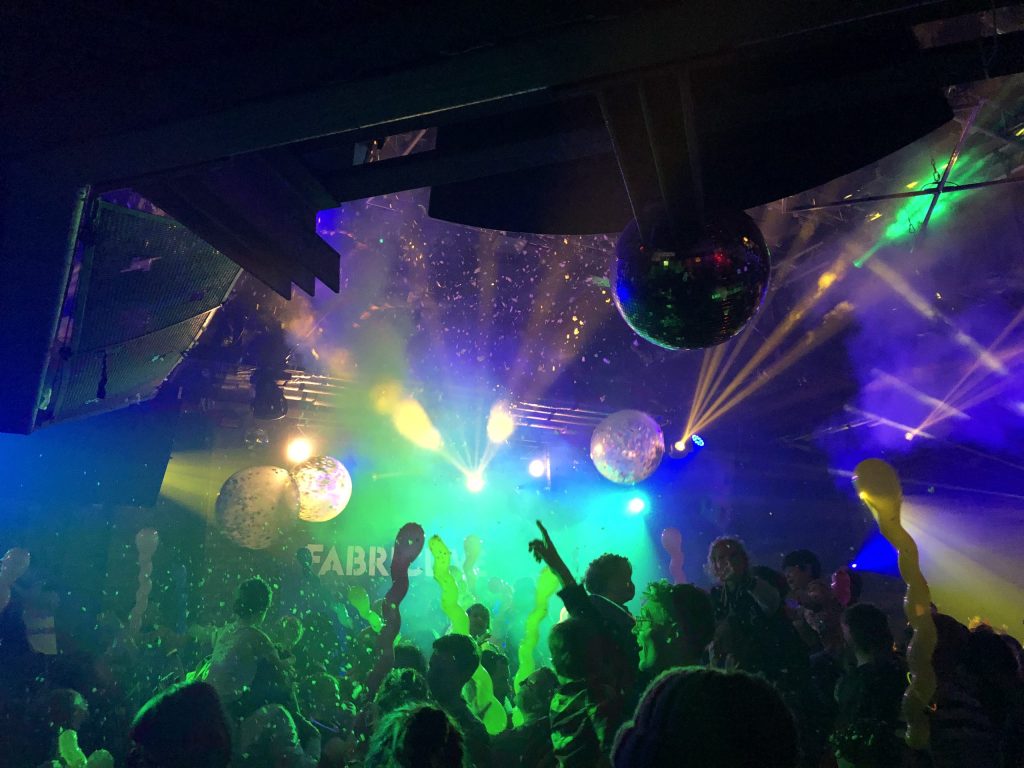
Family raves are a multigenerational activity born from the interest of an older generation that grew up raving, that deeply enjoys it but knows that an all-night-long party marked by substance use is not a suitable environment for children (Armour, 2019). In consequence, the organisers of these events adapted the party concept for young people: electronic versions of children’s music are pinched by DJs and played in big speakers at the side of dark dancefloors, for 2-4 hours at a time, where adults and children alike dance and jump among funny-shaped balloons, flashing lights and colourful characters.
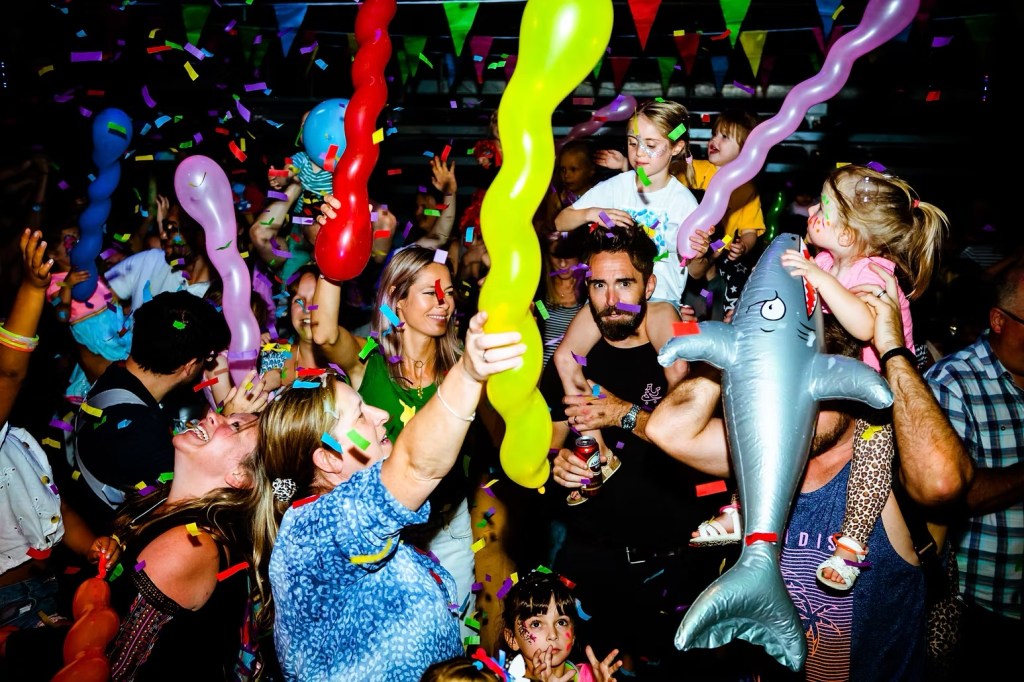
“It’s great that people don’t have to stop raving when they have kids”, mentioned an interviewee to the BBC reporter. Indeed, currently there is a wide offer in the United Kingdom, United States and Australia of EDM events organised for the whole family. Rave-A-Roo, Little Ravers, Tiny Dancers, Raver Tots, Junior Jungle, Big Fish Little Fish are some of the examples, ranging for single parties to festivals with a full electronic music line-up. Inflatables, costumes, face-paint, balloons, glow-sticks, confetti, dressed-up animators, play and crafts areas, rest and chill rooms, and buggy parking are some of the amenities offered by the organisers in the different settings.
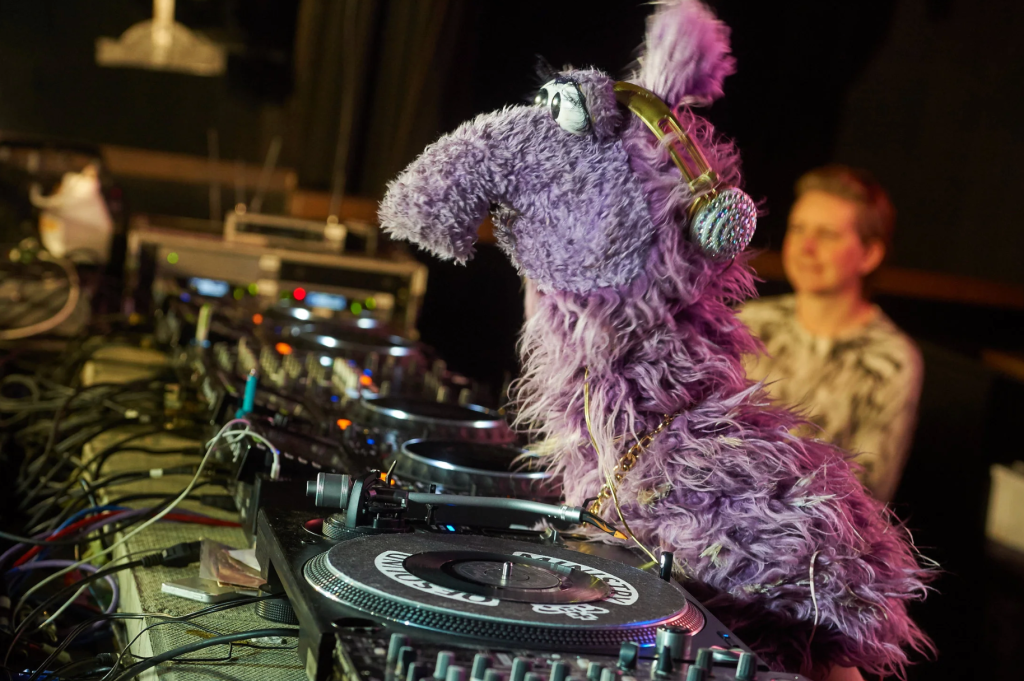
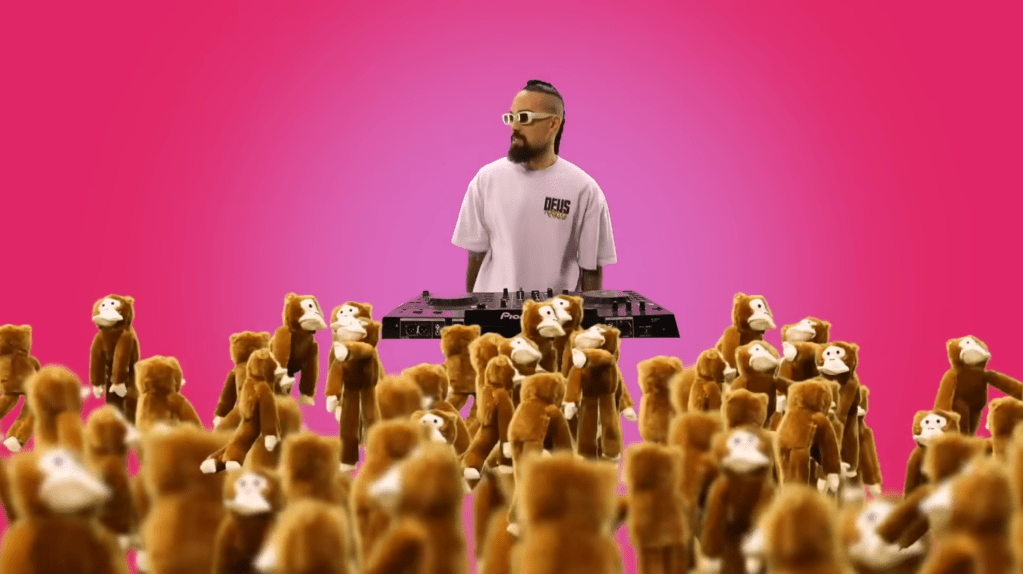
There are a few known DJs in the children’s electronic music scene who usually work for the same organisations depending on their schedule and contract duration. Among the most notorious ones, for his reversions of old, well-known children’s songs and his presence in social media, is Lenny Pearce. If you look up “Toddler Techno” in any search engine, your screen will be covered with his name in no time.
Who is Lenny Pearce?
From breakdancing to producing electronic music, Lenny Pearce’s involvement with the Australian party scene is not new. As a DJ, he enjoyed exploring new rhythms and creating electronic music to regularly share in his SoundCloud account.
When his first daughter was born in 2023, and after listening non-stop to traditional children’s songs, he realised he could mix these classic nursery rhymes and give them a little bit more spice as it is explained in his YouTube channel description:
“Lenny Pearce, known for his innovative approach to dance music, is not just breaking the mould with his beats but also with his belief that parties aren’t just for teens and adults. In a world where DJ culture often revolves around nightclubs and adult-only events, Lenny Pearce is carving a unique path, proving that families can be part of the party scene too […] By breaking this stereotype, Lenny is transforming how we think about entertainment—bringing families closer through music, and showing that great parties are about inclusion, not exclusivity” (@LennyPearce).
This experimental approach, fuelled by the idea that raves should be intergenerational spaces, led to the creation of “Toddler Techno”, a series of EDM remixes of old-time titles like “The Wheels of the Bus”, “Incy Wincy Spider”, “Row your Boat”, “5 Little Ducks”, “5 Little Monkeys” and “Hop Little Bunnies”.
After his explosive debut on social media, he released two albums named Lenny’s Toddler Techno (Vol. I and II) in 2025. Amid the promotion of his songs, he went on tour around the USA. The positive reception of the public was immediate, as all his shows sold out in 10 minutes (Bain, 2025).
If you listen to his songs and hear how high-energy and exciting they are, you will be able to understand why parents see in Family/Baby raves an opening to share their enjoyment of electronic music with their children. Having talented people, like Pearce himself or the teams behind the raves’ productions, creating safe, entertaining and intergenerational spaces through music is a pleasure for the old ravers, the little ravers and the ones like me, who are just looking for bangers to brighten up the dreary Glaswegian winter to motivate the days.
 SLIDING MAGAZINE
Leave a comment