

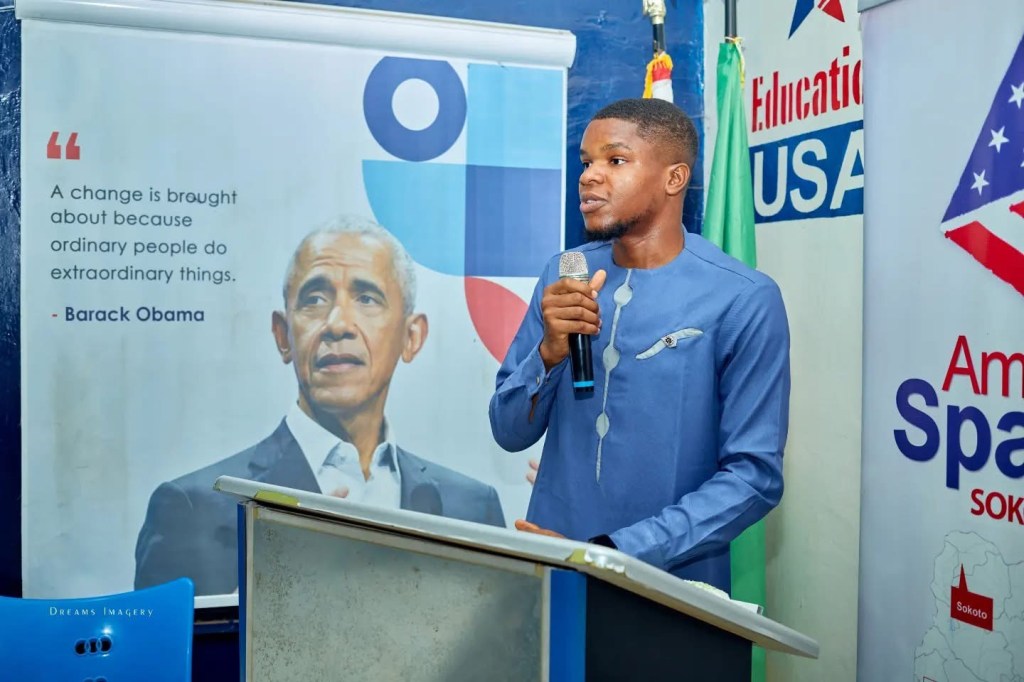
In a new piece for Sliding into the DMs of book professionals, I had the chance to talk with and learn from Uchenna Maximus Emelife, a 26-year-old Nigerian literacy promoter, bookseller, and artist who was named to the International Literacy Association’s (ILA) 2025 Class of 30 Under 30 Literacy Leaders, an honor that, as the ILA describes, “celebrates the rising innovators, disruptors, and visionaries in the literacy field.”
As you will see in the lines ahead, Uchenna truly deserves this recognition. While the world was sinking into the chaos of the pandemic, he decided to create the Book O’Clock, an organisation born from his need to share the stories he devoured and the inspiration they sparked. What began as a personal impulse quickly grew in reach and purpose. Today, the organisation runs book clubs for young and adult readers and continues to expand its impact through prizes, festivals, and initiatives that support emerging writers and critical literary engagement.
He is now completing the International Master’s in Children’s Literature, Media, Culture and Entrepreneurship – guess where we met.
When I spoke with Uchenna, I felt something similar to what happens to someone living in Santa Marta who, on certain days, can glimpse Barranquilla when the air clears. It is an awareness of the distance that separates the two places, but also the discovery of a reflection—something that, despite the miles between them, makes certain customs and realities feel familiar.
Although I am clearly unfamiliar with many aspects of Africa and, more specifically, of Nigeria, there is something that runs through many countries in the global South: the direction of our gaze. A gaze that, even today, continues to dominate and colonize our aesthetic and cultural criteria, preventing us from seeing ourselves represented and, worse still, from undervaluing our own cultural richness and the many ways in which we exist.
Speaking with him—just as I hope reading this interview will be for you—was profoundly inspiring in prompting me to consider how I might emulate even a fraction of what he and his team have achieved in Sokoto. May it serve as a mirror through which countries in similar latitudes—Colombia and Nigeria—continue to use art and literature as a medium for social advocacy.
A small note: This interview stays true to the heart of our conversation, even though it’s not an exact word-for-word transcript. We removed small repetitions and filler words so it reads more smoothly. Everything you’ll read here was reviewed and approved by the interviewee before publication.
A second small note: On November 7, 2025, Uchenna led an amazing panel titled “The Child in African Literature: Possibility, Silences, and Interventions.” This piece was originally meant to be published before the panel took place, but your very embarrassed writer here wasn’t able to make that happen. Still, you can get a sense of the ideas and motivations that guided him while organizing it.
Sara Pérez (S.P.): Hi Uchenna. It’s really an honour to have you here at Sliding Magazine, and thank you so much for taking the time to speak with us. We really admire your work and the impact you’ve created through your organisation and all your cultural initiatives. Before we begin, could you briefly introduce yourself and tell us what drives you as an artist, literacy promoter and cultural entrepreneur?
Uchenna Emelife (U.E.): Thank you so much. It’s truly an honour to be here. My name is Uchenna Emelife. In summary, I am a literacy promoter, a bookseller and a cultural enthusiast. I founded Book O’Clock Literary Foundation, which organises cultural events to promote literacy and African literature. So, as a literacy enthusiast, one thing that drives me is to share the love for stories and books with people, because I have discovered the transformative power of literacy, and I intend to share that with as many people as possible.
So when people attend our events, attend our programs and then leave such programs touched or inspired to do something similar, for me, they have been able to tap into that transformative power of stories, and it is those goals that drive me both as an artist and as a curator of such artistic programs.
S.P.: I’m a bit curious. When you define yourself as an artist, what is your art?
U.E.: My art is the business of making art visible. That is how I define my art. It may be through my curatorial work, whether through my bookselling, the distributions I also handle, or the book festival I curate. So the business of making art visible, that is my art, because it requires a lot of creative thinking, a lot of critical processes. That is where my art lies, and that’s how I would define it.
S.P.: That’s really thought-provoking. I have never thought about that. That’s really good! From what you said, passion really shines in your work, and what you do. You just talked about Book O’Clock, which as your website describes it’s an organisation that promotes literacy in northern Nigeria and uses arts and literature as tools for social advocacy. This is a very meaningful project that you’ve started at a really young age. How did the idea of Book O’Clock begin?
U.E.: I started Book O’Clock precisely on the 23rd of April in 2020. I grew up in Sokoto, northern Nigeria, a place where art and literature are not the driving sectors. So we have more interest in politics and other sectors than in literature. And this was me as a child who liked to read books, who wanted to discuss books, but didn’t have anyone to share that passion with, and I was tired of waiting for someone to make that possible.
I was part of a couple of online communities where I could share that love for reading and writing. However, I still wanted a personal connection, a human connection, to discuss what I was reading with people I could see, people I could touch, and that was lacking. And online, I saw people sharing images of literary events happening in other cities in Nigeria, and I just got tired of waiting for something to happen, so my friend and I, with whom I had already formed a literary connection, decided to start a book club in the middle of the pandemic. All around us were unending reports of rising COVID cases, which frustrated us and the only succour we had was books. So, we decided to share that comfort we found in the pages of a book with our little community. We went forward with it and started a book club, reading books weekly and discussing them in a virtual chat room. Over time, we shared the link with the entire university community, and we were surprised by how many people had actually been waiting for such a platform.
So that reminded us that we’re not exactly alone, and that there is more to our community; it’s just that there are fewer platforms like ours that can tell a different story from the norm. That was how Book O’Clock started. So it began as an online book club for just a few people who read books weekly and discussed literature.
Over the months, as our community’s interest grew, we realised we could do something more. We went from just reading books weekly to opening a bookstore where I could sell the books we were reading in the book club, because we noticed no stores were carrying the contemporary book titles we were interested in. I had already formed a network with publishers, so I told them, “I want to start a bookstore”, and they gave me their support, and in September of the same year, I started Book O’Clock Store.
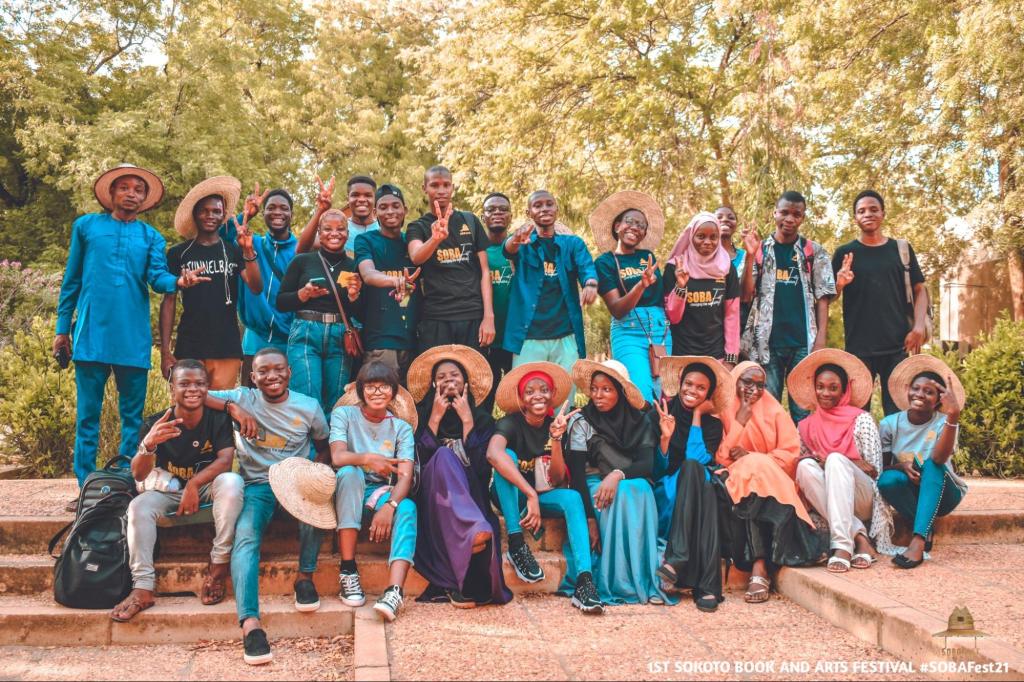
So, the story continues to evolve. The following year, we realised that we had a pool of untapped creative talents, who no one knew but had incredible stories to tell through their arts. They were not featured in Nigeria’s arts and cultural events either. So we thought, “We should create an elaborate event in Sokoto that would spotlight these talents,” and the following year we started the Sokoto Book and Arts Festival (SOBAFest).
Every initiative born of Book O’Clock has been to address the most pressing problems in our community. So we are very observant of what’s happening and the community’s evolution, and we try to curate projects that respond to that.
In a nutshell, the need for a platform, a community of creatives, and a literary community that could offer a stage to local talent gave birth to Book O’Clock, and it’s precisely what continues to drive us. Now we take a more ‘glo-cal’ approach, connecting with the wider global intellectual and creative current.
S.P.: Well, that’s really inspiring, and I think it’s really common between the entrepreneurial media that I have listened to, is that it’s normally good entrepreneurships started because they found a problem that they needed to fix for themselves, and I think that it’s really inspiring that you found a place to do it and that you continued growing depending on what was happening around.
I’m really curious about what you said about being responsive to the needs of the community, and how your organization could match or find a solution to what was going on. So, in this sense, can you explain to me, or maybe give me an example of how your organization has used art and literature as a powerful tool for social advocacy?
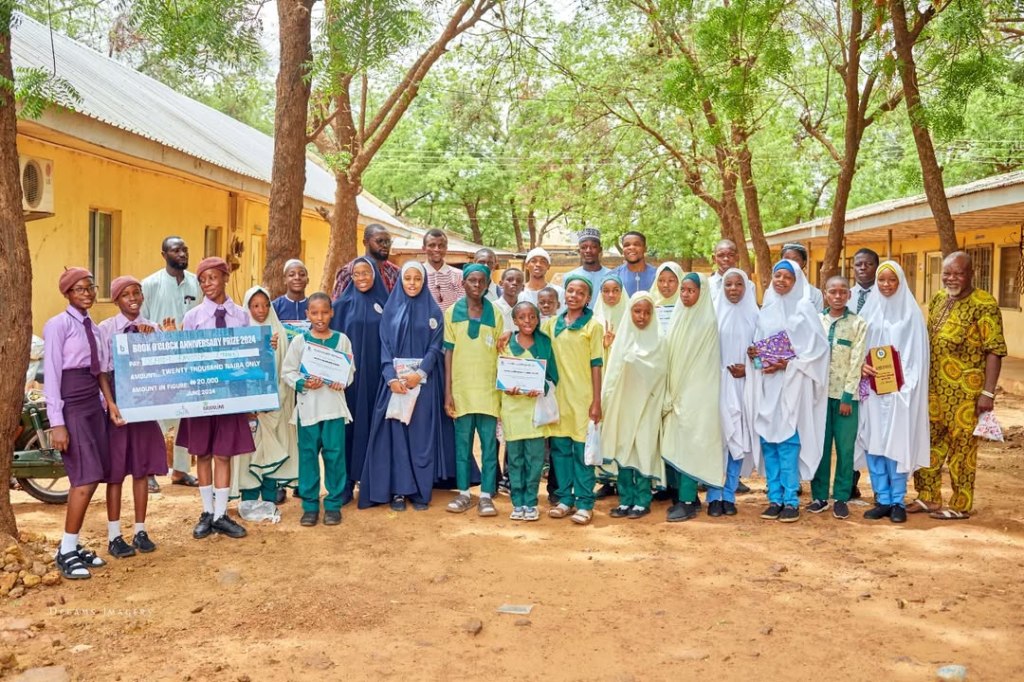
U.E.: At the core of Book O’Clock is this recognition that art can be used as a tool for social change; as a tool for not just changing the whole community, but even yourself, you know, self-expression is change, too. Hence, every project that Book O’Clock has carried out reflects this consciousness – it recognises that the arts are not neutral. For specific examples, in our Book O’Clock Prize, we work with secondary school children. As part of this, we encourage them to submit critical and personal reflections on a range of social issues affecting both our community and the world at large. Over the years, we have invited them to write on mental health and national consciousness. This year, we are focusing on climate action in response to the recurring floods across Sokoto.
We allow them to share what they think about these issues because children are often spoken over, and everyone just assumes they don’t have opinions, which we believe is improper. And each year we do this, we find candid and innocent reflections on these issues, and we are so amazed that they want to articulate their thoughts, amazed not just at the product but also at the process of articulation and the opinions they have about these issues. These views can only be heard if such platforms that allow them exist.
We also have the Queen Amina Short Story Prize, which encourages women and girls to discuss issues in northern Nigeria, primarily as they affect them. We have received stories emphasising the need for girl-child education, which, as simple as it may seem, is still a contested issue in some parts of Nigeria, stories exploring the burden of womanhood as defined by the society, and never the woman, to stories showing girls and women living whole lives, in joy, in pain, in love, and heartbroken. Their stories become a platform for both their voices and the other girls/women who may see themselves in the characters they create.
We also have projects that are directly linked to social problems. We have collaborated in the past with platforms such as Praxis Magazine, now defunct, on a project called “It’s okay not to be okay”. We had sessions in which everyone came to talk about mental health. This is a city where such conversations are spoken in hushed tones, and we wanted to correct that. So, firstly, we screened a documentary, then we had poetry and spoken word, and then we had a roundtable section where people talked about their mental health. We used art as an entry point into these more critical, more personal reflections.
Even at the book festival, every panel is curated to meet a specific need. For instance, at this year’s edition, the theme was ‘Intersections’, and we wanted to explore intersectionalities from different perspectives. In my community, for instance, we have those who are not originally from Sokoto but have made Sokoto a home, and their identities have created an interesting mix that they bring to their work. So we wanted to highlight how even on a personal level, these kinds of dualities can inform artworks. We had a panel that discussed what it means to write about home in a home that isn’t yours. We also had panel discussions on how language itself has become intersectional in Nigeria, with Nigerian languages mixed with local languages, and how this blend introduces a whole new language while inviting us to rethink our understanding of the language of Nigerian literature.
So you see that everything we do drives us to use art to respond to broader intellectual and critical issues, whether social or personal.
S.P.: That is really inspiring. I think you have given young audiences the power to speak about their perception of things and what you said. Some of them are very innocent, but being innocent does not mean that they are not true or valid. I think that’s a really powerful tool, and it’s the fact that they can see it and reflect upon it, and also we can learn a lot about what they are really receiving from the adult discourses of what things should be or how they should work.
But then, I’m curious about how you have seen the reception of these initiatives from young people? How have they received this?
U.E.: It has been interesting to see, over the years, the kinds of responses we get from people. One story I’d like to share is about my friend, Majeed Saleh, who was just a guest at the first edition of our book festival. According to him, after listening to people perform on stage, he was able for the first time to give a name to what he had been doing from the comfort of his home. He didn’t know, all along, that what he was doing was poetry. But after listening to other young people like him do the same thing, it felt to him like this was his calling. It felt like “I have to do this because maybe I’m actually good at this”, he shared with us. So the following year, he joined us. He was just attending rehearsals, paying attention, and one day he said he wanted to perform. We were like, “Okay, we have a list of performers already, and we don’t know you”, and he insisted, “Yeah, I want to give this a shot”, and we were all blown away by how good his performance was. The same year, he entered the annual slam we organise for poets in Sokoto, and he was a runner-up for the prize. The following year, he entered again, and he won the award, and now he’s doing amazingly well. He’s no longer with us, but he has carried and represented us exceptionally well wherever his art continues to take him.
It’s been interesting how, every time we hear stories like this, it reminds us of why this platform is essential. It reminds us that even if only one or two people are touched by attending each of these projects, it shows that this platform matters, and we may never know how far it is reaching until we hear these kinds of stories.
Another example is a girl who participated in one of the workshops organised at a secondary school. At the time, she was writing a book, but she didn’t tell us. Many months later, she wrote to us to say that that session was what motivated her to complete the book, and she sent us a copy. Now she is with us as a volunteer on the initiatives we organise for other schoolchildren. She is now in the university, applying the same benefit she got from us to impact other children in our network. So that circular impact inspires us, and it reminds us of the importance of this work.
But of course, there were times when the reception wasn’t so good. We’ve had events that didn’t go well because, as mentioned earlier, ours is a community where these kinds of programs are relatively new. So sometimes, no matter how hard you work to get people to attend, even when it’s free, we have to do extra work to ensure the entire hall is maxed out. So we’ve had these kinds of struggles to navigate, even to this day, five years later, and many times it gets really concerning. We question ourselves about what we are doing when only a few people seem interested. But I always tell my team that even the disinterest should be a reason we should continue, until we have been able to actually prove that this is a worthy venture, correct people’s opinions on arts and literature, and let them realise their transformative utility, only then can we actually say, satisfactorily, that we have done what we have been called to do. But if no one, or the same people, keep showing up, then it means there is still more work to be done. So we continue to re-strategise, finding ways to reach more people.
In a nutshell, it has been a mix of both, on one part, people who attend the events, our programs, projects, participate in our workshops and have had their lives touched, with testimonies to share, on the other, people that we have struggled to connect with because of various traditional or religious views that contradict what we are offering. We have to find strategies to actually meet those people, because at the end of the day, they are our primary target audience. We are not working for those who already have access to the arts, but for those who still struggle to access them.
For instance, we started encouraging performances in Engausa, which is a mixture of English and Hausa. It is an emerging linguistic trend in the Nigerian literary discourse, where we infuse Hausa language, the local language in several parts of northern Nigeria, including Sokoto, with the English language, so in that way, we can respond to both communities: those who can understand English, as well as those who can only speak Hausa. On a writer/speaker level, they, too, can feel empowered; their art doesn’t alienate their language but fuses it with English, which connects with the reader in more ways than one. The story not only represents their postcolonial dualities but also their language. So this is the strategy that has since been adopted at Book O’Clock, and we are doing our best to infuse it into all of our programs.
S.P.: I think the first part of what you were saying — about some of your participants becoming real writers, or realising they had a talent and that their art was valuable — really stood out to me. Not necessarily in terms of being published, but more like, “I enjoy this, and now I have an audience that listens to me through your events.” I think that’s so rewarding, considering all the effort you put in. Then you talked about the challenges of being a cultural entrepreneur — especially in a context where, as you mentioned, this kind of work isn’t always seen as relevant or where such spaces aren’t common.
But then, as I know, many people want to do things related to art and literature. What other challenges have you faced? Or what have been the most difficult things you have faced in keeping pursuing this purpose?
U.E.: It has been very challenging, mainly because we also have to recognise that one’s organisation is part of a larger environmental context, and that everything happening in that context also affects it. What I mean is that Book O’Clock is in Nigeria, a country facing many problems, including economic and political instability and insecurity, which continue to affect our work. As a result, many team members and other members of our community emigrate every year, so it almost feels like an annual ritual — rebuilding our community from scratch. They either move to bigger cities or abroad for a better future. So, such kinds of challenges, even though it’s not exactly our fault, we still have to navigate them. This is where PESTEL analysis comes in; we use it as a tool to respond to these external macro-environmental challenges.
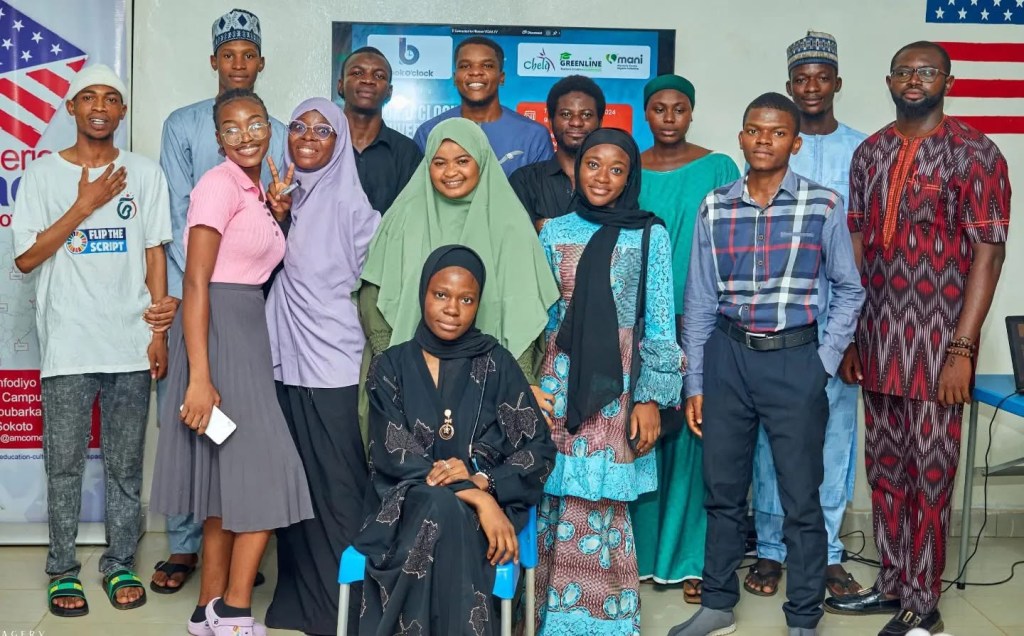
How? For instance, we now have a year-round open call for volunteers and spontaneous admissions to the volunteer base. We have accepted that due to these problems, we can’t work with the same people over and over again because we cannot stop them from aspiring to other things. We are also aware that, as much as we advocate for the arts and culture, it’s not the most lucrative sector to be in, especially in Nigeria. Hence, it’s difficult to tell a young person not to abandon their creative artistry or Book O’Clock when they are presented with a more lucrative opportunity, and we try to respect their choices. This sounds easy, but it is not. Our kind of work requires both passion and internalisation, which take time to build, and new volunteers may not already share our long-held ambitions and goals.
There is also a financial problem. It is difficult to sustain all these projects and initiatives without adequate funding, especially when you are self-funded or when funding is community-sourced. But at the same time, we explore other funding sources such as external grants and sponsorships/partnerships from like-minded organisations.
This financial challenge has also made us either reimagine our projects or forgo them. It has also informed our model: we think about how we can transform the challenge to suit the project at hand.
I remember the first edition of our book festival. This was the first time we had the festival; we were very young, and we had bright ideas. We said we wanted to do something related to what was happening in Lagos. Some of us had attended bigger festivals in bigger cities in Nigeria, and so we had the biggest ideas for Sokoto’s book festival, but we didn’t have the resources. We had ideated such excellent programs, but lacked the resources to make them happen. I became a bit depressed about it. And then we thought, “Well, there is Zoom!”, and rather than flying all our guests to Sokoto, which could have cost a fortune, we hosted them on Zoom and turned the festival hybrid.
So SOBAFest’s hybrid model today, which has now allowed us to connect to a more global audience, was born from the very financial challenge that threatened its realisation. This tells you that some of the challenges we face feed into the navigation and justification of our celebrated and acclaimed projects today; we had to be strategic to withstand them.
S.P.: Yes. The financial part is always tricky, but as you said, challenges make you creative as long as you are connected with the purpose.
This Friday, November the seventh, you’ll be leading the panel titled “The Child in African Literature: Possibility, Silences and Interventions”. Could you tell our audience a bit more about it?
U.E.: Yes, it is the most exciting thing I have been doing in the last couple of months, and I’m so excited about it. “The Child in African Literature” is literally just that. We want to give a platform for the child in African literature to be seen in a more global perspective.
Growing up, I liked to read, so I read every book I could get my hands on, and that early exposure to literature informed my worldviews and present explorations. It also made me interested in children’s literature because I know how a child’s earliest literary experience shapes them, yet in Africa, children’s literature is not discussed as it should. In several festivals, there are a few panels/sessions dedicated to children’s literature. In African literary academia, there are very few scholars interested in children’s literature, which is ironic, given that the history and origins of literature in Africa stem from oral literature, and its primary audience has always been children. So if we are no longer speaking to children in our stories, we should be concerned about how African children are spoken to. It means that there’s a problem. It means that there’s a gap. We have totally lost it, and it doesn’t mean that no one is addressing this failing, but that they don’t have the same visibility as those who write for adults, and in my opinion, both should have the same level of visibility.
The Child in African Literature offers an opportunity to amplify the visibility of those changing this narrative. We have an author on the panel who’s writing brilliant and culturally resonant African children’s literature (Namse Udosen). We have Professor Elodie Malanda, whose research explores the representation of African childhoods in children’s literature. We have a publisher (Thembalethu Shangase) who runs a fascinating non-profit publishing model (Book Dash). We will discuss how it solves the problem of book accessibility in Africa and why such models should be replicated in many contexts. We also have a bookseller (Farida Ladipo-Ajayi) who also runs a literary hub (The Bookworm Café) for children in Lagos, Nigeria. We also have a children’s media producer (Kunda Kids) who will discuss why African representation in children’s media is essential. Then we have me contributing to the conversation from two standpoints: my work at Book O’Clock and my research on African children’s literature.
So it is a fascinating blend, and the purpose is to discuss the child in African literature on multiple levels, from industry and academia. Thereby, bridging academia and industry to explore offerings from both sectors across the continent for the global children’s literature market and scholarship. I am also honoured that CLMCE has accepted to be a part of this initiative.
S.P.: When I was asking this question, I thought that “The child in African literature” would be focused on the conception of childhood, how they are represented, and it would be traversed by postcolonial thought, but I also see now that it’s also connected to your mission at Book O’Clock. Increasing visibility, ways to solve the gaps, and to have more books narrating our childhood, which I can relate to the Latin American context, specifically the Colombian context.
I’m interested to know how this panel opens new possibilities in children’s literature scholarship, or how it addresses gaps that you still see, especially now that you’re a student of the CLMCE program.
U.E.: This panel does that in several ways. For instance, on scholarship, we have Elodie Malanda, who has studied how Sub-Saharan African children’s literature complicates dominant conceptions of childhood and how childhood has historically been conceptualised, exclusive of the Global South. She has also researched how the West represents African children. The multiple framings she applies in her research invite us to think not just of why African representation is vital in children’s literature, but also about the implications of the kinds of representation. Suppose it is the West representing Africa and Africa representing itself. So, through her insight, I imagine the panel audience will come to recognise a gap in how we conceptualise childhood and identify the need for more multicultural frameworks that can recognise individual societies and how they conceive them.
But also not just in scholarship, but also in publishing. We have publishers, booksellers, and others working in the book sector on the panel. We discuss market trends and how they can also inform our understanding of the genre.
But also in the lens of how books are mediated to children, because we have mediators who will talk about the various methods they apply in their work. For instance, Namse Udosen is one I am really excited to listen to. In addition to being an author, he organises a project called READ-A-CREATE. In it, he brings books from shelves to children in his community. A book’s purpose, no matter how beautifully written or made, is achieved not when it has been published, but when it has been read. Through Read-A-Create, Namse ensures that children read books.
Through mediators like Namse, children not only gain access to books, but their readership is guided by pedagogies that can assist them in understanding and articulating such books to respond to their context and as an entry point to even more critical reflection, which is something that at Book O’Clock, we are very interested in. That transition from an artwork into the transformative power it carries, when properly read by or to the child. In a nutshell, as I mentioned earlier, we do not approach this subject only through scholarship, but also through education and the cultural industry.
S.P.: I really liked what you said about cultural differences. Sometimes, when you come from places like South America or Africa, you realize that our countries are often grouped together as if they were the same. However, they are huge continents, something you’d better understand when you compare the distances between European cities to the distances within our own regions.
U.E.: I totally agree. We must recognise and appreciate the diverse ways of being. Not to undermine one for the other, but to accept their coexistence and view this variety as the spice of life. Even within Africa, for instance, as you rightly pointed out, it is a whole continent made up of several cultures, and so, childhood cannot be a monolith. It is crucial that we also recognise intracontinental multiplicity, and this panel hopes to open up that possibility. That is why we have panellists from different parts of Africa, who will equally contribute to the conversation, informed by their individual positions and contexts.
S.P.: Your work consistently emphasises visibility, representation, and the importance of listening across cultures.
U.E.: It is so sad to see the recent pushback to this kind of inclusive mental framing. We are so comfortable with our bubble that we fail to recognise that there are other ways, that there are other things out there. That limits our knowledge and our understanding of the world, and the same limited perspectives are sadly passed down to children.
I constantly challenge my perspectives and am intentional about discovering new ideas through people I meet and the places I visit. Even this panel is a result of things I have learned from different parts of the world. So I really believe there is so much we have to offer to one another if we can be more respectful, open-minded and genuinely eager to learn — allow your ideas to be contested and contest others’. That is what actual growth is. I know this is such a delusional thing to say, but I genuinely think we can stop wars if we can actually listen to one another—no need to hug or shake hands. Just listen, but no one wants to listen. And I hope this panel helps people listen.
S.P.: Let’s bring back a conversation with our readers. If you had to recommend a text, or any kind of media, translated or not, which one would it be and why?
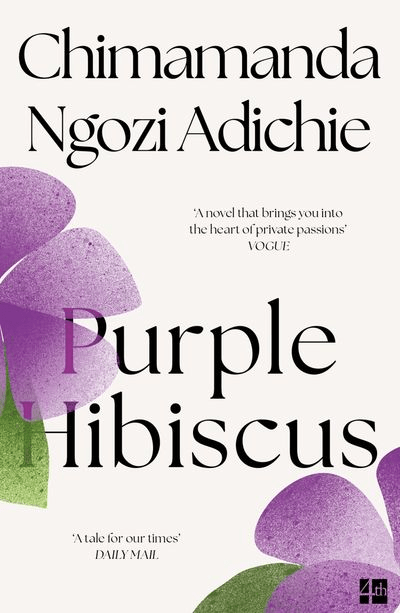
U.E.: This is interesting because whenever I have conversations, this is usually my last question. I talk about this book all the time, and by now it has to be the first thing that comes up when you Google me. It is called Purple Hibiscus by Chimamanda Ngozi Adichie. I read the book as a teenager, and even if it can be called a simple story, for me it was much more than that. It completely changed the way I view literature.
I was a child who read widely. I was reading Percy Jackson, Harry Potter, everything. What these books did for me was feed my fantasies. They made me have very aspirational ways of living and continue to aspire to the West. But reading Purple Hibiscus as a teenager, I saw myself for the first time in fictional characters: they were young, they were also southern Nigerians, they were Catholics, they spoke the same language I spoke, had a similar family dynamic, and that was very moving for me. The first time I read that book, I just could not put it down. I kept going back to it, because as I said, it wasn’t a distant story anymore, but could easily pass as mine or of someone I knew. That personal resonance kept me glued to its pages.
Purple Hibiscus was also one of the books that reframed Nigerian young adult literature, moving beyond overt didacticism. In Purple Hibiscus, we see a familiar, simple story about a family that still implicitly interrogates aspects of society, while telling a delightful tale. Purple Hibiscus continues to come up in many conversations with Gen Zs and even Millennials who, at the time, discovered Chimamanda in 2008 or 2009. But for me, I read it when I was 13, and to this day, I credit my journey in literature to it. After readingPurple Hibiscus, I just knew that I wanted to do something with stories. I wanted to share that feeling with other people. And that was how my journey began.
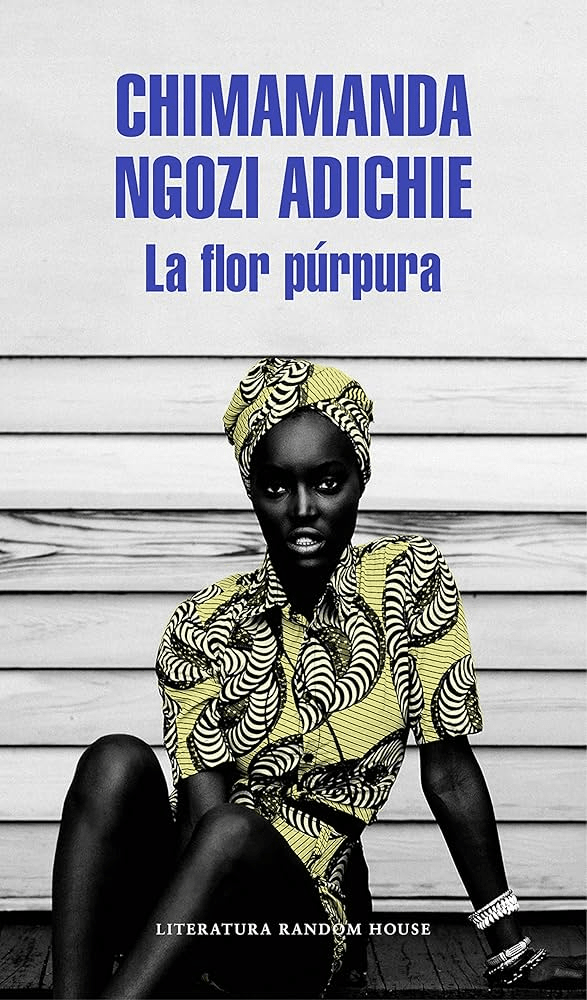
S.P.: I have to confess that when you said the name, I was a bit lost, since I read the book in Spanish, titled La Flor Púrpura. I loved it. But reading this book, I realised how white and Western my reading was. I was enjoying the book, and even though the cover presented a black girl sitting down, in my imagination, all these characters were white. It wasn’t until a part of the book described their skin color, that I realized how stupid I was. I felt so responsible that I had to begin the book again. This book revealed how much I needed to change my narratives, my perspectives.
It was also more evident because when I read it, I had recently moved to Cali, which is a city located in the southwest of Colombia, and it’s one of the most culturally and racially diverse cities in the country. But still, racism has been so ingrained into our culture that we still look forward to the white, European perspective on everything. So to me it was like, how is it possible that I’m not reading this as it should be?
U.E.: I agree, and I find your testimony relatable. I too was very obsessed with the West because their stories were the most accessible: they were in the books in the bookstores, whose paperbacks my parents could afford; in the books on the little shelves in school that I took home with me; and they were also the ones on the cable, and on TV. So that exposure continued to make me feel less of myself, but not in a bad way. It instead made me comfortable with feeling that way. To say: “I am okay with not being seen, because I should aspire to be like them. I should aspire to be someone else and not just myself”. And I wasn’t sad about it. So my work or art in amplifying African literature today is a form of resistance to this acquiescent erasure, recognising that there are other Africans like me who grew up this way and are still growing up this way. I try to correct that through the programs I curate.
Going back to the panel, we have a speaker, Louisa Kiwana, the co-founder of Kunda Kids, who transitioned from African children’s literature to African children’s media. This is essential because, while the media has become much more diverse, there remains a gap in authentic representation. Kunda Kids’ content, however, is informed by African sensibilities, not only through nominal representation. Whether through their music, animation, or toys, children encounter Africanness.
As you have seen, Uchenna and his team have built a dynamic organization that uses art to spark conversations, advocate for change, and meaningfully address the issues affecting young people in Nigeria—an effort that is already becoming an inspiring model well beyond its borders.
I encourage you to follow Uchenna Emelife and the Book’O Clock Literary Foundation (www.bookoclock.org| @booko_clock) to stay informed, keep learning, and, if you wish, support the creative and thoughtfully designed projects they continue to bring to life.
 SLIDING MAGAZINE
Leave a comment