
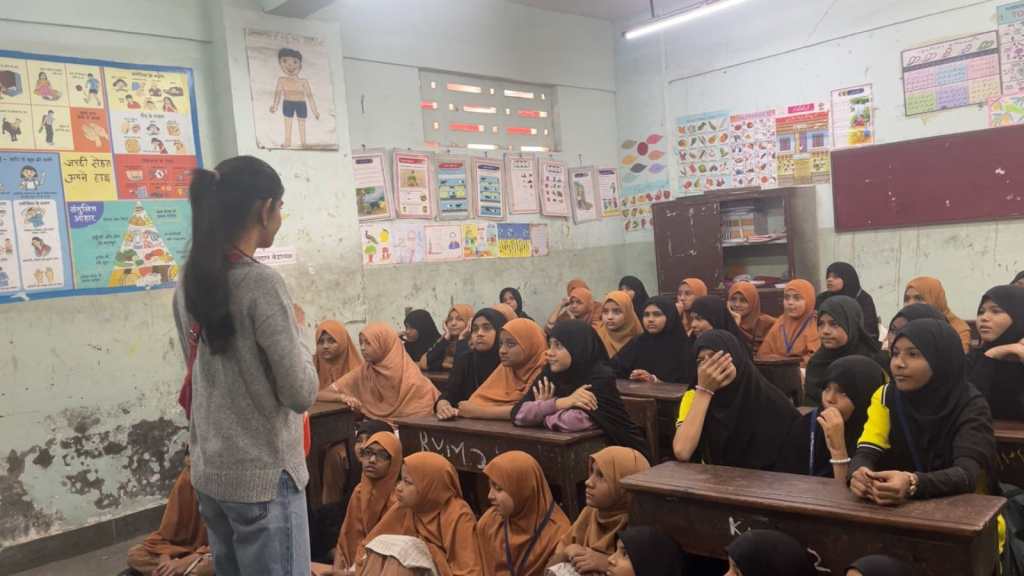

As India celebrates Republic Day, this article reflects on the Constitution not merely as a legal document, but as a lived promise experienced first through childhood—through festivals, stories, and everyday freedoms. Tracing the making of the Constitution under Dr. B. R. Ambedkar, the piece explores democracy, religious freedom, caste-based inequality, and the growing fear around cultural expression. It concludes by highlighting children’s literature as a quiet yet powerful tool to preserve constitutional values for future generations.
Every year on 26 January, India celebrates Republic Day with parades, flags, and familiar images of national pride. Yet beneath the spectacle lies a quieter, more fragile promise: that the Constitution of India was written not merely to govern adults, but to safeguard futures. It is a document imagined for generations who would inherit its freedoms—often first experienced not through law books, but through childhood rituals, festivals, stories, and play.
As Dr. B. R. Ambedkar reminded the Constituent Assembly,“The Constitution is not a mere lawyers’ document; it is a vehicle of life, and its spirit is always the spirit of the age” [1].
In a time marked by rising fear, religious polarisation, and unequal access to opportunity, Republic Day becomes more than a commemoration. It becomes a reminder of what the Constitution was meant to protect—and what we risk losing when its spirit is ignored.
Writing the Constitution: Time, Thought, and Collective Responsibility
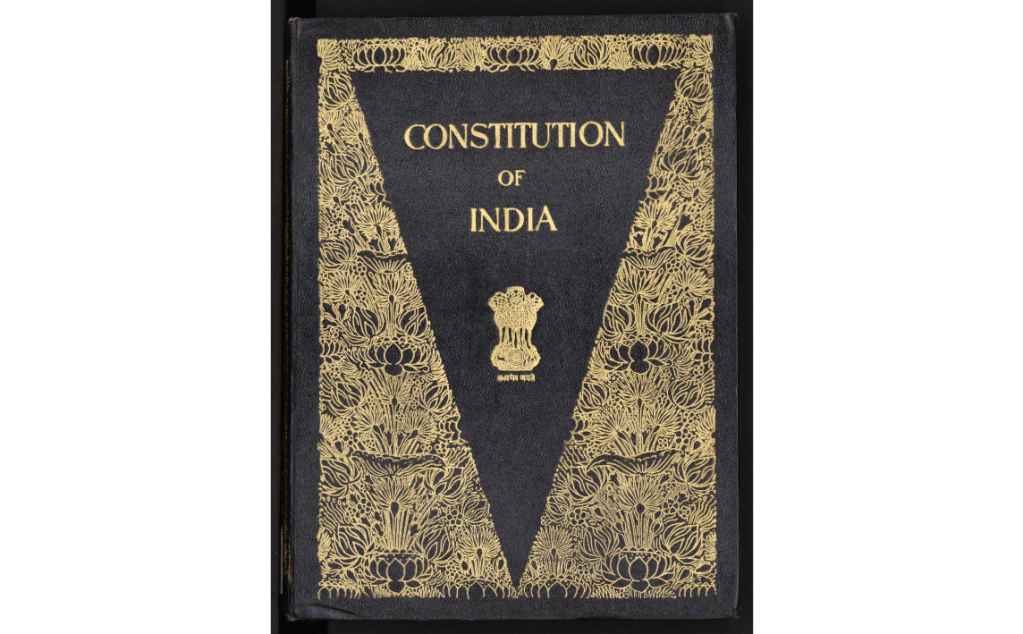
The Indian Constitution did not emerge overnight. It was drafted over 2 years, 11 months, and 18 days, between December 1946 and November 1949. The Constituent Assembly, which at its peak comprised 299 members, debated every clause with remarkable intensity. In the end, 284 members signed the final document on 24 January 1950, two days before it came into force.
At the centre of this process stood Dr. B. R. Ambedkar, Chairman of the Drafting Committee, alongside six other members. Ambedkar famously described the Constitution as neither purely federal nor unitary, but uniquely Indian—crafted to accommodate diversity, dissent, and deep historical inequality. The document drew from multiple global sources, including the British parliamentary system, the Irish Directive Principles, the American Bill of Rights, and the Canadian federal structure, while remaining rooted in the realities of Indian society.
Ambedkar repeatedly emphasised that the Constitution was designed not only to organise governance, but to prevent future injustice, warning that “however good a Constitution may be, it is sure to turn out bad because those who are called to work it happen to be a bad lot” [1].
Crucially, the Constitution was designed as a living document, capable of protecting citizens not just from colonial rule, but from future injustices—social, religious, and structural.
Democracy Beyond Elections
Democracy, as envisioned by the Constitution, is not limited to voting every few years. Ambedkar (1949) defined democracy more broadly, stating that “democracy is not merely a form of government, but a mode of associated living, of conjoint communicated experience.” It is a daily practice of dignity, participation, and equality. Ambedkar warned that political democracy cannot survive without social democracy—a way of life that recognises liberty, equality, and fraternity as inseparable principles.
For children, democracy is not learned through ballots or assemblies. It is learned through permission: the freedom to speak, to dress, to celebrate, to believe, and to belong without fear. This is where the Fundamental Rights become lived realities rather than abstract Articles.
- Equality Before Law (Article 14) : Guarantees that the state shall not deny any person equality before the law or equal protection of laws within India, meaning everyone is treated the same under the law.
- Prohibition of Discrimination (Article 15 ): Forbids discrimination by the state against any citizen based on religion, race, caste, sex, or place of birth, promoting inclusivity.
- Abolition of Untouchability* (Article 17): Makes untouchability an offence and abolishes it in any form, a crucial step towards social equality.
- Freedom of Speech and Expression (Article 19): Secures fundamental freedoms, including freedom of speech, expression, assembly, association, movement, and profession.
- Freedom of Religion (Article 25): Guarantees freedom of conscience, the right to freely profess, practice, and propagate religion, ensuring religious liberty.
Together, these rights form the backbone of India’s plural identity.
Festivals as Constitutional Practice
In childhood, constitutional values often arrive disguised as celebration.
Diwali is remembered as light defeating darkness, diyas glowing on windowsills, and the innocent thrill of crackers. Holi carries stories of Holika Dahan, colour, mischief, and renewal. Onam brings the legend of King Mahabali (Maveli) returning to visit his people—a festival rooted in equality and abundance. Christmas arrives with stars, carols, and the imagined footsteps of Santa Claus. Eid brings new clothes, shared meals, charity, and the joy of togetherness after fasting.
For Muslim children, festivals like Eid-ul-Fitr and Eid-ul-Adha are moments of generosity, prayer, and community. They are not political statements; they are memories in the making.
These festivals are not just cultural traditions—they are everyday enactments of Article 25. Article 25 guarantees that “all persons are equally entitled to freedom of conscience and the right freely to profess, practise and propagate religion” subject to public order, morality, and health. They teach coexistence long before children learn the word “secularism.”
When Innocence Is Interrupted
Yet increasingly, these experiences are no longer uncomplicated.
Children are questioned—or attacked—for wearing festive clothing. Families celebrate cautiously, altering rituals out of fear. Processions require security. Religious spaces become sites of anxiety rather than refuge. The language of “propaganda” and “threat” intrudes into spaces once defined by play, colour, and food.
This atmosphere of fear does not need to be named politically to be understood socially. When children begin asking whether it is “safe” to celebrate a festival, something fundamental has shifted. The Constitution did not promise conditional freedom. It promised equal citizenship.
Ambedkar warned against precisely such contradictions, noting that “we are entering into a life of contradictions… in politics we will have equality, and in social and economic life we will have inequality” [1].
Caste, Inequality, and the Broken Promise of Equality
Ambedkar’s deepest concern was not religion alone, but caste—a system he saw as fundamentally incompatible with democracy. While the Constitution abolishes untouchability and guarantees equality, caste-based discrimination continues to shape access to education, employment, safety, and dignity.
Ambedkar was unequivocal on this point, asserting that “political democracy cannot last unless there lies at the base of it social democracy,” [1] grounded in liberty, equality, and fraternity.
Children from marginalised communities still encounter unequal opportunities, targeted violence, and institutional neglect. These realities directly contradict the constitutional vision of equal citizenship. Republic Day, then, must also be a day of reckoning: a reminder that legal equality without social equality remains incomplete.
Why Stories Matter: Teaching the Constitution Through Books
If fear is learned, so is freedom. Children do not encounter the Constitution first through Articles or amendments, but through stories—stories that shape how they understand fairness, belonging, resistance, and voice. Children’s literature offers a way to introduce constitutional values without anxiety or polarisation. These books do not demand agreement; they encourage empathy, curiosity, and moral imagination.
They do not instruct children on what to think; they help children learn how to think. They frame freedom as something shared, fragile, and worth caring for. In doing so, they keep the Constitution alive—not as a document, but as a story passed from one generation to the next.
Choosing the right books, especially as gifts, becomes a quiet but powerful act of civic education.
Education, Ambedkar argued, must go beyond instruction, because “the object of education is to give children the power to think for themselves ” [1].
Books on the Constitution and Rights
Sen Gupta, S. (2016) – Our Constitution. National Book Trust
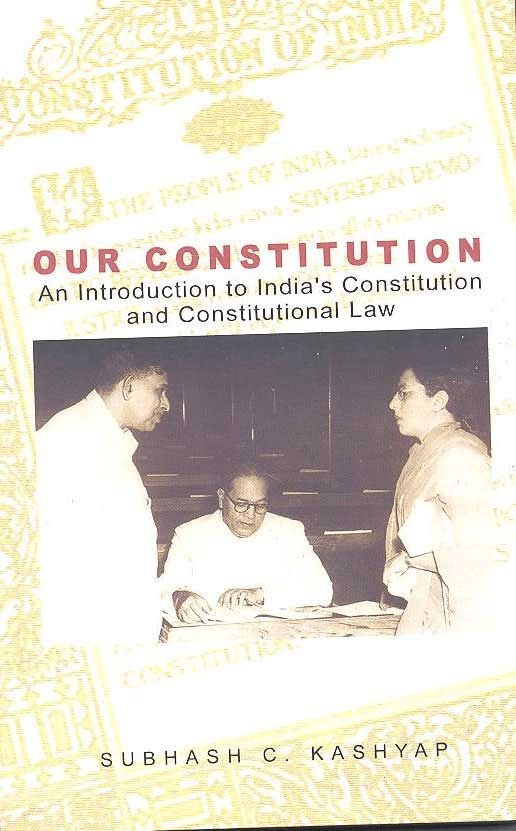
Age group: 9–14 years
Written in accessible language, Our Constitution breaks down complex ideas such as rights, duties, democracy, and governance into concepts children can understand without oversimplification. Rather than treating the Constitution as a distant legal text, the book presents it as a living framework that shapes everyday life—from freedom of speech to equality before the law. It is especially valuable for middle-grade readers beginning to question authority, fairness, and justice, making it an ideal introduction to civic thinking.
Why this book: It empowers children with knowledge of their rights while encouraging respect for democratic processes.
Leila Seth – We, the Children of India
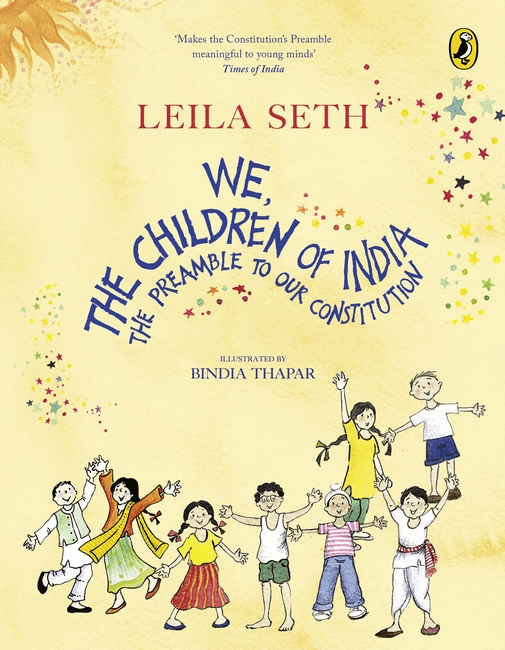
Age group: 6–10 years
Former Chief Justice of India Leila Seth adapts the Preamble of the Constitution into a child-friendly narrative, accompanied by illustrations that emphasise unity, diversity, and shared responsibility. The book avoids legal jargon and instead focuses on values—justice, liberty, equality, and fraternity—allowing younger readers to emotionally connect with ideas often reserved for older students.
Why this book: It introduces constitutional ideals at an age when values are absorbed intuitively, not analytically.
Books on Freedom Fighters and the Idea of Resistance
Amar Chitra Katha – Stories of Freedom Fighters
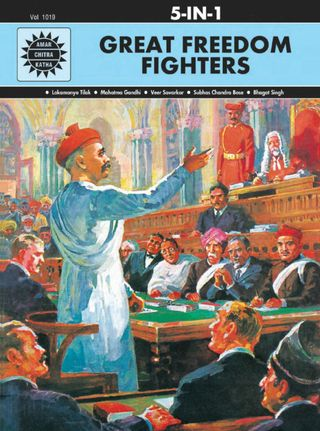
Age group: 8–14 years
These graphic narratives bring India’s freedom struggle to life through visual storytelling. By presenting figures such as Bhagat Singh, Subhas Chandra Bose, Rani Lakshmibai, and others, the series emphasises courage, sacrifice, and ethical resistance. The format makes history accessible without diminishing its seriousness, especially for reluctant readers.
Why these books: They make the freedom struggle personal and relatable, showing children that democracy was earned, not inherited.
Chakravarti Rajagopalachari – Stories for the Innocent
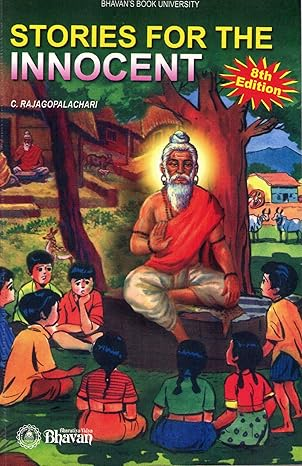
Age group: 10–15 years
Rajagopalachari’s retellings focus on moral reasoning, leadership, and social responsibility. Rather than glorifying conflict, the stories highlight ethical dilemmas, collective action, and the consequences of power. This makes the book particularly relevant when discussing democracy as a moral system, not just a political one.
Why this book: It encourages critical thinking about leadership and justice rather than passive hero worship.
Kazuki Ebine – Gandhi: A Manga Biography
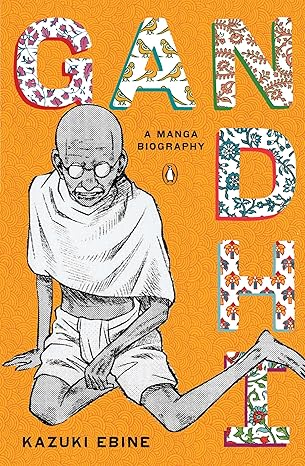
Age group: 12+ years
By presenting Mahatma Gandhi’s life through the manga format, this biography bridges historical narrative and contemporary visual culture. It explores non-violence, civil disobedience, and moral courage in a way that resonates with older children and teenagers accustomed to visual storytelling.
Why this book: It reframes freedom as ethical resistance and introduces complex ideas through an engaging medium.
Books on Belonging, Equality, and Shared Humanity
Jacqueline Woodson – The Day You Begin
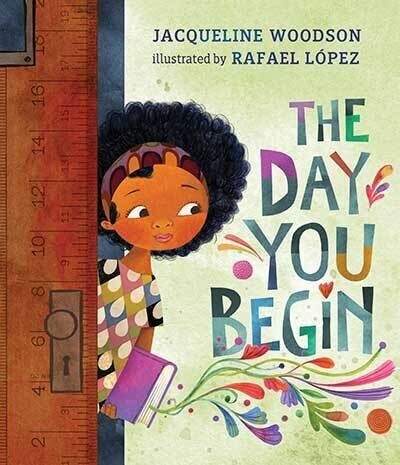
Age group: 5–9 years
This picture book gently explores what it means to feel different—because of culture, language, appearance, or experience. Without naming discrimination explicitly, it validates feelings of exclusion while affirming that difference is not a flaw but a story worth telling.
Why this book: It nurtures empathy and self-worth, foundational values for any democratic society.
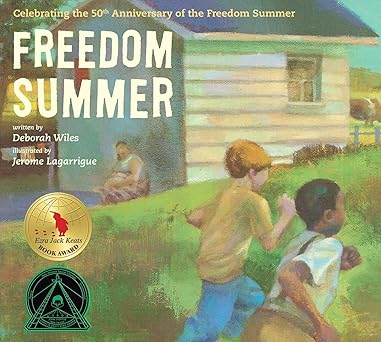
Deborah Wiles – Freedom Summer
Age group: 7–12 years
Set during the American Civil Rights Movement, Freedom Summer tells the story of two boys—one Black, one white—navigating segregation and its aftermath. While rooted in a different national context, the themes of inequality, friendship, and delayed justice resonate strongly with discussions on caste, access, and constitutional promises in India.
Why this book: It helps children understand that equality is not automatic, and that freedom often arrives unevenly.
Republic Day as Renewal
Republic Day is not merely a celebration of a document signed in 1950. It is a commitment renewed each year—to protect innocence, plurality, and dignity. The Constitution was written with extraordinary care, debate, and hope. To honour it fully means ensuring that children can celebrate festivals without fear, grow without discrimination, and inherit a democracy that is lived, not just declared.
Republic Day, then, becomes not just a celebration of independence, but a test of inheritance—one that echoes Ambedkar’s reminder that “constitutional morality is not a natural sentiment; it has to be cultivated.” [1].
NOTES
*Untouchability is a form of social discrimination in India where certain communities were treated as “impure” and were avoided, excluded, or denied basic human rights such as education, public spaces, and social interaction, simply because of the caste they were born into.
Bibliography
- Ambedkar, B. R. (1949). Constituent Assembly Debates. Government of India.
- Gupta, S. S. (2016). Our Constitution. National Book Trust.
- Seth, L. (2010). We, the Children of India. Penguin India.
- Sen, A. (2005). The Argumentative Indian. Penguin Books.
- Nussbaum, M. C. (2011). Creating Capabilities. Harvard University Press.
- Woodson, J. (2018). The Day You Begin. Nancy Paulsen Books.
 SLIDING MAGAZINE
Leave a comment