
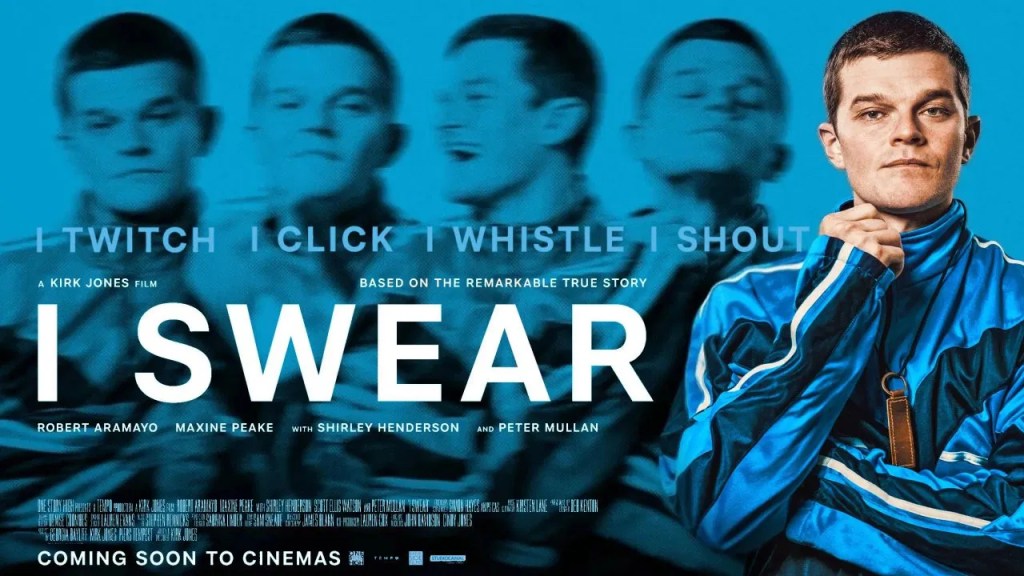

I Swear (2025) explores the life of John Davidson, a Scottish man who, in his teenage years, developed Tourette’s Syndrome. This motor disorder was widely unknown in the 1980s, and so he had to endure the consequences of ignorance and lack of social and structural support. Through an emotional lens, the movie invites the audience to reflect on the importance of education, inclusion and humanity in our communities.
Tourette’s Syndrome, according to the DSM-5 (one of the most important manuals for the diagnosis of mental disorders), is a neurodevelopmental disorder characterised by the presence of non-voluntary, sudden, recurrent and non-rhythmic tics. These tics can be movements or vocalisations, like the ones shown in the I Swear (2025) movie trailer, where John shouts “Fuck the Queen” in front of, well, Queen Elizabeth II.
The cause of Tourette’s is unknown, and despite all the research efforts, there is still no cure for it. Research has, however, improved the quality of life of those living with this syndrome; information availability and education have also built a more understanding society for them. I Swear is just the latest effort to raise awareness about the condition.
The film begins with a 12-year-old John Davidson cycling to his work as a newspaper boy. He is just a teenager from Galashiels, Scotland, who dreams about being a goalkeeper for a second division team. When John began to experience tics at 12 years old, shouting obscenities to the school’s director, spitting peas at dinner and having involuntary movements when playing football, he thought his world was ending. In opposition to the seemingly normal life he was enjoying before, he did not know what was happening to him or who to ask for help. His parents, amid their own dysfunctional relationship, were incapable of supporting him emotionally; his school thought he was just acting out, looking for attention, and in consequence, he was physically punished; his classmates made fun of him and left him alone.
Tourette’s was not widely known in the 1980s, so the stigma surrounding John’s tics grew until it became unbearable. In an emotional, blue-toned scene, the audience witnesses the desperation of a young teenager who tries to escape from the shame of being different, of feeling faulty and of being an unworthy burden. After his suicide attempt and the doctor’s comments about the clear intention behind this previously considered “accident”, his mother recognises that John needs specialised medical help.
Through the impotence and the pain (I was not the only one ugly-crying in the cinema), I could not help but ask myself what would have been different if the medical staff knew what was happening to John, if the members of his family and his community were aware of the disorder, and if somebody would have made him feel seen, respected and loved. The film, fortunately, answered my questions as the plot unravelled after a 13-year time jump.
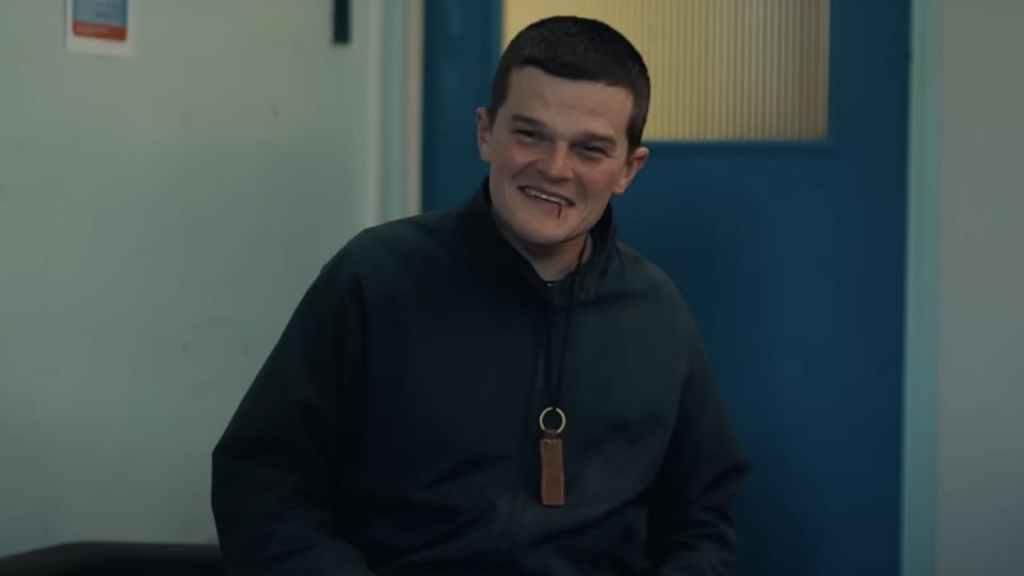
Kirk Jones/Studio Canal©
I will not keep discussing the story itself (because I really want you to go watch it), but the message behind it: the real problem is not Tourette’s, but society’s prejudices and ignorance. The lack of education about difference and inclusion, as well as the nonexistence of wider representation in media, is the motor for the story’s most upsetting scenes.
However, not everything was pitch-dark for John, no: supported by his found family, friends and colleagues, he began to teach people about Tourette’s, to open the discussion about vulnerability and exclusion and the damage that ignorance can cause; he reaffirmed his self-esteem as a valuable person and created spaces to advocate for change.
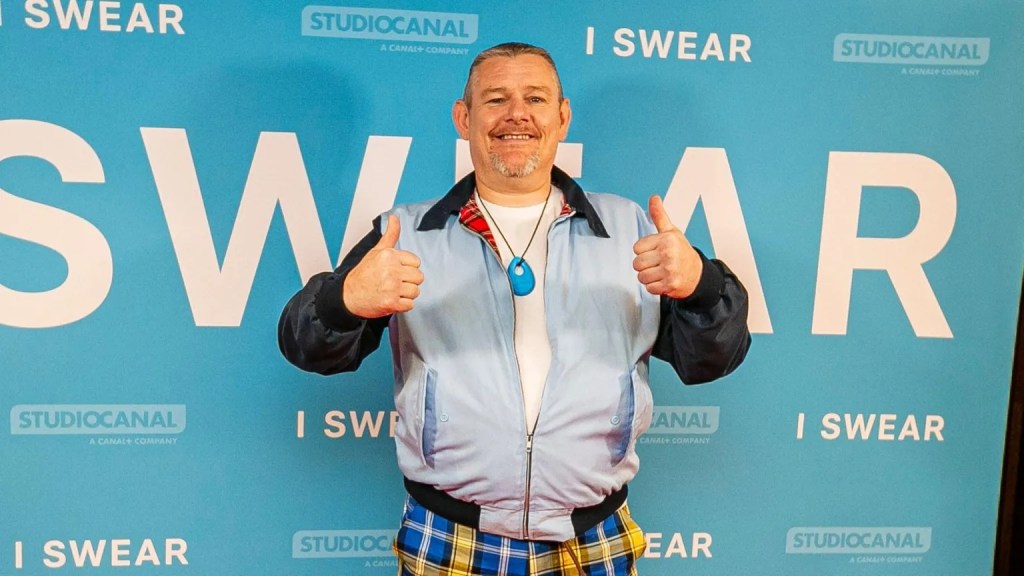
I Swear (2025) is the biopic based on the personal experiences (and lifelong work) of John Davidson, the Scottish man who became a nationwide known campaigner for Tourette’s Syndrome. Even though he could not participate as an actor, children from the Tourettes Action charity were cast for the film (you can read more about it here), which only aids in highlighting that this movie is not about tokenisation but about spreading John’s labour (for which he even received the Most Excellent Order of the British Empire in 2019!).
The entire movie is engaging due to its accurate portrayal of Tourette’s syndrome and John’s experiences. As a result, the precise depiction of the tics and the disorder’s comorbidities (like obsessive compulsive disorder, OCD), as well as the situations in which the main character gets involved, only adds value to an already extraordinary, compelling piece of storytelling. Kissing lamp posts to assure that they will function correctly, shouting “spunk for milk” in court, or swearing along with another woman with Tourette’s in the backseat of a car work as dark comedic reliefs while maintaining the veracity of the symptoms depicted.
At the end of the movie, I questioned the seemingly didactic approach of the final scene, where a reflection about the critical role of research, education and empathy is presented following John’s visit to the neuroscience centre at the University of Nottingham. I thought the message was clearly communicated in between the laughs, the crying and the sheepish smiles that the story evoked. However, after discussing it with my boyfriend (who very much enjoyed the film, too), I agreed that there are some things in life that cannot be left to open interpretation: the necessity of respect and inclusion for people from stigmatised groups must be made explicit, emphasised and, moreover, advocated and defended.
 SLIDING MAGAZINE
Leave a comment