


This essay uses the Chinese animated blockbuster Ne Zha 2 to explore how children read films as actively as they read books. Through concrete viewing activities – from using posters and trailers to analyzing sound, emotion, and “what if?” rewriting – it shows how families and educators can nurture children’s agency and critical film literacy in everyday settings.
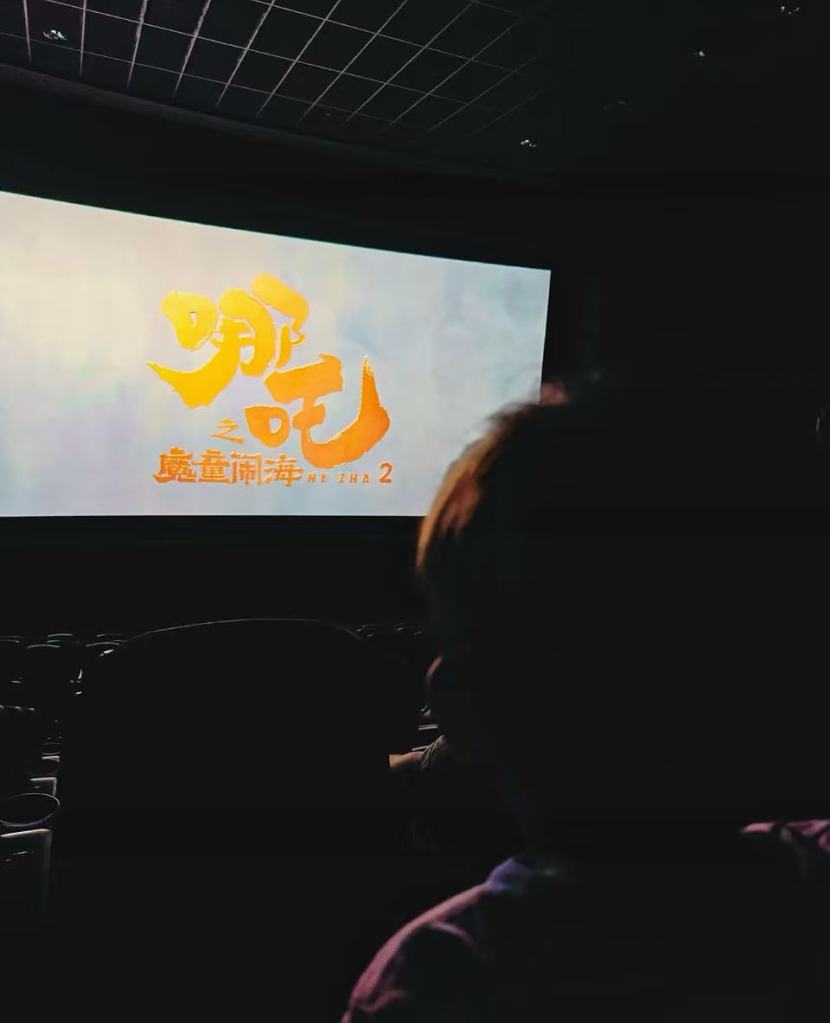
In the crowded foyer after a Sunday screening of Ne Zha 2, a ten-year-old beside me kept whispering to her friend: “Look, when he gets angry, the whole sea changes color.” The girl had probably never read a printed version of the Ne Zha legend, but she was already reading the film.
In China, Ne Zha is hardly an unknown figure. Children meet him in many places: simplified retellings of the classic novel Investiture of the Gods, school readers, old animated films such as Nezha Conquers the Dragon King, and, more recently, the 2019 blockbuster Ne Zha. Many children know him as a boy-god who fights dragon kings and rides wheels of fire, even if they could not quite say where that image first came from.
“If we care about children’s reading lives, we also have to care about how they watch.“
That girl’s remark stayed with me. It reminded me that many children’s first sustained meeting with myth, heroism and sacrifice no longer happens on the page, but on a glowing screen. If we care about their reading lives, we then also have to care about how they watch.

Stormy waves and dark clouds echo the emotional intensity and sonic atmosphere of Ne Zha 2. Image shared on a Chinese social media platform (Xiaohongshu) and used here for illustrative and educational purposes only. Copyright remains with the original creator.
Why this blockbuster matters
Ne Zha is a mythological figure from Chinese folklore, often imagined as a rebellious child-god. In classical literature, his story is most fully told in the 16th-century novel Investiture of the Gods, where he appears as a child warrior who defies both his parents and the Dragon King. But more recently, the hit feature film Ne Zha, has turned this mythological boy-god into a contemporary pop-culture hero. Ne Zha 2, which was released this year, is its record-breaking sequel. The Chinese animated film continues his story for today’s audiences, mixing traditional elements with modern humor and spectacular action.
When Ne Zha 2 opened in cinemas, headlines focused on box office numbers and technical achievement. Yet something quieter was happening. For many children, this was their first encounter with Ne Zha, not as an ink drawing or a chapter in a book, but as a moving image: a demon child sharing a body with his friend, diving into a burning cauldron, shouting that his fate is his own as the sea turns violent around them.
If we care about children’s reading habits, we also have to care about this kind of viewing. Film literacy – the ability to make sense of how films create meaning – is more than following the plot. It is noticing how light, color, sound, camera movement and editing shape our sense of character, power and feeling. It is asking what children can do with those images. Can they question them, talk back to them, reshape them? In the language of children’s agency, watching Ne Zha 2 becomes more than entertainment. It becomes a space where children practise seeing who frames the story, whose voices are loudest, and how they themselves might respond.
Reading posters and trailers: promises in a single frame
Film literacy can begin before we press “play”. Show children a poster or short trailer for Ne Zha 2. Ask a few open questions: Who do you notice first, and where are they placed? What colors and poses stand out? If this image could speak, what promise would it make?
Children quickly pick out patterns: Ne Zha’s wild hair and red eyes, Ao Bing behind or beside him, a rising wave or burning sky. Older viewers talk about a “good vs evil” battle; others sense that two boys are caught between gods and dragons.
When I tried this with a small after-school group, I was struck by how quickly children moved from “It looks cool” to precise comments: “He’s in the middle, but the sea is bigger than him”, “Why is that dragon smaller in the back?” They were already doing the work of critics.
Without heavy vocabulary, adults can name what children are seeing: framing (who is centered, who is at the edges), scale (who looks tiny or powerful), and taglines like “My fate is my own” as invitations to feel a certain way. Posters and trailers are persuasive texts, crafted to steer our expectations and our money. When children practise reading these promises together, they begin to recognize who has the power to frame a story – and that they can question those framings with others, not just alone. Interpretation becomes something they do, rather than something quietly done to them.
Worlds above and below the waves: who belongs where?
After the screening, you can “zoom in” on world-building. Choose two contrasting settings, for example, the bustling port town filled with market stalls and ordinary people, and the underwater dragon realm with its formal palaces and rituals.
Pause the images and invite children to become detectives of background detail. Where and when do you think this is? What do buildings, clothes and colors tell us about who has power? Where do you see everyday life – laundry, food, animals, side characters? Which details feel rooted in history, and which feel like pure fantasy?
Children make quick connections: the port town recalls seaside markets or crowded streets; the dragon realm reminds them of other fantasy films or palace dramas. When I asked, “Who is comfortable here?”, a child answered, “The people with big sleeves,” then added, “and not the ones on the boats.” She had noticed class without any adult prompting.
Every fictional world encodes ideas about belonging and authority. Learning to read these patterns helps children notice similar patterns in other media: whose neighbourhoods appear on the news, whose languages are subtitled, whose homes are treated as worthy of attention. It also opens the door to talking about their own worlds: who is visible in their schools, villages or cities – and who tends to remain out of frame.
Feeling the storm: emotion, sound and the body

Many children remember Ne Zha 2 not as lines of dialogue but as feelings in their bodies: the pounding music as Ne Zha absorbs a magical inner fire, the sudden quiet after a sacrifice, the swell of sound when two friends reunite.
Choose one intense scene – a battle, a moment of despair, the breaking of the cauldron. Watch it once without interruption. Then watch again, focusing on the craft: What do you hear as the scene begins – music, noise, silence? When does the sound become louder or quieter? Does the camera move quickly or slowly, come close or stay far away? What colors do you notice when Ne Zha is frightened, angry, or determined?
Invite children to draw a simple “emotion line” across the scene: a line that rises when tension increases and falls when calm returns. Ask them to link that line to specific film choices: “What did the director change here to make it feel exciting or frightening? What brought you relief?”
When a group of eleven-year-olds did this, their emotion lines for the same scene were surprisingly different. For one child, the peak was when the music swelled; for another, it was a brief close-up on Ne Zha’s face. Comparing these lines turned into a conversation about how no single reaction is “correct”.
Understanding how films make us feel does not cancel those feelings. It gives children language for talking about care, excitement and manipulation. Knowing that a close-up and sudden silence can produce tears helps them see that their emotions are both real and shaped by design – a key part of becoming a critical viewer rather than a helpless one.
Choices, trials and “what if?”: opening up the story
At the heart of Ne Zha 2 are not only battles but decisions: Ne Zha agreeing to share his body with Ao Bing; Ao Bing choosing between protecting his people and trusting a friend; adults hiding truths from children “for their own good”.
Pick one turning point and retell it in simple language if needed. Then ask: Who has power here? Who is trying to protect whom? Who gets to decide what happens next? Whose feelings are clearly shown, and whose are left in the dark?
Next, invite children to imagine alternative paths. What if Ne Zha refused to share his body? What if Ao Bing walked away from the trials? What if an adult character chose honesty earlier? Children can discuss options in small groups, sketch a new scene, or write a short diary entry from a side character affected by the decision.
Imagining “what if” is a rehearsal for democratic thinking. It invites children to see rules and destinies as made, not fixed. When they realise they can argue with the story, they also learn that real-world decisions – about school rules, public spaces, even national myths – can be questioned and rethought. Agency appears not as a heroic individual trait, but as a shared capacity to say “this could be otherwise”.

Copyright remains with the original creator.
From cinema back to conversation
Film literacy does not have to be confined to the classroom. Families who watch Ne Zha 2 together can turn a rewatch into a conversation with a few gentle questions: “What did you enjoy most this time? Did anything feel different from the first viewing? Did the film remind you of your own friendships or family dynamics? If you could send one message to the people who made this film, what would you say?”
These questions center on the child’s interpretation, instead of hunting for a single “correct” moral. Adults can share their own responses too, including uncertainty: “This part made me uncomfortable; I’m not sure why. What do you think?” That models a reflective way of watching in which nobody has to pretend certainty.
From there, bridges to other media appear naturally. A child who can talk about how Ne Zha 2 uses sound to build tension will more easily spot similar tricks in other films or game trailers. A child who has practised asking “Who is missing from this world?” may begin to see similar gaps in adverts, news clips or textbooks. These conversations show children that their views on media count in family life, not just in tests at school.
Beyond one film: towards more just media worlds
Ne Zha 2 made a big wave in recent children’s culture, but it does not have to wash through and disappear. If we treat it as more than “just a blockbuster”, we can help children see themselves as more than an audience. They can notice how the story is built, ask who is speaking, and begin to answer back in small ways – in their drawings, their questions, their own short clips.
When children learn to read a film like this, they are also practising skills they will need in everyday life. The same questions they bring to Ne Zha’s world can later be turned towards campaign videos, charity appeals, influencers’ posts or viral trends in their feeds. It is no longer only about “good taste” or “screen time”, but about how they understand power, persuasion and fairness in public stories.
Children need more than time limits and warnings. They need chances to ask, together with adults they trust: “Who is framing this story, and who benefits from it? What kind of world is being shown, and who is missing? What could this look like if we told it differently?”
Turning the big waves of spectacle into talk, questions and alternative scenes takes patience. It can feel slow compared to the rush of a cinema release or a trending hashtag. But it is also a form of respect. It tells children that their reactions to film are worth time, that their ways of seeing are part of family and classroom life, not an afterthought.
If we bring that respect into classrooms, libraries and living rooms, then the next time a child leans over after a screening and whispers, “Did you see how the sea changed?”, we can answer, “Yes – and let’s talk about why.”
Bibliography
- Ne Zha 2 (2025) [Film]. Directed by Jiaozi. China: Beijing Enlight Pictures.
About the author
Xu Wang is a volunteer teacher and children’s literature practitioner from China, focusing on low-cost, replicable reading routines in rural classrooms. Their work connects songs, drawing, and picturebooks to support emotional literacy and intercultural understanding. They contribute public-facing pieces that translate classroom practice into shareable protocols for teachers and caregivers. Xu Wang is currently developing projects at the intersection of children’s literature, media, and cultural entrepreneurship.
 SLIDING MAGAZINE
Leave a comment