
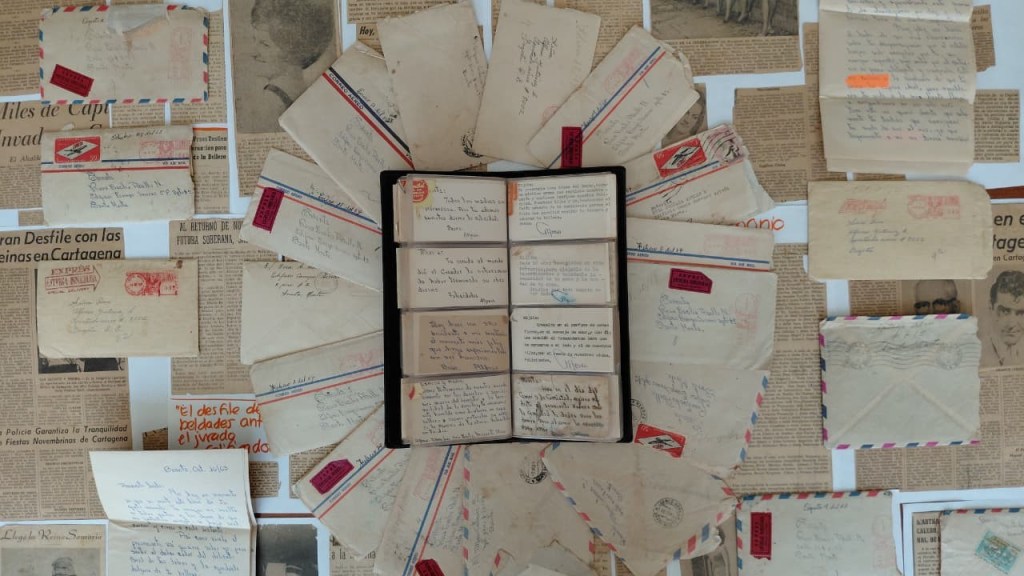

This editorial explores biographical media as a lens for understanding identity, memory, and childhood. By linking family archives with digital narratives, it highlights how storytelling mediates cultural self-representation, empathy, and historical interpretation, emphasizing the evolving impact of digital archives on personal and collective memory.
I have always been fascinated by people’s lives. Not as a professional gossiper—quite the opposite. I am usually the last one to notice what’s really going on. Instead, I have learned to look at lives from a Newtonian perspective: for every action, there is an equal and opposite reaction. Or, in this case, for every life, there is a story that helps to make sense of it.
I would always sit by my grandmother’s side to listen to her innumerable stories about her time as a participant in the National Beauty Pageant and about her love story with my grandfather Alfonso, who died several years before I was born. Her love seemed to grow with every sigh of remembrance; her stories kept him alive, yet without a doubt, his absence took the joy of her life with him. She held on to this love as the greatest story of her life, and she made sure to preserve evidence of it. When she died, I inherited part of her collection: flower cards, telegrams, letters, and newspaper clippings she had diligently kept for so many years.
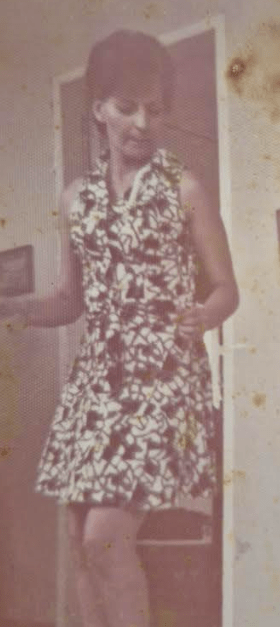
I had always imagined myself as the person in the movie who receives a box full of family evidence and dives into it, ready to announce it to the world. The announcement part is still on pause, but I have, of course, carefully categorized everything by date and devoured every piece. (I even found a letter my father wrote to my grandmother when he was still my mother’s fiancé— isn’t that beautiful?)
Even though I have an archival devotion, I cannot help but wonder what would become of my grandmother’s practice if she were a young adult today. What would be her favorite social media platform? How would she choose to present herself while representing her region at the National Beauty Pageant? Where would she post her storytime about falling in love with Alfonso? Would she be an influencer of any kind? Would she post vlogs? How would she record or share her incredible lasagna recipe, her clothing creations, her hairstyling routines, or her newest knitting patterns? Would she allow herself to make public the bee-like laughter I used to tease her about? Would she surrender to vanity or show herself without makeup or with messy hair? Would she dare to share her light and dark emotions?
Mimi, my great-grandmother, would probably try to limit her publications—or argue that sharing all of that is dangerous or vain. Although there are many reasons to agree with her, the explosion in biographical media today reveals two things that previous generations may not fully acknowledge: people now have more tools to creatively express their identities and to preserve memorable moments, and they place their trust in the systems where this content is shared.
As old taboos are gradually dismantled, secrecy is diminishing, and both the quantity and quality of the ways people choose to represent their lives are increasingly shaped by the digital agency they possess.
Digital archives are the present—and the future—pieces of the puzzle of our lives’ stories and of everything we choose to share. It remains uncertain whether future generations will be permanently deprived of this material when attempting to uncover their past, but one thing is clear: we will soon begin to see the impact of migrating our lives into digital records.
As photographs, videos, stories, blogs, and posts multiply the available sources and sustain countless interpretations, humanity seems set to continue expanding the ways it narrates itself—perhaps making it even harder to discern what was true and what was not, precisely because of the digital affordances we now possess.This issue of SLIDING Biographical Media aims to explore the multiple ways in which people choose to share their own stories—or the stories of others—with the world, especially those related to childhood and adolescence. All the pieces analyzed or presented in this issue are significant both in terms of content and format, as each serves as a source of knowledge about the conceptions of childhood that shape these narratives. They attempt to identify the traces of memory that adult biographers often use to reinforce, contest, or reinterpret the experiences of the past, and to justify themselves as a cultural product (Douglas, 2010, p. 89).
The idea of viewing ourselves as cultural products is very thought-provoking, as we cannot deny that we are not only shaped by where we come from but also by what we are allowed and able to do with it. Accessing biographical media can be one of the most empathetic ways of reading: it humbles us to truly listen to a story, often evoking the desire to embrace the child or teenager it portrays. Biographical media can make us realize that, in similar circumstances, even choices that seem objectively wrong from the outside could have led us down the same path.
In childhood studies, biographical media is particularly relevant because, although every life has a story that helps it make sense, there is no “sum zero” on the effects of a good or bad childhood on adulthood. This type of media helps young readers learn about history, resilience, creativity, and human endurance—and inspires social agency, change, and the possibility of impacting others’ lives. In its own way, biographical media reveals the subtle magic, good fortune, and astonishing coincidences that sometimes allow life to move forward despite its challenges.
We invite you to join us in exploring the vast world of biographical children’s literature and media in SLIDING’s first issue of 2026.
Bibliography
Douglas, K. (2010). Contesting childhood: Autobiography, trauma, and memory (1st ed.). Rutgers University Press. https://doi.org/10.36019/9780813549156
 SLIDING MAGAZINE
Leave a comment