
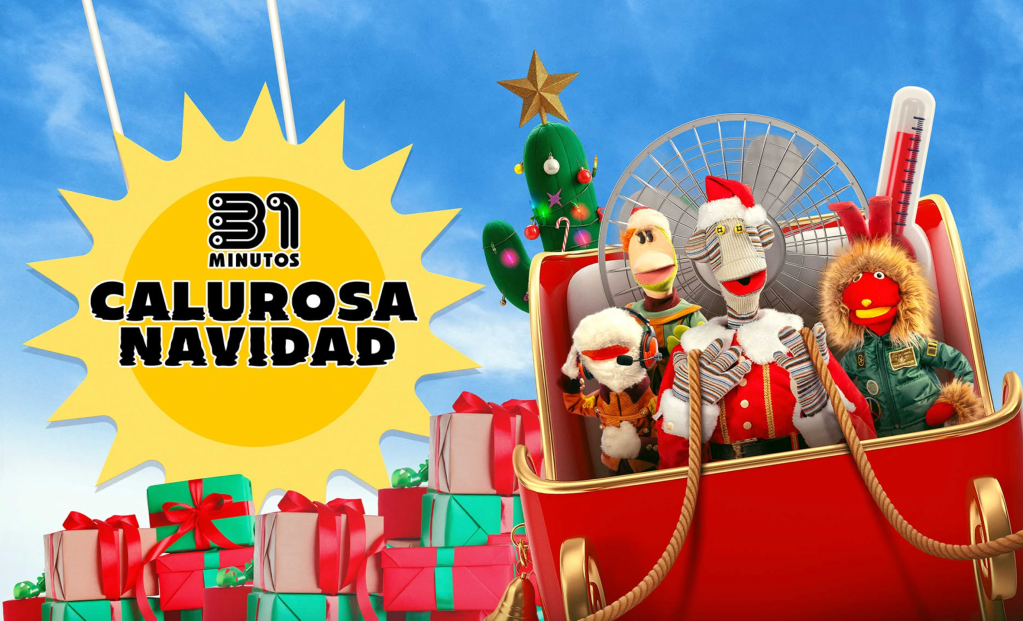

Spending the festive season in the northern or southern hemisphere (or near the tropics) has its differences. A bright sun, water balloons and watermelons are part of a non-hegemonic characterisation of Christmas that 31 Minutos, a children-oriented puppet show from Chile, depicts in its special episode. Here we explore the idea of its very hot Christmas along with other festive topics.
The concept of a white Christmas was always strange to me, even if it was everywhere around me during December. I could not heartily engage with the snowy showcases in shops, with the Santa Clauses and their elf helpers, the big turkey dinners, the snowmen, and the general wintry symbols of the season. For me, being born and raised in Chile, it was all about roasting under the sun, eating watermelon, playing with water with my siblings, staying up late to wait for the Viejito Pascuero (hear me out: he is an old man that comes at Pascua de Navidad, so the name is on point, even if we are the only ones that call him that way) and playing with the new toys until we fell asleep in the early morning hours. And, of course, the spotlight was on the 25th with the big family barbecue that went from noon until the evening. Even if I watched the typical Christmas movies, like El Grinch (or How the Grinch Stole Christmas) or Mi Pobre Angelito (or Home Alone), the whole idea of a cold Christmas seemed too distant to be true.
When 31 Minutos, a Chilean puppet television show that mimics a news programme in a sarcastic and absurd manner, aired a Christmas episode at the beginning of their second season, I felt seen. While focusing on the perks of a last-minute celebration, Bodoque’s ludopathy and misadventures (and his reversion of a Jesus Christ Superstar’s song, which is peak referential drama for a children’s show in my opinion), they showed the hot Christmas that I was used to.
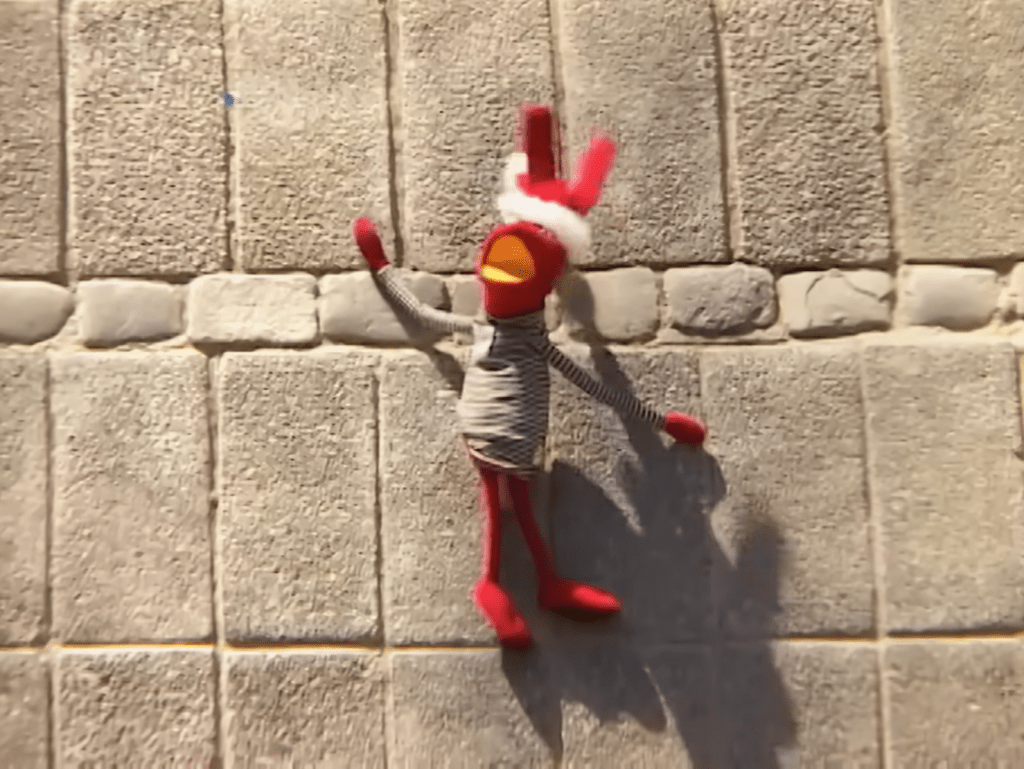
First of all, before I start dissecting this masterpiece, I want to leave here a SPOILER ALERT. If you want to see the episode (linked above) first and then come back to this article, that is totally fine! In the official 31 Minutos’ YouTube channel, you can find every season of the show (including this Christmas special) with subtitles in Spanish and English. Additionally, it is necessary to raise awareness about troublesome uses of language and stereotypes in the show. They are a representation of the times in which this particular season was produced (2003-2004). While I do not condone them, I would rather analyse these elements critically and assert the change of societal norms and culture, rather than flat-out cancel the show.
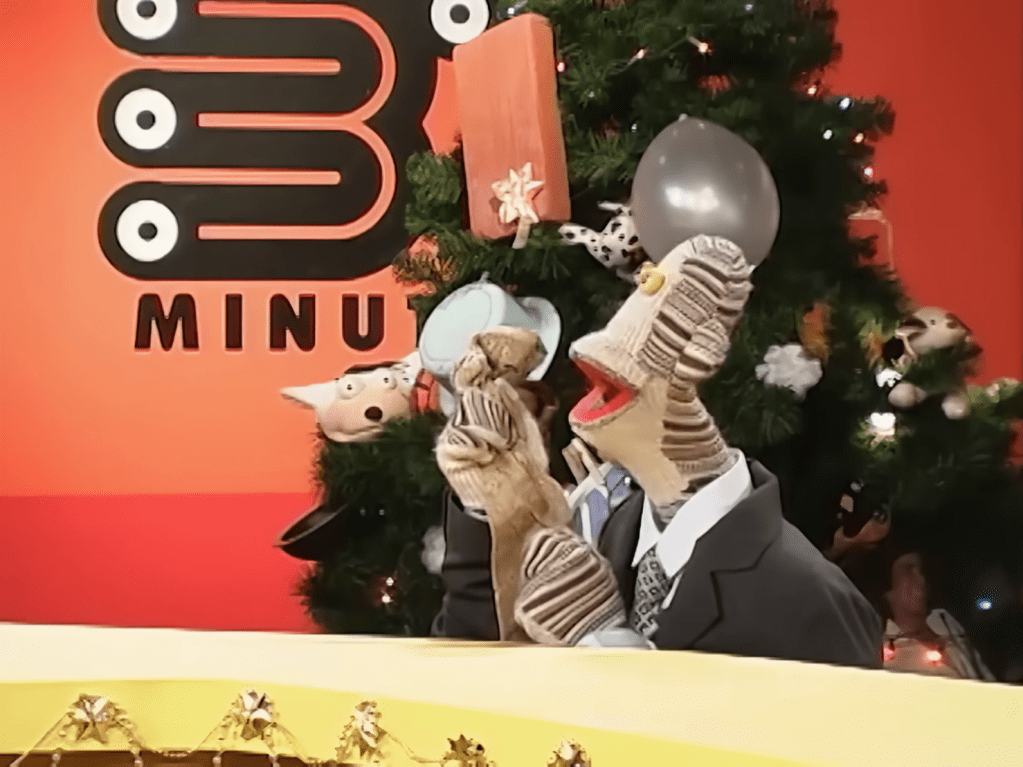
Without further ado, let’s begin this exploration with a summary of the episode: Tulio Triviño, the narcissistic news anchor of 31 Minutos, is reminded by his boss that he cannot go home on Christmas Eve, since it is one of his contractual obligations to lead the channel’s Christmas special. If he stays, all the members of the crew must too. In a hurry, all the puppets decorate the studio and plan the programme. However, due to the rush and the lack of resources, everything is a mess: the tree is caught on fire by an unsafe electrical connection; the presents are lost by Bodoque while betting for “Tormenta China”, a racehorse that NEVER wins; the usual tree baubles are replaced by a plunger, someone’s grandma, a belly-button fluff and even a porta-potty; among others. Somehow, they manage to keep the festive spirit alive among the chaos and enjoy each other’s company.
Representation – It’s summer here!
Yes, though it is summer in half of the planet in December, Western representations of Christmas usually reproduce wintery landscapes and long nights. The song “Calurosa Navidad” by Los Viejos Pascueros Acalorados, however, explores the imagery linked to heat and the aestival season. Calurosa Navidad (“Heated Christmas”) is the opposition in which the symbols are subverted, and the experience of a hot Christmas is upheld:
Calurosa Navidad
Arriba el sol quemando nuestras calles
Calurosa Navidad
Es el sudor que moja nuestros trajes Aquí no nieva nunca
Aquí no hay noches blancas
No hay guerras de nieve pero hay bombas de agua
Heated Christmas
The sun is up burning our streets
Heated Christmas
Is the sweat that wets our suits
It never snows here
There are no white nights here
There are no snow fights, but there are water balloons.
(Translation is mine)
In the music video shown in the episode, the band formed by four men dressed as low-quality Santas is depicted profusely sweating, eating watermelon, floating in a small inflatable pool and lighting up a bonfire that, due to the heat, provokes a wildfire. Though most of us will never start a fire like that, the experience of massive wildfires is unfortunately common during the summer in Chile.
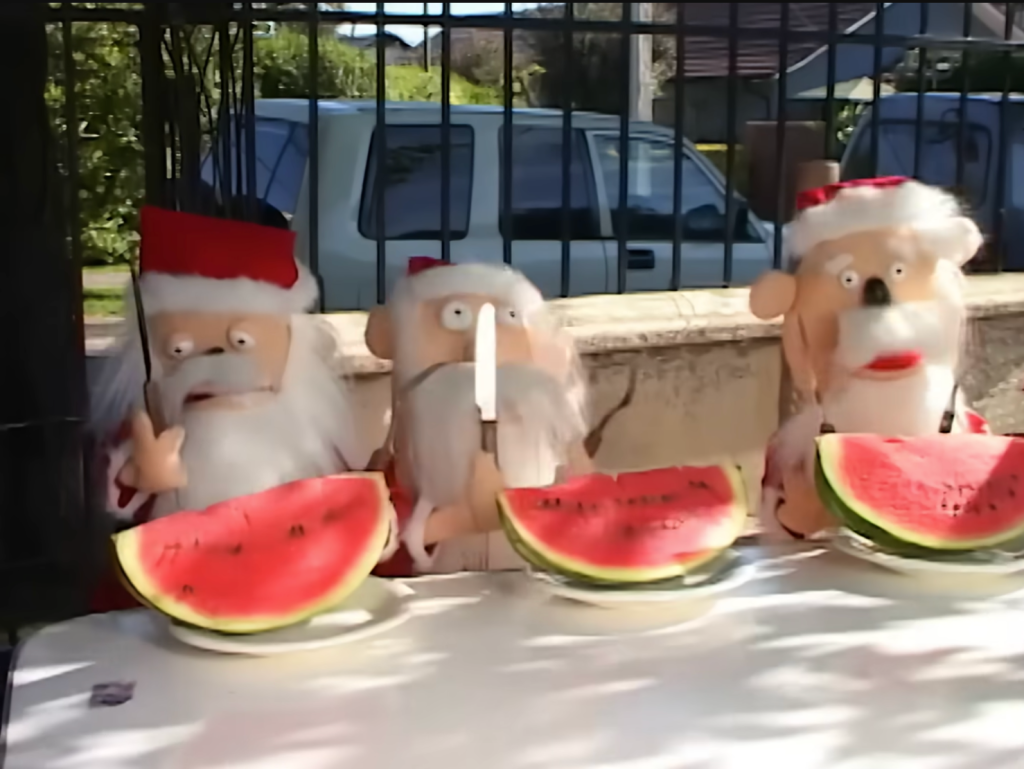
Related also to the high temperatures, the verse “Caen patos fritos al pasar” (“Fried ducks fall while passing”) exaggerates the heat, even prompting fowl to fall from the sky fully cooked. The ducks are represented in the music video as the viral rubber chicken that took the internet some years ago (again, another amazing reference to popular media).
The summery symbols mentioned above, even though shared with other territories that also experience a hot Christmas, are deeply Latin American, especially Chilean. 31 Minutos opens a space for children in our long and narrow country to feel seen and represented in festive fashion on the screen.
Social commentary – Loneliness and Mental Health
The fact that the episode begins with Sr. Manguera making all his employees stay in the studio working while he goes to his house to open the presents is a direct critique of capitalism: some have the privilege to enjoy the festivities with their families, others do not. They must keep producing, even during holidays.
If you know 31 Minutos (or even just watched their Tiny Desk concert on the official NPR Music page), you should already be aware of the political discussions shaped throughout the show. Reflections about war, contamination, migration, individualism, power abuse, and more are present in all the seasons (and movies!).
However, what calls the most attention in this special episode is the struggles with mental health of part of the population during the end-of-year festivities. The best example is Policarpo Avendaño: he is the entertainment journalist of the programme and presents the musical ranking each week. However, due to the special nature of the show, he is sent home by Tulio several times… to which he does not comply. He is seen throughout the whole episode trying to aid in the Christmassy efforts of the rest, but is pushed aside every time. Tulio finally loses it and tells him to go with his beloved ones and enjoy the festivities. Policarpo begins crying and saying that he is all alone and has nowhere to go. Moreover, being in the studio with his colleagues is the best way he can think of to spend Christmas. The puppets come together and reassure him, telling him that he is a valuable friend, and he can stay if he wants to.
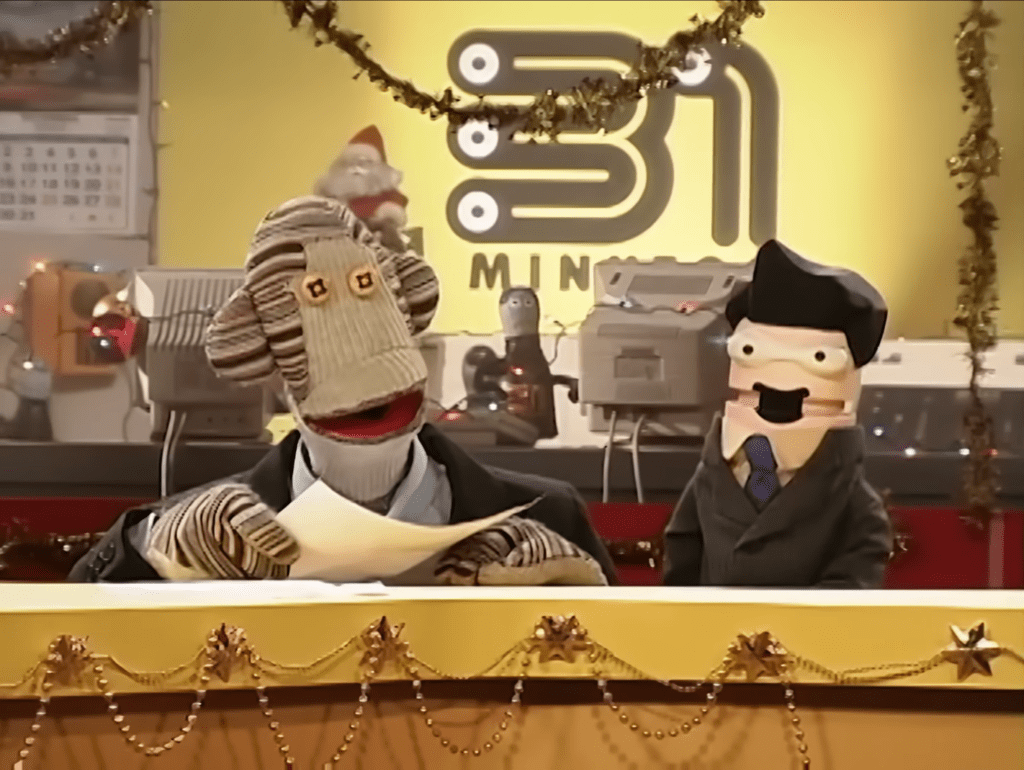
In another example, Bodoque’s ludopathy pushes him to almost ruin Christmas for everyone in the set. Yes, materiality should not be the most important aspect of the festivities, but when somebody you trusted with the task of picking up the gifts arrives with horseshoes (!) because he lost the real presents by betting on racehorses, something rubs the wrong way. Even Bodoque, when singing in his dramatic solo scene at the racecourse, mentions that if he had one gift more, he would bet it again to win the others back. All jokes apart, he is ill and needs support and treatment, rather than judgmental stares and public reproach.
In a season regarded as a cosy, familiar and happy one, we should not forget about people facing their own struggles. Hopefully, the inclusion of these topics in children’s shows will aid in the visibility of these issues. Furthermore, it will spark the desire to act and share time with somebody who needs it.
Absurdity – Horseshoes for everyone
31 Minutos, at its core, plays with the absurd. The opposition of it with rather serious topics builds a complex relationship that the audience must unravel. A tree with ridiculous ornaments enables a discussion about collaborative actions, frustration and crisis management. Bodoque gifting everyone horseshoes before breaking down due to guilt opens a space for laughter and further reflection, as well as the watermelon tree-topper suggested by Balón von Bola, a senior journalist who lives with dementia.
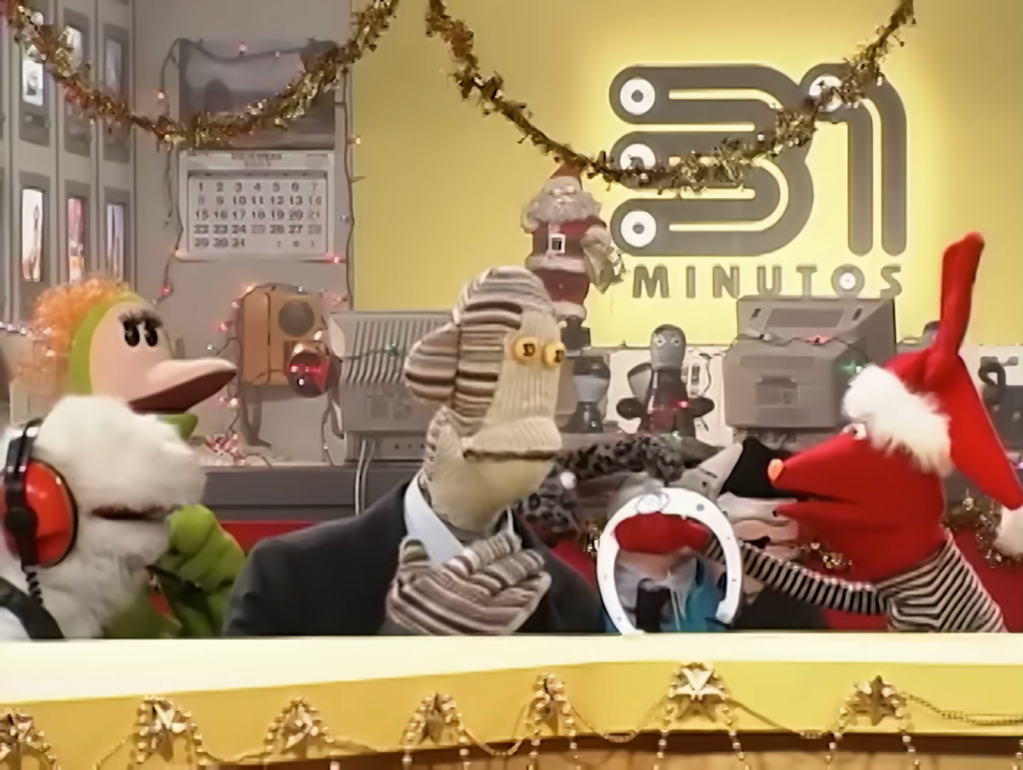
This playfulness lightens the tone and makes the themes approachable to a wider audience, who do not feel attacked or uncomfortable facing them. The climax of the purpose-driven absurdity of this episode is the concept of “the Magic of Christmas”. Near the end of the show, all the puppets forgive Bodoque, motivated by the spirit of the season –and the fact that the Christmas special must have a happy ending, as Tulio mentions. He also affirms that, in the happiest season of the year, miracles happen. Could the presents magically appear?
Juanín (the fluffiest member of the crew) shouts “¡y llegan los regalos!” (“and the presents arrive!”) as he looks to the ceiling, but nothing happens. He repeats the phrase, yet the only thing they hear is the crickets in the background. Patana (the only female journalist of the team and Tulio’s niece) shouts that they already learned their lesson, but nope. Only a guy tapping on a gas cylinder that mimics the sounds of a bell passing by. It seems that the puppets did not learn the real meaning of Christmas, after all.
Policarpo, trying to change the moody atmosphere, encourages everyone to sing their own Christmas carol, which emphasises the importance of love, support and material detachment during the festive season. And guess what? Upon finishing the song, colourful boxes began to drop from the sky. As the cherry on top, Santa Claus falls on top of Tulio, who was already complaining about the presents hitting him, knocking him out. Finally, a couple of reindeer appear in the empty studio, trying on the horseshoes. By coincidence (or a miracle), they were their size, and so they left the set with new covers in their hooves.
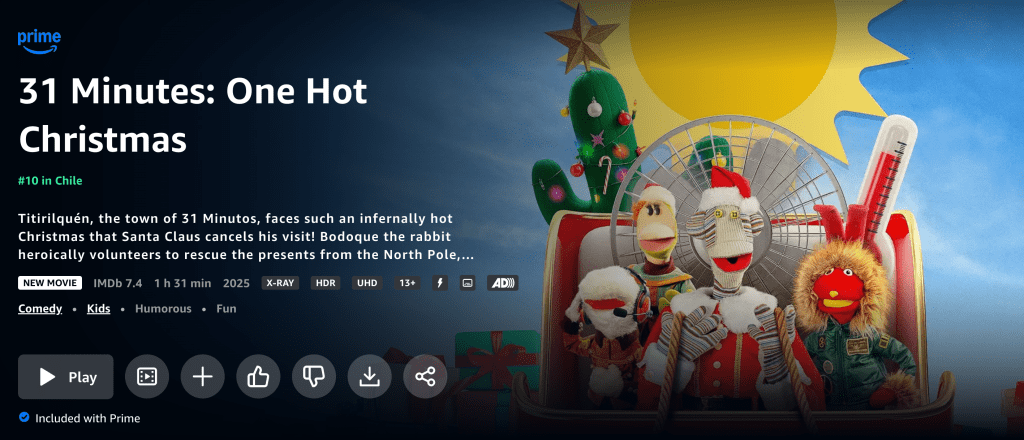
31 Minutos’ playful depiction of Christmas does not end here. If you want to explore the newest addition to their multimodal universe, you can check the movie released on November 25th on Amazon Prime Video: 31 Minutos: A Hot Christmas. In their usual fashion, the hour-and-a-half film explores through their puppets the significance of the season amid a heat wave, and the imminent cancellation of the festivities due to it.
What do we get, then, from this 2003 Christmas special? To enjoy the festivities with humour, putting the material aspect of it on a second plane, celebrating as you wish without any hegemonic cultural pressure, sharing smiles with your loved ones and avoiding the racecourse at any cost.
 SLIDING MAGAZINE
Leave a comment