
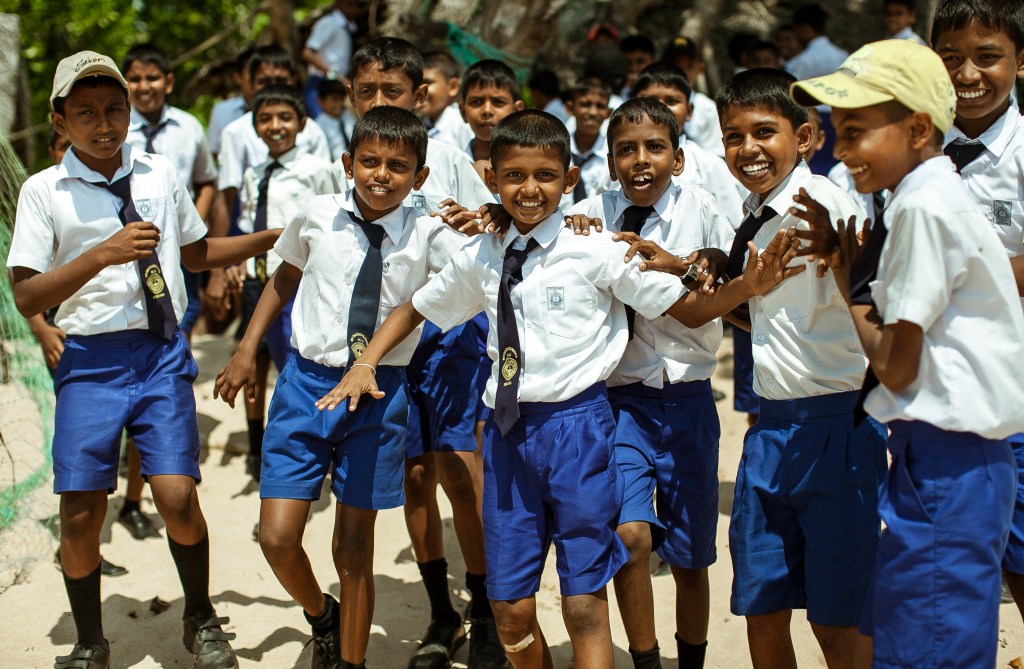

This article explores the development of children’s rights and agency in India through history, law, and literature. While children were once viewed mainly as dependents, modern acts like the Right to Education (2009) and Juvenile Justice (2015) affirm their rights to education, protection, and participation, though challenges remain in practice. National symbols, too, reflect this shift: Jawaharlal Nehru’s legacy and the celebration of Children’s Day highlight cultural recognition of children as the nation’s future. Literature, from R. K. Narayan’s Swami and Friends to Paro Anand’s No Guns at My Son’s Funeral, portrays young people as active agents confronting inequalities. Despite progress, issues such as child labour, early marriage, and gender disparities reveal persistent gaps. The article argues that children’s rights must be recognised as claims of young citizens, demanding both legal reform and cultural change.
When we speak of children’s rights and agency in India, we are not merely looking at laws on paper. We are looking at centuries of shifting cultural attitudes, historical silences, and, more recently, a growing acknowledgement of children as individuals with voices of their own. Agency, in this context, refers to a child’s ability to make decisions, express themselves, and influence matters that concern their lives. Rights, meanwhile, are the protections and entitlements guaranteed by law. Together, these ideas form the backbone of how we envision a society that truly values its youngest citizens.
“Agency, in this context, refers to a child’s ability to make decisions, express themselves, and influence matters that concern their lives.”
India’s recognition of children’s rights has deep roots, though not always in the modern sense of agency. Ancient Indian texts such as the Manusmriti and later pedagogical writings often emphasised the duties of parents and teachers toward children, but the child’s own voice was rarely acknowledged. Children were seen as dependents in need of guidance rather than individuals with rights.
The turning point came during the colonial period and post-Independence India. Laws were gradually introduced to protect children from labour, neglect, and exploitation. For instance, the Child Marriage Restraint Act of 1929 (commonly called the Sarda Act) was one of the earliest attempts to prevent the marriage of young girls. This law prohibited the marriage of girls under 14 and boys under 18 (later amended to higher ages). While it aimed to protect children, it also sparked debates about cultural practices versus legal intervention — debates that continue in different forms even today.
Alongside these legislative beginnings, independent India also carved out symbolic spaces to celebrate children. After the passing of Prime Minister Jawaharlal Nehru in 1964, November 14th — his birthday — was declared Children’s Day. Nehru, often affectionately called Chacha Nehru, believed that children were the foundation of India’s future and famously emphasised nurturing them with love, education, and freedom. While Children’s Day is often marked with cultural programs and school activities, it also reflects a deeper historical acknowledgement that children are central to the nation’s progress. This cultural tradition complements the legal reforms of the time, reminding us that children’s rights are not only about protection from harm but also about celebrating their presence and potential in society.
Post-Independence, India took significant steps toward framing child protection as part of its constitutional and legal framework.
Article 15(3) of the Indian Constitution empowers the State to make special provisions for children, recognising that equality sometimes requires tailored protections. For instance, government initiatives such as the Mid-Day Meal Scheme and free uniforms under the Right to Education Act reflect how such provisions are designed to promote equal opportunities for children from disadvantaged backgrounds.
Article 21A (Right to Education, added in 2002) makes free and compulsory education a fundamental right for children aged 6–14. This is tied to the Right of Children to Free and Compulsory Education Act, 2009 (RTE Act), which ensures that schools must provide not only admission but also a child-friendly learning environment.
The Juvenile Justice (Care and Protection of Children) Act, 2015 (JJ Act), focuses on two categories: children in conflict with the law and children in need of care and protection. It recognises rehabilitation and reintegration as more humane responses than punishment, showing a shift toward respecting a child’s developmental needs.
The Prohibition of Child Marriage Act of 2006 raised the legal marriage age to 18 for girls and 21 for boys, addressing a persistent issue of agency, particularly for the female child.
The Protection of Children from Sexual Offences (POCSO) Act, 2012, created a legal framework for handling cases of child sexual abuse. It was groundbreaking because it defined various forms of abuse and provided for child-friendly courts, recognising that justice must be accessible to children.
Each law attempts to not just shield children from harm but also to position them as active stakeholders. However, translating these legal provisions into practice has always been the real challenge.
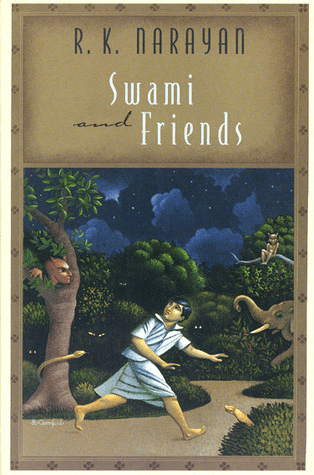
While laws formalise rights, literature offers a glimpse into how societies imagine children and their capacities. Indian children’s literature often reflects tensions between protection and freedom. Books such as R. K. Narayan’s Swami and Friends (1935) portrayed children navigating authority, friendship, and small rebellions, giving us one of the earliest fictional accounts of children’s everyday agency.
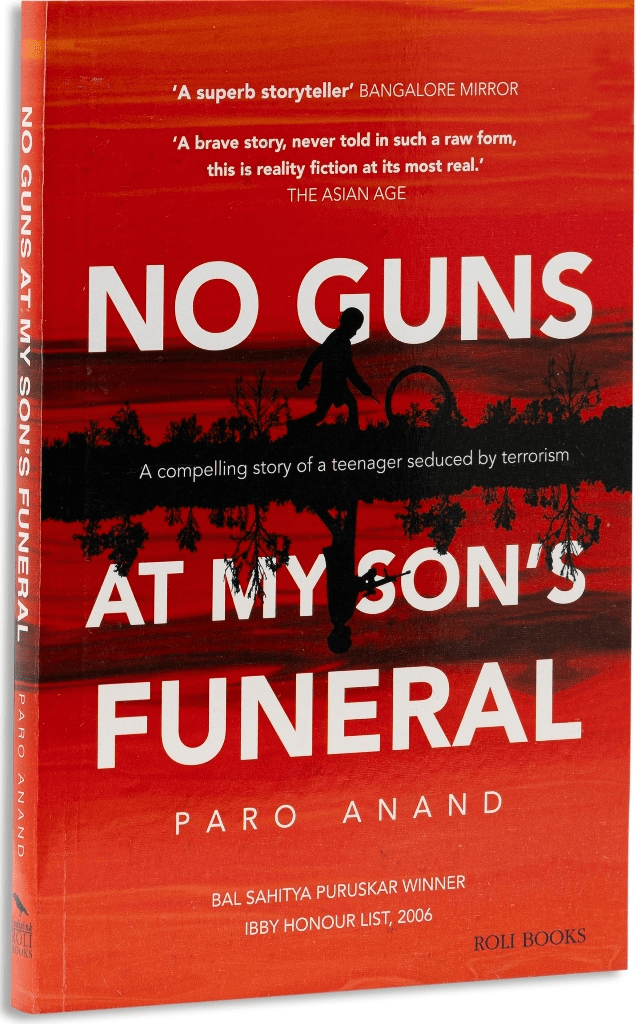
Later, writers like Paro Anand in No Guns at My Son’s Funeral (2005) tackled heavier issues such as terrorism and children’s involvement in conflict, challenging the idea that children’s lives are apolitical.
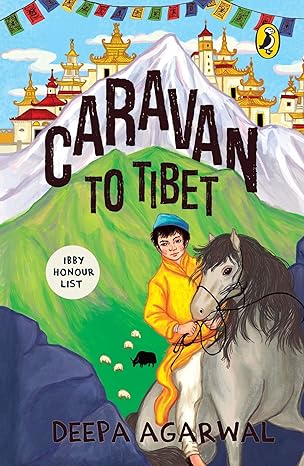
Similarly, Deepa Agarwal’s Caravan to Tibet (2007) showcased how young protagonists could be resilient, decision-making agents within historical and adventurous contexts. See more of the book here.
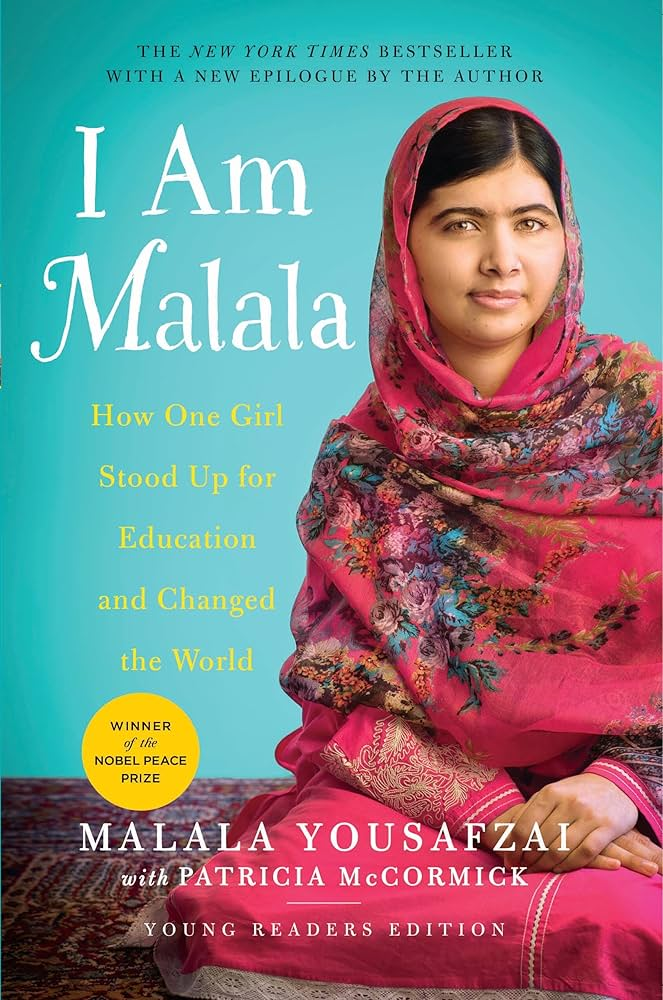
International books, too, have influenced the discourse in India. Malala Yousafzai’s memoir I Am Malala (2013) resonated deeply with Indian readers because it echoed familiar struggles around girls’ education.
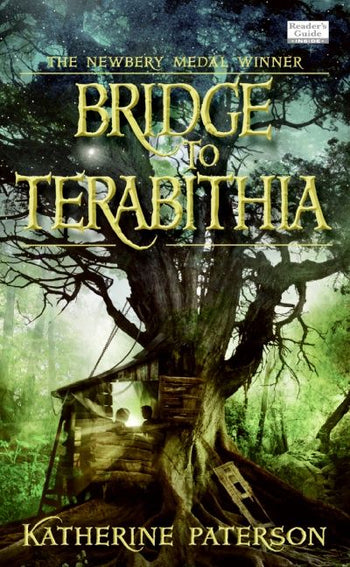
Meanwhile, fiction like Katherine Paterson’s Bridge to Terabithia (1977) has been embraced in India for its sensitive portrayal of childhood imagination and grief — expanding the idea of what counts as children’s rights: not just survival and protection, but also emotional well-being.
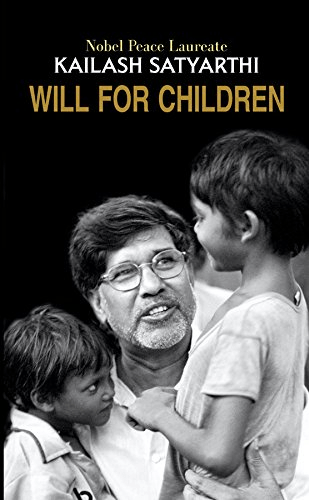
Nonfiction and activist literature also play a role. Kailash Satyarthi, the Indian Nobel Peace Prize laureate, has written extensively about child labour, particularly in Will for Children (2005). While harder to find online, details are available in print through Prabhat Prakashan publishers.
Books like these demonstrate that children’s agency is not confined to classrooms and homes; it extends to labour rights, survival struggles, and resistance.
Despite legal frameworks and growing awareness, India continues to grapple with violations of children’s rights. Child labour remains a pressing issue, particularly in the informal sectors. Though the Child Labour (Prohibition and Regulation) Amendment Act of 2016 prohibits the employment of children under 14, exceptions remain for family-based enterprises, which are often exploited.
The female child continues to face layered disadvantages. Early marriage, unequal access to education, and safety concerns in public spaces undermine the spirit of the laws intended to protect her. Reports of child sexual abuse remain alarmingly high despite POCSO. In rural areas, girls are more likely to drop out of school to help with domestic work, which limits their agency in the long run.
Safety is another deeply human concern. Recent high-profile cases of child abuse in schools and institutions have sparked debates on the adequacy of monitoring and accountability. It raises the question: do we see children as rights-bearing individuals, or do we continue to view them merely as extensions of families and communities?
When we read about children’s rights in India, it is easy to get lost in the language of law and policy. But on the ground, it is about very human struggles. A child forced to work in a bangle-making factory in Firozabad, a girl discouraged from going to school after puberty, or a boy silenced when he complains about abuse — each represents a story of agency denied.
Literature and activism remind us that children are not passive recipients of adult decisions. They are thinkers, creators, and leaders in their own right. Whether through a fictional hero like Swami or a real-life figure like Malala, children consistently demonstrate that they can and do resist, imagine, and demand better futures.
“Children are not passive recipients of adult decisions. They are thinkers, creators, and leaders in their own right.“
India has made progress — constitutionally, legally, and culturally — in recognising children’s rights and agency. Yet, it is not enough. Legal safeguards exist, but gaps in enforcement and social attitudes continue to harm children. Protecting children cannot stop at drafting laws; it requires confronting systemic inequalities, gender biases, and cultural practices that stifle young voices.
“Protecting children cannot stop at drafting laws; it requires confronting systemic inequalities, gender biases, and cultural practices that stifle young voices.”
For example, improving girl child safety requires more than raising the marriage age; it calls for safe transport to schools, campaigns against harassment, and community-based awareness about gender equality. Similarly, education access should not end with enrollment — it must include inclusive classrooms for children with disabilities, updated teaching methods, and environments that nurture creativity rather than rote learning.
Each year, India celebrates Children’s Day on November 14th, honouring Nehru’s belief that children hold the nation’s future in their hands. But the true spirit of this day cannot be captured only in cultural programs or token celebrations. It must translate into sustained action — ensuring safety, education, and space for children to dream and decide. Only then can we claim to honour Nehru’s vision, not just once a year, but in the everyday lives of children across India.
As a society, we must recognise that children’s rights are not a benevolent gift from adults but a rightful demand of the youngest members of our communities. Their voices — in law, in literature, and in lived experience — must not only be heard but acted upon.
Bibliography
- Agarwal, D. (2007). Caravan to Tibet. Puffin. Available at: https://archive.org/details/caravantotibet
- Anand, P. (2005). No Guns at My Son’s Funeral. Roli Books. Available at: https://rolibooks.com/product/no-guns-at-my-sons-funeral
- Narayan, R. K. (1935). Swami and Friends. Hamish Hamilton. Available at: https://books.google.com/books?id=KjwpT8sjNB4C
- Paterson, K. (1977). Bridge to Terabithia. Harper & Row.
- Satyarthi, K. (2005). Will for Children. Prabhat Prakashan. (Print edition available through Indian bookstores).
- Yousafzai, M., & Lamb, C. (2013). I Am Malala: The Girl Who Stood Up for Education and Was Shot by the Taliban. Little, Brown and Company. Available at: https://www.amazon.com/Am-Malala-Education-Changed-Readers/dp/0316327913
 SLIDING MAGAZINE
Leave a comment