

In this opportunity, I want to bring forward an example in which the Western idea of child agency is put to the test, one that reveals the tensions between theory and lived experience in the Global South. Specifically, it is the story of how child activism mixed with environmental advocacy led to exile.
Children are not subject to the adult regime; instead, we adults need to provide a world in which children can live freely, safely and with dignity. That sounds like a coherent thought, doesn’t it? Even though children need guidance and protection, we also believe they are entitled to their own opinions and capable of acting on their own will. This belief is summarized to child agency.
One of the earliest ways this idea took shape was through education. In the early 20th century, for example, the Montessori method emerged as a revolutionary pedagogical model. It shifted the paradigm from the authoritarian, teacher-led, one-size-fits-all model of education to a personalized and inclusive model that nurtured the child’s needs and unique potential.
Today, the notion of agency has extended beyond the classroom. Forms of civic participation carried out by children take multimodal formats, with the internet being one of the most popular ones. Children and teenagers can find in online communities new ways of communication and connectedness. Despite the internet’s inherent risks, both adults and young people often view it as a democratic arena for discussion — a space that can foster the empowered, agentic child we like to imagine. Yet, this ideal can take unexpected turns, and there are risks we adults may be overlooking.
In this opportunity, I want to bring forward an example in which the Western idea of child agency is put to the test, one that reveals the tensions between theory and lived experience in the Global South. Specifically, it is the story of how child activism mixed with environmental advocacy led to exile. But before walking down that troubled path, let’s take a stroll through the sweeter one of imagining the “leaders of the future.”
From Audience to Public
Children in our mediatized and globalized world moved from being the audience to whom various contents are directed — from politics with laws in their favor to entertainment with products designed for their pleasure — to becoming part of the public. Young people are taking initiatives, becoming leaders, and using the internet to carry out activism. Hence, they turn into a collective that engages with media texts, as Silverstone (2005) would define it, beyond being mere recipients.
The United Nations Convention on the Rights of the Child (UNCRC) includes a section on liberty and participation rights, emphasizing children’s ability to express their views and influence matters that affect them. Scholars such as Tisdall (2015) argue that children’s participation has evolved from simple presence to a genuine entitlement to decision-making. In this sense, child activism is an effective way to endorse and promote child agency while learning about and promoting children’s rights.
A case of Child Activism
As we might know, child activism is not a new phenomenon, however, social media affordances promote the spreadability of these initiatives, making them more visible and allowing them to potentially achieve intended goals or gain new advantages and acceptance.
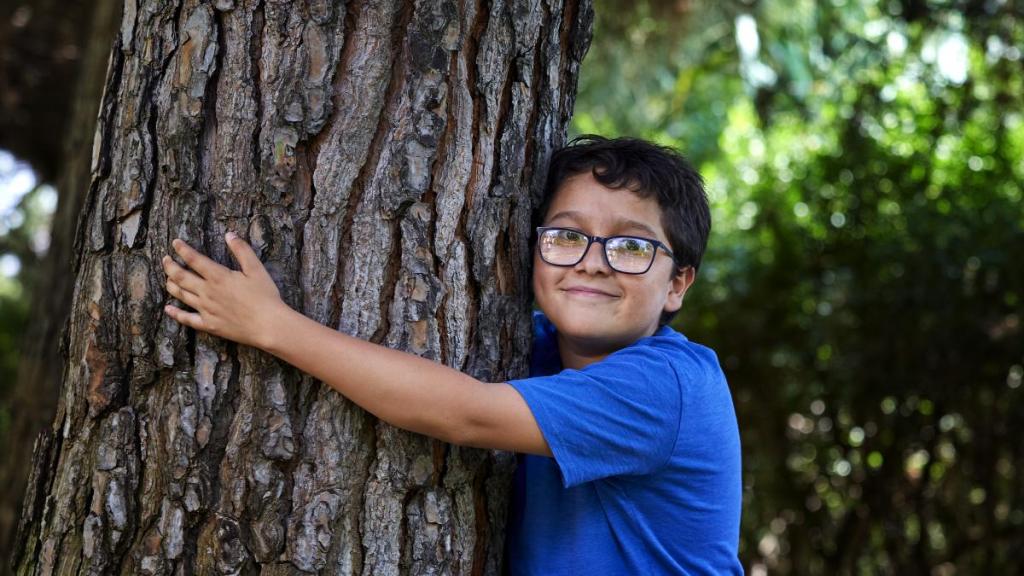
That was the case of Francisco Vera Manzanares, also known on social media as Francisco Activista, a young Colombian activist, once a child activist, who speaks about the climate and the environment. He is described on his blog as a human rights defender and founder of Guardianes por la Vida, an organization dedicated to “defending the right to live on a healthy, clean, and dignified planet.”
Francisco’s story embodies the modern ideal of the empowered child: one who is named, educated, understood, listened to, and protected — as outlined in the essential rights of the child. Yet, the attention that accompanies such activism often carries multiple outcomes. The same digital and media ecosystems that amplify young voices can also expose them to scrutiny, politicization, and even harm. Through Francisco’s experience, we can begin to question how adult-led digital cultures shape, support, and sometimes endanger the very agency they claim to celebrate.
Reception Overview
At nine years old, Francisco founded Guardianes por la Vida, and soon after began attracting national media attention. There was no doubt that Francisco was an eloquent, conscientious, and innovative child (now a teenager) who used his voice not only to protest but also to organize, lead a community, and stand for his beliefs. As he began to speak publicly (via social media and local press) about environmental issues, Vera became increasingly known in Colombia. Multiple interviews and international recognition made him a national pride.

However, not all the attention he received was positive. At just eleven years old, Francisco began receiving death threats after publicly speaking out about climate issues. For his safety, he relocated to Spain, where he has continued his activism. Over time, his online presence has evolved and it’s no longer limited to eco-activism, his content now spans global conflicts, animal welfare, educational videos, environmental justice, among others. On his website, visitors can trace his journey and see how he has remained committed to his cause, even in exile.

Time to Ask Some Questions
With this being said, how does it happen that an agentic modern child like Francisco causes so much commotion in the adult world to the point of receiving death threats and being forced to leave his country for his own safety? What aspect of “simply fulfilling the role of a child” unsettles adults so deeply, and why does it appear so threatening?
There may be no single answer, but by reviewing media responses to his persona, a telling paradox unravels: he is simultaneously seen as a threat and infantilized. In many interviews, Francisco is asked questions that would seem patronizing if directed at an adult environmental advocate. For instance: “What role do children and youth play in stopping climate change?” or “What can we do in our daily lives to contribute our grain of sand?” (RedEscuelas, 2023). In some other, he had to explain what his answer was to the recurrent question of “why didn’t you decide to be a normal kid?”, explaining that having ideas of our own could easily label anybody as non-normal. These sorts of events make us wonder what kind of person would dare to ask these questions to an adult activist?
While it’s not inherently problematic for multiple platforms to inquire about his work— after all, such exposure can be helpful in reaching more people– it’s important to think critically about the way we address young activists, and how our tone may reveal underlying biases.
Another critical point in his digital activism is the profitability of his image in traditional national media. At the beginning of his career, he gave interviews and opinion columns were written praising his work. Headlines read what “the child activist” had to say, and even today it’s easy to find articles featuring his name in reports of every international conference he’s attended.
Additionally, having a figure like Francisco in mainstream media has proven to carry symbolic capital. A clear example of this is when one of the most popular national magazines published in their print version a fabricated interview attributed to Francisco. In this interview the young activist expressed his desire to become president of Colombia one day. Even though it was proved to be a false interview, people did not shy away from giving their opinion. One of them was a grown up journalist advising him on social media to pursue a different career path. It is not clear why a “serious” magazine would attempt to portray this image of the young activist, or what was the reasoning behind the journalist’s entitlement for vocational council, but this example shows two things: first, that Francisco’s image and opinions can be used to serve different hidden agendas and, secondly, that these two events reveal a deeper tension: his agency is celebrated only as long as it serves adult narratives.
To conclude
The presence of Francisco, the child activist, causes controversy among the Colombian public. His existence is paradoxical in itself: it provokes admiration and condescension, adulation and repression, fascination and threat. Francisco’s story reminds us that the same structures that praise children for their bravery often fail to protect them when their voices challenge established power. Perhaps the lesson is not only to celebrate young activists but also to question the adult frameworks. True support for children’s activism requires not just admiration but shared responsibility, and one extra step we should take into consideration is adult-led media engagement in regards to child agency.There might be a chance of learning more about children by studying how we – adults- behave towards them.
References
- Livingstone, S (2005) Introduction: audiences and publics : when cultural engagement matters for the public sphere. In: Livingstone, S., (ed.) Audiences and publics : when cultural engagement matters for the public sphere. Changing media – changing Europe series (2). Intellect Books, Bristol, UK, pp. 9-16. ISBN 1841501298
- Tisdall, E. K. M. (2020). Challenges for children’s participation: Child activism for ending child marriage. Children & Youth Services Review, 108, Article 104568. https://doi.org/10.1016/j.childyouth.2019.104568
Recommended by the author:
- Nissen, S., Wong, J. H. K., & Carlton, S. (2021). Children and young people’s climate crisis activism: A perspective on long-term effects. Children’s Geographies, 19(4), 1-7. https://doi.org/10.1080/14733285.2020.1812535 Tandfonline+1
- Cuevas-Parra, P. (2024). Child identity-based activism in Brazil: Wearing Afro-style hair to contest discrimination, racism and oppression. Children & Society, 38(4), 979-994. https://doi.org/10.1111/chso.12772
 SLIDING MAGAZINE
Leave a comment