

A woman returns to a secluded inn from her past, only to discover that time has not touched the place—or the people within it. As whispers coil through the halls and the enigmatic Seraphine reveals the inn’s true nature, Evelyn must fight against both supernatural forces and human obsession to escape before she becomes another memory trapped within its walls.
1
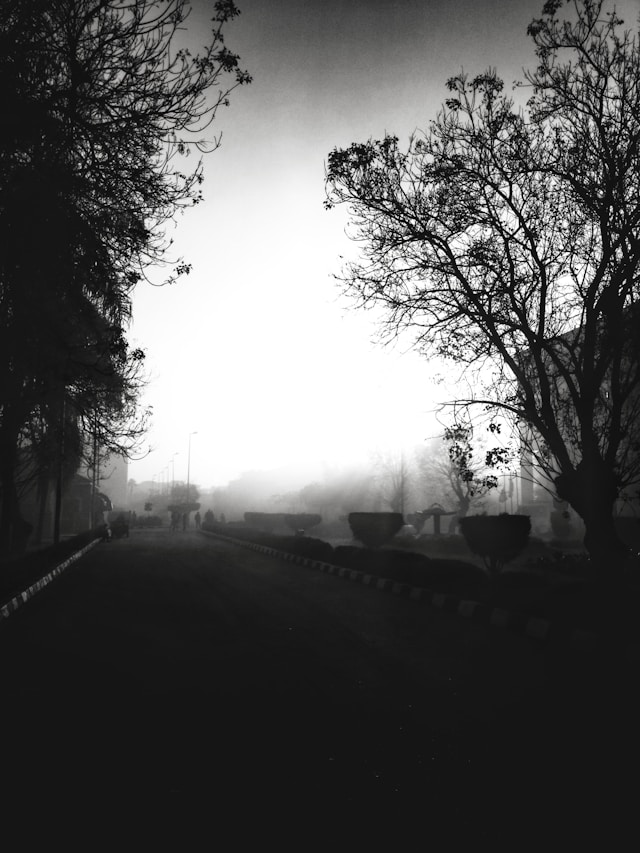
The road to Mavis Pierre stretched endlessly ahead, a narrow ribbon of asphalt threading through wheat fields turned to shadows in the dusk. Evelyn Marlowe gripped the steering wheel tighter than she needed to, the hum of the tyres loud against the silence pressing in on her. She had driven this way once before, years ago, when Adrian had whisked her away on one of his theatrical whims. “A hidden jewel of an inn,” he’d called it, laughing in the sunlight, his voice bright with the kind of reckless charm she had loved and later learned to fear.
Now, she travelled alone. Thomas—sweet Tommy—was safe with friends in the city, but the thought of his small hand clutching hers still lingered on her palm. She told herself this trip was a reprieve, a chance to breathe, to reclaim some piece of herself that had vanished after Adrian’s disappearance and the years of exhaustion that followed. But she had chosen this inn for a reason—because it was the place Adrian once brought her, the place that had felt enchanted before it soured. Maybe, she thought, if she could stand here on her own terms, she might prove to herself that he no longer held power over her. But even as she whispered reassurances to herself, something deeper whispered back: You shouldn’t be here.
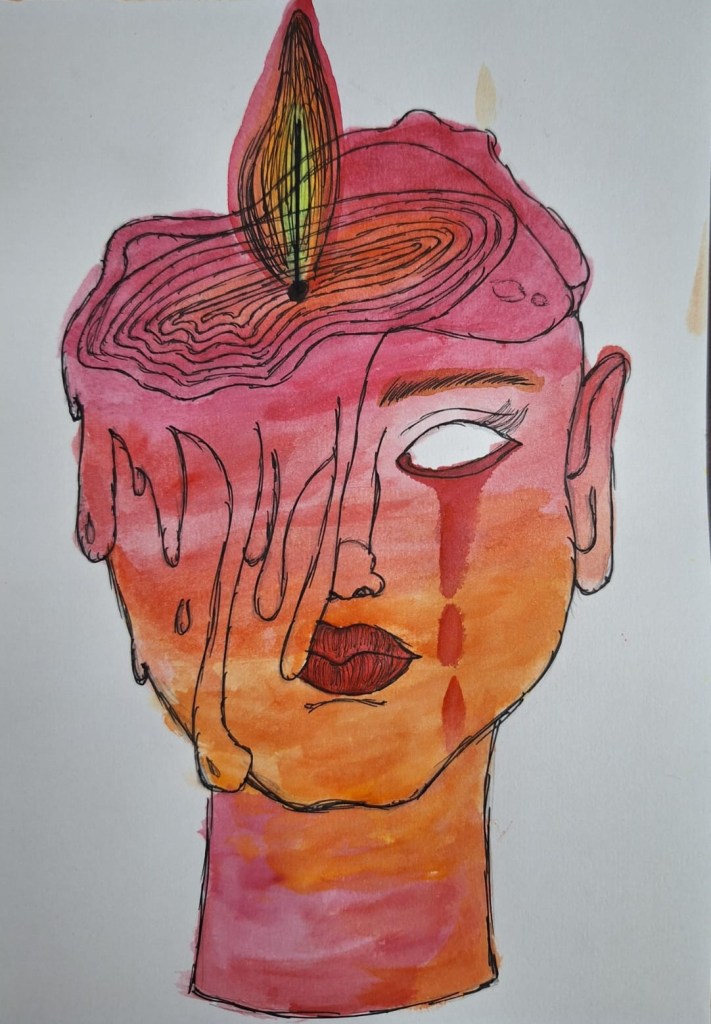
© Joshna Joy
She almost laughed at herself. Talking to shadows now—great, maybe she really was losing it.
Her phone flickered on the passenger seat. The screen showed the time as 8:13 p.m. Her wristwatch, however, read 6:47. She frowned. Bad reception, faulty batteries—she dismissed it, though unease stirred in her chest. She smacked the watch against her wrist as if that would fix it. Nothing. Damn it.
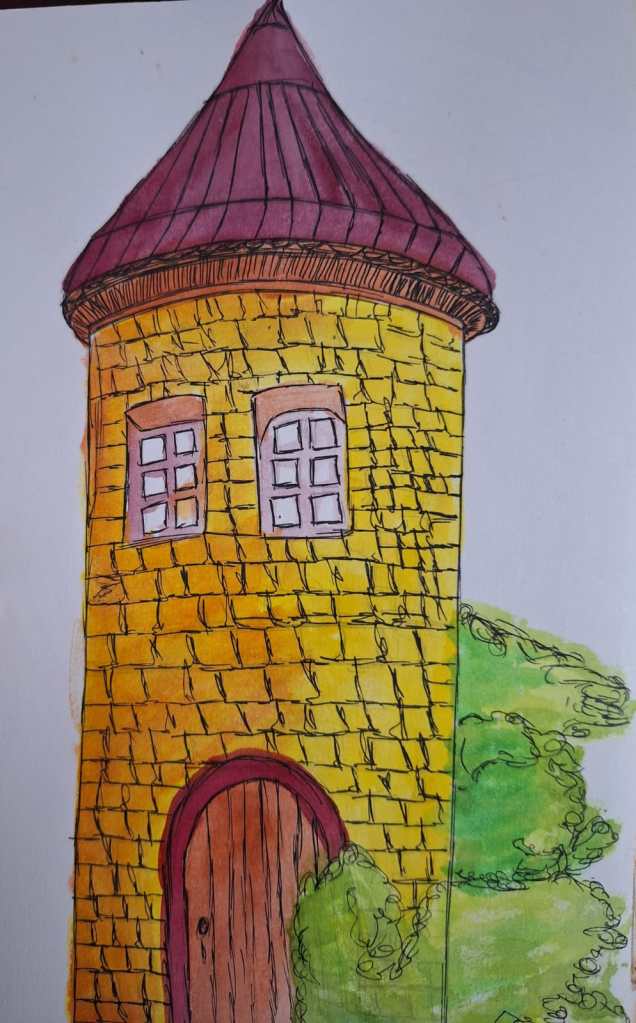
The sun had already slipped behind the fields when the inn appeared. Its roof rose like a jagged silhouette against the purple horizon. For a moment, Evelyn thought she saw lanterns burning in the upper windows, though no smoke curled from the chimney. The gravel crunched beneath her tyres as she slowed, heart thudding with something between dread and nostalgia.
It looked exactly as she remembered—unchanged, impossibly so. And that, more than anything, made her shiver.
2
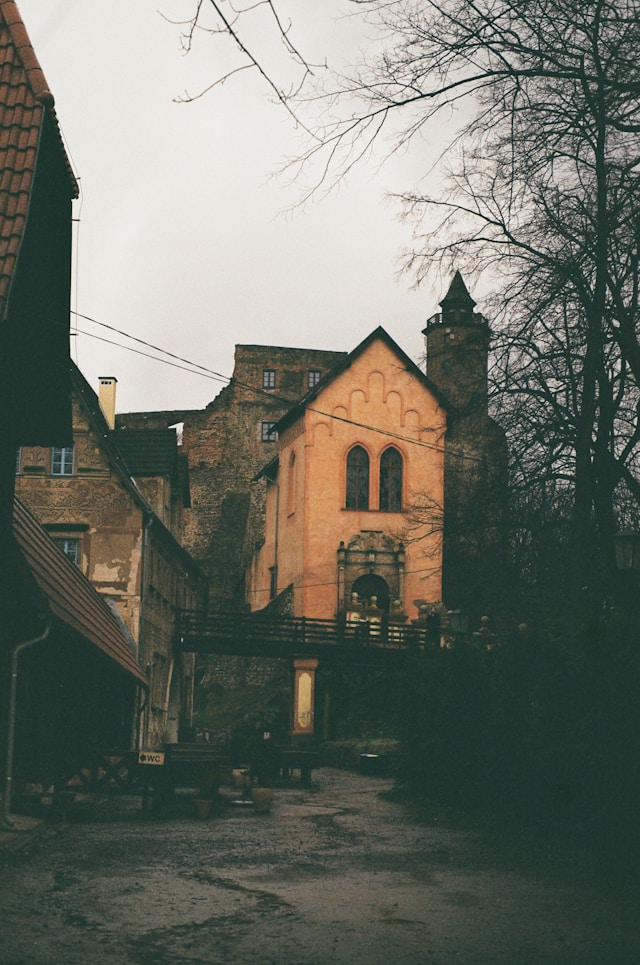
Evelyn parked in the gravel drive, the engine’s rumble fading into the kind of silence that felt staged, as though the world itself were holding its breath. The inn loomed before her: tall, gabled, its façade draped in ivy that seemed too green for late summer. The windows reflected no light, only a depthless black, like unblinking eyes set into the stone.
She hesitated at the door, hand poised over the brass handle. It was cold, unnaturally so, as if it had not been touched for years. Her palm stung with the cold, like she’d grabbed metal in mid-winter. When she pushed, the hinges creaked with a groan that reverberated through the hall beyond.
The air smelled faintly of lavender, though beneath it lingered another odour, metallic and sharp—iron, or perhaps blood. The thought made her stomach lurch. She swallowed hard, forcing it down.
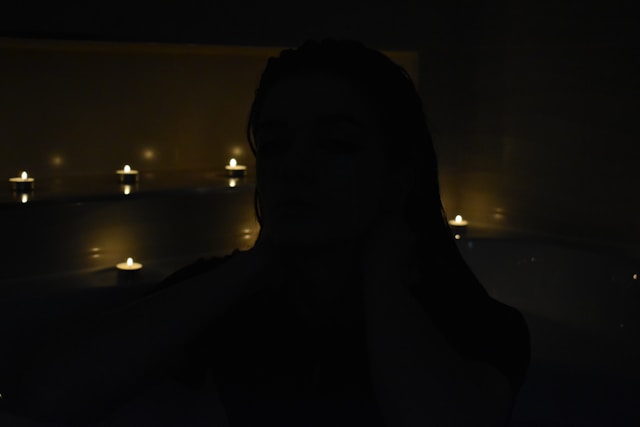
At the reception desk sat a woman Evelyn remembered too well. Seraphine Duval. She looked unchanged from years ago—her hair a glossy raven-black, her gown of deep velvet too elegant for an innkeeper. She might have stepped out of a painting, some melancholy aristocrat preserved against time.
“Welcome back,” Seraphine said. Her voice was soft, yet it carried through the hall like a hymn.
Evelyn startled. “You remember me?”
A faint smile curved the woman’s lips. “I remember all my guests.”
Evelyn almost said, That’s creepy, but bit her tongue.
There was something in the way she spoke that made Evelyn’s skin prickle, as if beneath those words lay something unsaid, something claimed. She took her key without daring to linger, retreating toward the staircase that rose in a sweep of faded red carpet.
The inn was quiet, too quiet. The grandfather clock in the hall ticked steadily, yet when she passed another clock on the landing, it showed a different time—an hour earlier. Evelyn frowned, pausing, then told herself she must have misread it.

As she climbed, she passed a library with the door ajar. Within sat a man bent over a typewriter, the clack of the keys sharp and urgent. He glanced up when she slowed, his eyes pale blue, his expression startled—as though caught doing something forbidden. For a heartbeat, he stared, then smiled faintly and returned to his work.
Evelyn almost moved on when it came: a whisper, dry as leaves.
Go away.
She froze, heart hammering. The man hadn’t looked up. His fingers danced across the keys, relentless. The whisper seemed to seep from the walls themselves, curling around her ear. Her knees nearly buckled. She gripped the bannister so hard her knuckles ached.
She quickened her pace, retreating to the safety of her room, though even there, with the door locked, she could not shake the feeling that the house itself had spoken.
3
Morning came grey and reluctant, the light filtering through Evelyn’s curtains already dimmed by heavy clouds. She had slept poorly, dreams crowded with whispers and shifting shadows that dissolved whenever she opened her eyes.
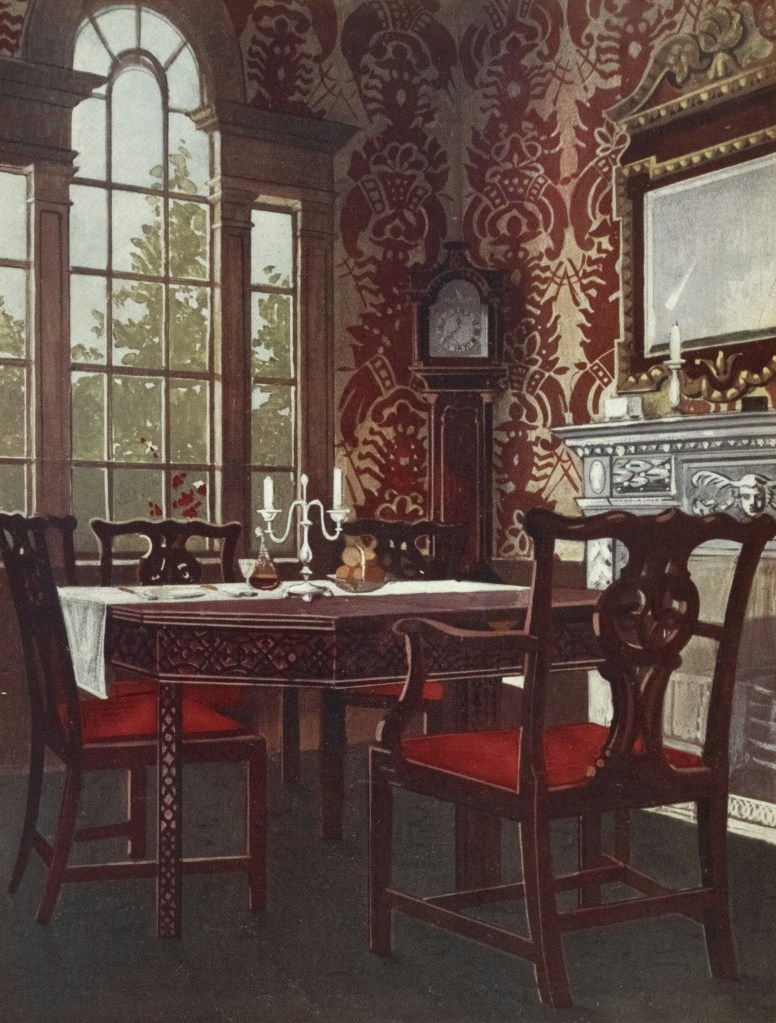
By late morning, her hunger drove her from the room. The dining hall was deserted, its long tables set with polished china but no other guests in sight. She settled for coffee and toast, then drifted back toward the library, her curiosity tugging at her despite the unease she still carried.
The library smelled of dust and old paper, the shelves towering to the ceiling like solemn sentinels. And there he was again—the man from last night. His typewriter clacked steadily, a fortress of stacked pages around him. He looked utterly consumed, as though the world outside his manuscript did not exist.
Evelyn tiptoed along the shelves, scanning the spines. She found old editions of Gothic novels, volumes of folklore, and even guest ledgers bound in cracked leather. When she reached higher, stretching to read a title, she stepped backwards—and collided with his desk.
The piles of paper wavered, then slid to the floor in a rush. Evelyn gasped, dropping to her knees to gather them. “I—I’m so sorry,” she stammered.
The man blinked, surfacing from his trance. For a moment, his eyes were strange—too sharp, too intent—but then he smiled, softening. “It’s all right. Mistakes happen.” His voice was low, almost melodic, with a faint accent she couldn’t place.
She handed back the stack, cheeks hot. “I didn’t mean to disturb you.”
“You haven’t,” he said, though he studied her longer than politeness required, as if committing her to memory. “I’m Nathaniel Dorian. But most call me Nate.”
“Evelyn Marlowe.”
The faintest flicker crossed his face at her name, though he masked it quickly. “A pleasure.”
They rose together, the silence between them carrying a charge Evelyn couldn’t define. Then, just as she turned to leave, the whisper returned.
Go away.
She stiffened, glancing around the shelves. Nate’s expression did not change. He returned to his typewriter, fingers resuming their relentless rhythm.
Perhaps he hadn’t heard it. Or perhaps he had, and simply chose not to acknowledge it.
Evelyn walked quickly back to her room, clutching the key in her fist. But the words lingered in her skull, hissing like a warning she could not ignore.
4
By the second day, Evelyn began to notice patterns—tiny omissions that pricked at her mind like thorns. At breakfast, the eggs were rich, the bread warm, the coffee dark and smooth. But when she asked for garlic butter—something simple, ordinary—the young server stiffened, glanced toward Seraphine, and replied too quickly, “We do not serve garlic.”
No silver cutlery gleamed on the table, only dull pewter knives and forks that looked older than the building itself. Even the mirrors on the walls seemed wrong, their glass tarnished, warped, as if they rejected true reflections. Evelyn’s own face appeared pale and elongated within them, her eyes too dark. She leaned closer, squinting. Maybe it was just bad glass. Old mirrors did that… right?
At first, she tried to explain these things away. Old houses had quirks, superstitions. But unease gnawed at her. That evening, restless, she returned to the library.
Nate sat in his usual place, shoulders hunched, typewriter clacking like a heartbeat. When he saw her, he paused, leaning back as though he had been expecting her.
“You’ve been watching the house,” he said. It wasn’t a question.
Evelyn hesitated. “Only… I noticed there’s no garlic. No silver.”
He smiled faintly, the expression both kind and unsettling. “Yes. That’s deliberate.”
Her pulse quickened. “Deliberate?”
“Have you never heard the stories?” His voice dropped conspiratorially, his eyes gleaming with intensity. “This inn—it is older than its name. Some say Mavis Pierre is not a name at all but an anagram. Vampire Rise. Fitting, isn’t it?”
Evelyn’s mouth went dry. “That’s ridiculous.”
“Is it?” Nate leaned forward, his words quickening, almost fevered. “No garlic, no silver, no sunlight. Look around—the windows are shaded, the ventilation is designed so they never need to be opened. This place is a cage. A sanctuary. Depending on who you believe.” He wasn’t speaking like a man trying to prove a theory true; he spoke like someone entranced by the possibilities, a storyteller savouring every thread of a legend, whether or not it made sense.
“She wanted to tell him to shut up, to stop feeding her nonsense. Instead, she just sat there, pulse drumming. Her heart thudded. “You’re serious.”
“I’m a writer. I collect legends. This inn has more than most.” He leaned closer, lowering his voice until she felt his breath against her ear. “And tonight… is the full moon. They say it’s when restraint breaks. When the hunger is strongest.”
A chill coiled around Evelyn’s spine. She wanted to laugh, dismiss him, but something in his tone rooted her to the chair. It was not the thrill of someone sharing a ghost story for amusement—it was conviction.
“You’d do well,” Nate murmured, “to lock your door. And keep to your room.”
His eyes held hers, too long, too intently. Then, as though a spell had broken, he leaned back and resumed his typing, the keys hammering out some unseen fate.
Evelyn left quickly, the echo of his words following her into the empty corridors. She told herself it was nonsense, a story spun by an eccentric man. And yet, when she passed Seraphine on the staircase, the landlady smiled in that sorrowful, knowing way— and for the first time, Evelyn wondered if she was prey.
5
By the time the sun dipped low, a hush fell over the inn that Evelyn had never heard in any living place. Not the shuffle of staff, not the creak of floorboards, not even the distant hum of voices. It was as though the building itself had been abandoned in the span of an hour.
Dinner was delivered to her room on a tray by Seraphine herself—steak, seared but crimson at the centre, juices running across the porcelain. “Eat before the sun is gone,” Seraphine murmured, her dark eyes lingering too long. “Tonight is not safe for wandering.”
Evelyn wanted to ask why, but her voice lodged in her throat. She nodded instead, locking the door as soon as the landlady left. She ate mechanically, her stomach tight with dread, each mouthful tasting faintly metallic. When the last light of day bled from the sky, she drew the curtains tight, shoved a chair against the door, and sat trembling with her phone in her lap.
No signal. No clock that matched the time. The seconds seemed to stretch thin, warped by the silence pressing at the walls.
At first came the scratching—soft, deliberate, like fingernails against wood. Then the whispers, closer now, curling under the door: Evelyn. Come out.
She pressed her hands over her ears, heart hammering. This was absurd, she told herself. Exhaustion, paranoia, the nonsense Nate had planted in her mind. Yet when the knocking began—hard, frantic—she screamed.
“It’s me!” A voice she recognised, muffled but urgent. “Evelyn, open up—it’s Nate!”
Relief surged, quickly tangled with dread. Why was he here? Why did he sound so desperate? She hesitated too long, and the pounding grew more frantic, the handle rattling.
“Please,” Nate begged. “It’s not safe. I saw something—at my window. A woman. She was watching me. Let me in.”
Every instinct screamed to keep the door locked. Yet the thought of someone else alone in this nightmare—someone human—was unbearable. Evelyn lunged forward, sliding the bolt back. Nate slipped inside, slamming the door shut behind him. His chest heaved, sweat glistening on his brow.
“Thank God,” he gasped. “You’re all right.”
Evelyn sagged against the wall, clutching her arms around herself. “What’s happening here?”
Nate glanced at her, then away, paced the room, his movements restless, his body carrying the wild, cornered energy of something caged. “I don’t know. But the rumours—they’re not just stories. There’s something in this place. I told you not to leave your room. We need to stay together.”
The scratching returned, louder now, on the windowpane. Evelyn’s stomach lurched when she realised the window was three stories up. Something outside was clawing to get in. Her throat tightened. Three stories up—nothing should be there. Nothing.
She grabbed Nate’s arm. “What do we do?”
He turned to her, and in the dim lamplight, his eyes looked wild, gleaming with something she couldn’t name. “We wait,” he said. “And we don’t sleep. Not tonight.”
They sat together in silence, the inn groaning around them, shadows deepening. Every tick of the clock sounded like a countdown. Evelyn could not shake the feeling that she had not let safety into her room—she had let danger in.
6
Morning light crept through the curtains, pale and uncertain. Evelyn awoke to an odd stillness, as though the inn itself were holding its breath. Nate was gone. Her door was cracked open, and across the hallway, he stood by the stairwell, his face drawn, eyes unfocused.
“Evelyn,” he said—but his voice trembled with something Evelyn didn’t recognise. Not fear, exactly. Obsession.
“I’m sorry,” he began, hands twisting together. “I—I couldn’t let you leave. You don’t understand. You’re… perfect.” Her skin crawled at the word, like he’d touched her without moving.
Something cold settled in her chest. “Perfect?” she echoed, voice small.
Nate blinked rapidly. “Yes. You’re the hero of my story. My book. Everything I’ve worked toward. I… I wasn’t writing a manuscript just for me—I was writing it for you.”
Evelyn stepped back. “This is real life.”
“Reality is messy.” He seemed to shrink into himself. “I wanted to protect you. Keep you safe. Keep you with me.” His eyes glistened.
Evelyn forced calm into her voice. “We need help. I want to leave.”
Nate closed the distance between them, voice urgent. “They won’t let you go—Seraphine won’t—”
She felt that edge of panic she’d tasted before. Still, she squared her shoulders. “Let me call someone. Let me do anything.”
He shook his head, stepping back. “Wait,” he whispered, “please just… please don’t go. Not yet.”
Evelyn opened her mouth to argue, but at that moment, the door swung shut behind her—with no visible hand to pull it. The inn groaned in response, and even within the dim hall, Evelyn realised the danger wasn’t ever just Nate’s obsession. For all her fears, Evelyn had always suspected the inn itself was wrong, older and darker than it seemed. But now, with Nate’s fixation pressing in on her, she realised the danger wasn’t only in the inn’s ancient cunning—it was in how his obsession fed it, how human desperation could become part of its trap.
7
Evelyn’s pulse quickened as the corridor lights flickered, shadows leaping across the wallpaper. Nate froze mid-step, his mouth parting in a warning Evelyn never heard—because in the next moment, Seraphine appeared.
She didn’t walk so much as glide, her velvet gown whispering across the floorboards. There was no dust on her shoes, no trace of the night’s storms upon her hair. She looked as though she had been waiting for centuries, simply for this moment.
“Nathaniel,” she said softly, though the weight of her voice filled the entire hall. “You talk too much.”
Nate flinched, his hands clutching the bannister. “She deserves to know! She deserves the truth!”
Seraphine’s gaze flicked toward Evelyn. It was not unkind, but it was heavy—like being studied, weighed. “The truth is never a gift, Mr. Dorian. It is a burden.”
Evelyn’s throat felt tight. “What is this place?”
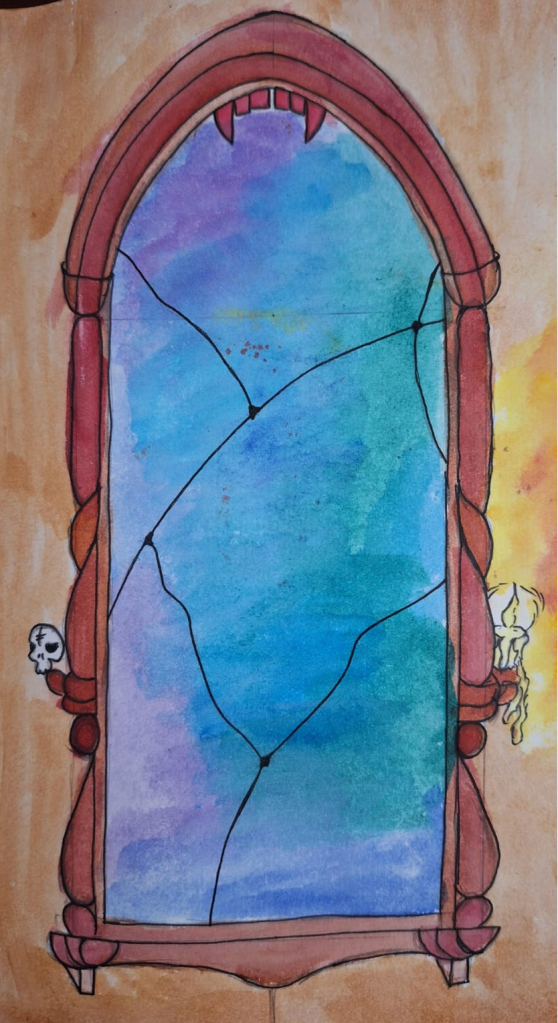
For a long moment, Seraphine didn’t answer. Then she turned toward a faded portrait on the wall—an image of a woman nearly identical to her, painted in the same gown she wore now.
©Joshna Joy
“This inn is not a house,” Seraphine murmured. “It is a keeper of memories. Some say a sanctuary. Others… a prison.” Seraphine said. The words clung to Evelyn’s skin. Did that mean the inn remembered for you—or that it stole what you most needed to hold on to? The thought chilled her: if forgetting was part of its power, then every moment she hesitated here risked erasing Tommy’s face, her life beyond these walls.
Evelyn’s throat went dry. A sanctuary, a prison—whatever Seraphine wanted to call it, all Evelyn felt was the weight of a lock turning on her soul.
Evelyn’s eyes darted to Nate, who looked at her with fevered intensity. “I told you,” he whispered. “This is where they keep us—where stories never end.”
Her knees felt weak, but Evelyn forced her voice steady. “And me? Why am I here?”
Seraphine’s lips curved, neither cruel nor kind, but certain. “Because you came back. And those who return do not always leave.”
The chandelier above them trembled as if from an unseen wind. Evelyn thought she heard a chorus of whispers, threads of voices woven through the walls—pleading, warning, calling her name.
Seraphine’s eyes glimmered with a sorrow that almost seemed human. “You may think you chose this place, Evelyn Marlowe. But places such as these… choose you.”
The lights flickered once more, and for an instant, Evelyn saw her own reflection in the tarnished mirror across the hall. But it was not her—her features were sharper, her eyes pale and gleaming, her lips curled into a smile that was not hers.
She staggered back, clutching her chest. Whatever this inn was, it was already changing her.
8
Evelyn’s breath slowed until each inhale felt like it belonged to someone else. The whispers no longer frightened her; they lulled her, a soft chorus weaving through her mind like a lullaby she almost remembered from childhood. Every word told her to rest, to let go, to stop fighting.
Seraphine’s presence filled the corridor like a tide, velvet gown brushing against the faded carpet, her hand a cool weight on Evelyn’s shoulder. “You see, child,” she murmured, her voice threaded with something ancient and soothing, “you belong here. This place remembers you. It has been waiting.”The words slid through Evelyn’s mind like warm honey. Her thoughts began to blur. The road that had brought her here dissolved, her son Tommy’s small hand in hers flickered like a half-forgotten dream, and even her own name—Evelyn Marlowe—sounded distant, as if it belonged to someone else. What remained was warmth, calm, a strange dreamlike comfort that held her in place.
Nate stood a few steps away, trembling, his lips moving. She saw his panic but couldn’t hear his voice—his words were swallowed by the inn itself. She only saw Seraphine’s eyes: fathomless, glimmering, unblinking. They told her all she needed to know. Stay. Rest. Be part of something eternal.
The house seemed to respond. Portraits along the corridor shifted, the painted faces of long-gone guests now watching her with wide, unblinking eyes. They weren’t strangers—they felt familiar, like people she might once have passed on the street. Their mouths curved into faint smiles, inviting, resigned.
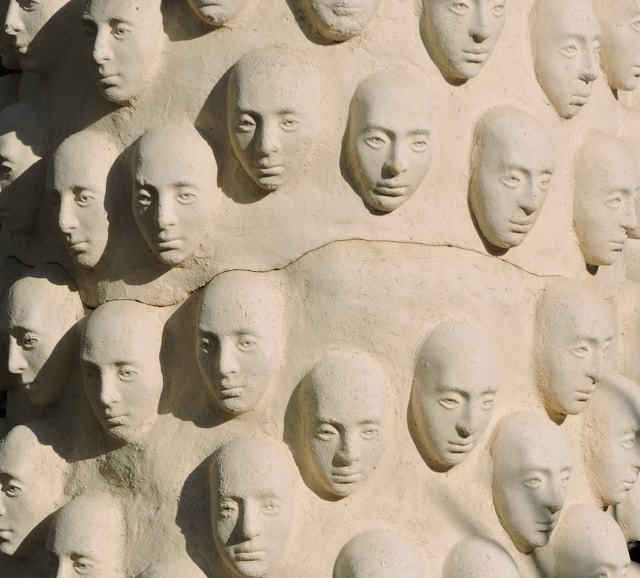
Evelyn turned to the warped mirror nearby. Her reflection was smiling too. Not a nervous smile, not one she chose—but calm, still, utterly claimed. Her hand lifted almost without her consent, reaching toward the glass. For a terrifying heartbeat, she thought she saw her reflection step forward, into her, pulling her deeper.
Her heart slowed, steady as a metronome. Her limbs felt heavy, her mind light. The weight of fear evaporated. She was no longer afraid, no longer lonely. She was chosen. She was bound. She was a story waiting to be added to Seraphine’s collection.
The walls breathed around her. The whispers grew louder, clearer: Stay. Stay forever.
Seraphine’s hand squeezed her shoulder, and Evelyn felt herself lean into it, her body trembling with surrender. It was easier this way. No more choices, no more running. Just belonging.
Her lips parted to whisper yes—
“Excuse me?”
The voice cut through like a bell.
Evelyn blinked. The shadows rippled, faltered. At the end of the corridor stood a young woman with travel bags slung over her shoulder, her face bright with curiosity. She looked wonderfully, perfectly ordinary—alive in a way that made Evelyn’s heart lurch.
“Do you know where I check in?” the newcomer asked.The trance cracked. Evelyn’s breath came ragged. Tommy. His name seared through her chest like sunlight through storm clouds.
Seraphine’s hand tightened, her expression darkening. But Evelyn pulled back, stumbling toward the sound of life, of hope. For the first time since she had arrived, she remembered: she still had a choice.
The newcomer tilted her head, her suitcase straps slipping from her shoulder as she studied Evelyn’s pale face and Seraphine’s unnerving stillness. “Are you… all right?” she asked softly.
That simple question shattered the last thread of the trance. Evelyn’s breath returned in a gasp, jagged and real. She staggered forward, her voice raw. “We have to go. Now.”
Seraphine’s smile faltered, the calm mask cracking into something sharper. The portraits on the walls shifted, painted eyes narrowing in disapproval. The house itself groaned, its beams shuddering as if protesting Evelyn’s rebellion.
“You cannot leave once you’ve been seen,” Seraphine whispered, velvet voice tightening. “The inn has already chosen you.”
But Evelyn was already moving. She seized the stranger’s hand, fingers locking in a desperate grip. “Run,” she hissed.
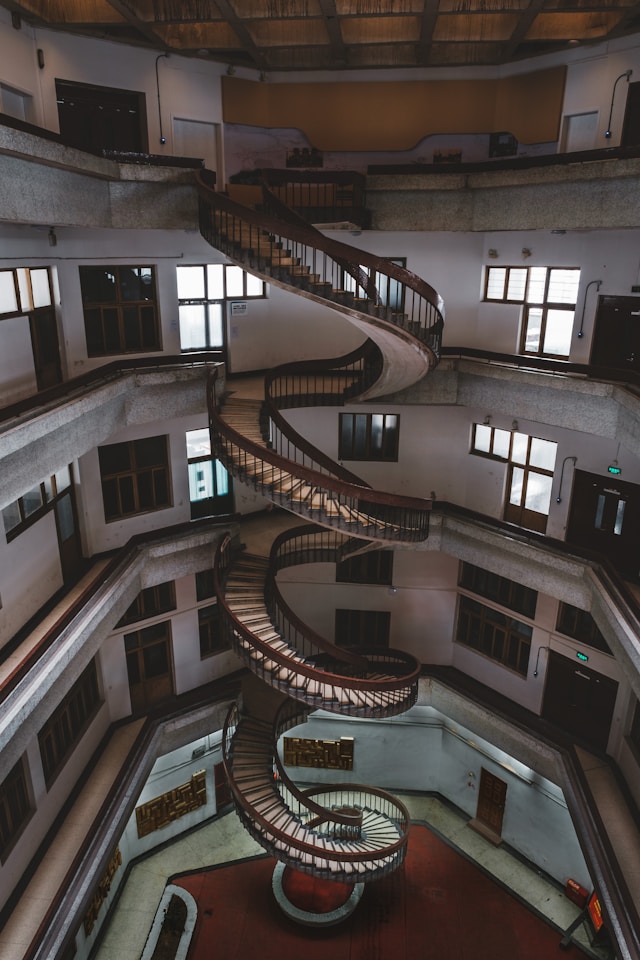
The two women bolted down the corridor. The floorboards moaned underfoot, doors slamming shut one by one as though the house itself were sealing their fate. Her legs burned; she tasted blood where she’d bitten her lip. Don’t stop. Don’t stop. The lamps flickered, then flared, throwing monstrous shadows against the wallpaper. Evelyn could hear the whispers rising into a furious chorus—no longer coaxing but commanding. Stay. Stay.
Nate’s voice rang out behind them, half-plea, half-warning. “Don’t leave me! Don’t—” His cry was cut short by the thunderous slam of another door, sealing him in darkness. Evelyn’s throat clenched, but she didn’t dare look back.
Down the staircase they fled, Evelyn’s legs burning, lungs heaving. The stranger—young, determined—yanked her along when she faltered. “This way!” she cried, her voice fierce, pulling Evelyn toward the entry hall.
The front door loomed, impossibly far, the shadows stretching like elastic with every step. For a terrifying moment, Evelyn thought the hallway would never end—that the inn was reshaping itself to trap them inside forever. The walls seemed to lean inward, narrowing, suffocating.
But then—suddenly—it was there. The door. Real, solid, framed in the faint silver of moonlight.
Evelyn hurled herself forward, grabbing the handle. It seared cold against her palm, like gripping ice, but it turned beneath her desperate strength. The door burst open, and they stumbled out into the night air.
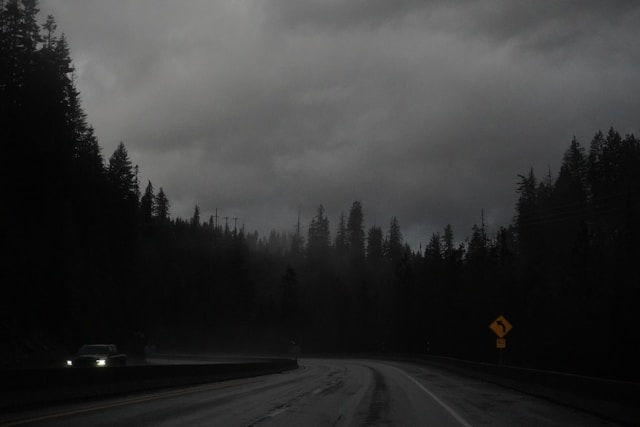
Cool wind slapped her face. The sky above was scattered with stars, vivid and sharp, as though mocking the suffocating dark inside. Evelyn gulped the air greedily, her chest heaving. The inn behind them stood silent, its windows glimmering faintly like a thousand watching eyes.
The stranger bent, catching her breath. “What was that place?”
Evelyn shook her head, her voice trembling. “A trap,” she whispered. “It doesn’t matter. We’re out.”
At the edge of the gravel drive sat a small hatchback, its paint dull from dust, still warm from its long journey. The newcomer fumbled for her keys, her hands shaking. Evelyn urged her on, glancing over her shoulder at the inn that seemed to lean toward them in the moonlight.
“Hurry,” she whispered. “Please, hurry.”
The locks clicked open. They climbed inside, slamming the doors, the interior smelling faintly of coffee and pine air freshener. Evelyn clutched the seatbelt as though it were a lifeline.
The engine sputtered to life. Gravel sprayed behind the tyres as the car lurched forward, headlights carving a path into the endless night. The inn shrank in the mirrors, its silhouette growing smaller against the horizon.
Neither spoke for several minutes. The road unspooled ahead of them, dark fields on either side. Only when the inn was gone completely from sight did Evelyn release the breath she had been holding.
The stranger’s knuckles were white on the wheel. “You’re safe now,” she said, though her voice carried its own tremor.
Evelyn turned to her, swallowing hard. “Safe,” she repeated, as if testing the word. She wanted to believe it. She needed to.
Still, in the reflection of the passenger window, Evelyn thought—just for a moment—that she saw the inn’s pale windows flickering like distant eyes. Watching. Waiting.
She closed her eyes, gripping the seat tighter. Whatever it was, she would not go back. Not ever.
And together, the two women drove deeper into the night, leaving the inn behind that had nearly devoured her. Evelyn did not look back—not once. But deep inside, she knew the inn had not truly released her. It had only let her go—for now. Already, she could feel the traces it left behind: the way her reflection lingered half a beat too long in glass, the way whispers threaded into her thoughts even when the halls were silent. It was waiting for her to falter, to forget.

 SLIDING MAGAZINE
Leave a comment