

Creepychantas was created as a space to share content that is not usually present in mainstream media. Conversations between two friends regarding true crime, creepypastas, myths and legends from all over the world, conspirative theories, paranormal events and more can be listened to in the podcast, read in their book, and commented on their social media-based community. Here we explore the reach of this multimedia phenomenon.
Some conversation topics are more prone to social acceptance than others. Showing interest in themes like paranormal activity, true crime, creepypastas (fictional horror stories disguised as real, born in internet forums) and conspirative theories could be seen as weird and even abject by some people. Not by Catalina Guerra and Catalina Kennedy though. These subjects, plus a good dose of curiosity, sarcasm, playful banter and self-deprecating humour was the base of the conversations between the two friends that led to the origin of the podcast Creepychantas.
The name Creepychantas was born between the merge of the above-mentioned creepypastas and the word chanta, a Chilean slang term to refer to somebody that is not trustworthy due to their ability to feign something they are not. Even if Spotify labelled the podcast as an educational/cultural one, both hosts were adamant to indicate that they were not. In fact, their podcast description highlights the chaotic nature of their conversation: “Holi! Nos gustan las historias de misterios y crímenes verdaderos, acompáñennos en esta caída libre por el agujero de las cosas que dan miedo a las 3 de la mañana pero contado entre chistes extremadamente fomes” [“Hi! We like mystery and true crime stories, come with us to this free fall through scary things at 3 am hole but told along with extremely unfunny jokes”. Translation is mine].
Among the 189 episodes they uploaded from May 2020 to January 2025, there are some more chaotic than others. Usually, the Q&A and the conspirative theories ones (like Paul Is Dead, regarding the theory that states the death of Paul McCartney, from The Beatles, and his replacement by a body double; or the Flath Earth belief) are full of laughter and less serious approaches to the topic. Creepypastas like the Russian Sleep Experiment are retold and examined in detail among what ifs and the hosts’ own opinion, as well as discussions about cryptozoology (or the study of animals/beings with no evidence of existence, like the Mothman, the Loch Ness Monster and the Chupacabras). In contrast, true crime is covered with moral remarks about the actions of the convicted people and the investigation process, but respect for the victims (as the cases of Ed Gein and Charles Manson, for example). Folklore from all over the world (with a focus on Chile and Japan, due to the hosts’ experience living in both countries) are recurrent topics in the episodes, with other European supernatural entities also mentioned (like dwarfs, gnomes and fairies). Poltergeists, ghosts, demons, and aliens could not be missing from the podcast too, with many conversations exposing the believer vs non-believer postures of both Catalinas.
The light context of the podcast, even if the discussed topics are mysterious, scary and even unsettling, found a niche in the young adult community (… and some adults that related with the hosts’ experience). A project that began as an excuse to schedule weekly “yapping” sessions between friends soon was big enough to hold a steady fanbase. In some episodes, the hosts even discuss why there are adolescents listening to them, if they are cursing, speaking nonsense, and just enjoying being themselves unapologetically. That, maybe, is the answer to their popularity.
To interact with their growing follower community, Creepychantas opened various accounts in social media, including YouTube, X, Threads and Instagram. Carousels with photos mentioned in the podcast episodes, replies to the comments in the Creepychantas posts, videos that explored multimodal formats of presenting the conversation, among others, began to shape a fan community. To keep in contact, not only with the hosts of the podcast, but with the other listeners (called “creepitos” o “cripitos”), the idea of a Discord chat was promoted among followers. In 2021, the Creepychantas server was created with a set of moderators and different member titles. At the end of September 2025, under a new name after the podcast ceased to be updated, it was still active with 1844 members.
The podcasts’ reach also allowed the hosts to open a Ko-fi (donation-based platform for creators) and, later, a Patreon. This platform lets followers pay a certain amount of money a month to access a little bit earlier to podcast episodes, as well as to consume extra content and participate in choosing the topics for future episodes. Now that the podcast is over, the Patreon is closed. The content that once was published there “solo vive en su memoria” [“only live in their memory”], a phrase from Titanic usually used in memes… and in the podcast.
During the height of popularity of Creepychantas, fanarts were created by some of the listeners. The one below, made by @hidauta on Instagram, led to a commission to create a more aesthetically pleasant cover for the podcast. That illustration with a purple background, both Catalinas in spooky costumes and Igor, a Furby-based long plushie who is the official mascot of the podcast, became easily recognisable across different media platforms, consolidating their presence and community on the internet. Keychains, postcards and stickers based on this official illustration were produced as merchandising to sell to the fans, which would be quickly sold out every time a product was released.
The podcast kept extending beyond the web, as a secret project was mentioned in several of the 2024 episodes and their social media. An illustration with Igor becoming a gentleman after reading a dossier labelled “Proyecto Secreto” [“Secret Project”] was published in their Instagram feed. The carousel mocked the concept of culture and the educational category in which the podcast was labelled at its beginning. It also, inadvertently, opened the discussion between the notions of high culture and popular culture: are books the only way to access knowledge? (I would love to delve into that here, but that’s for another time).
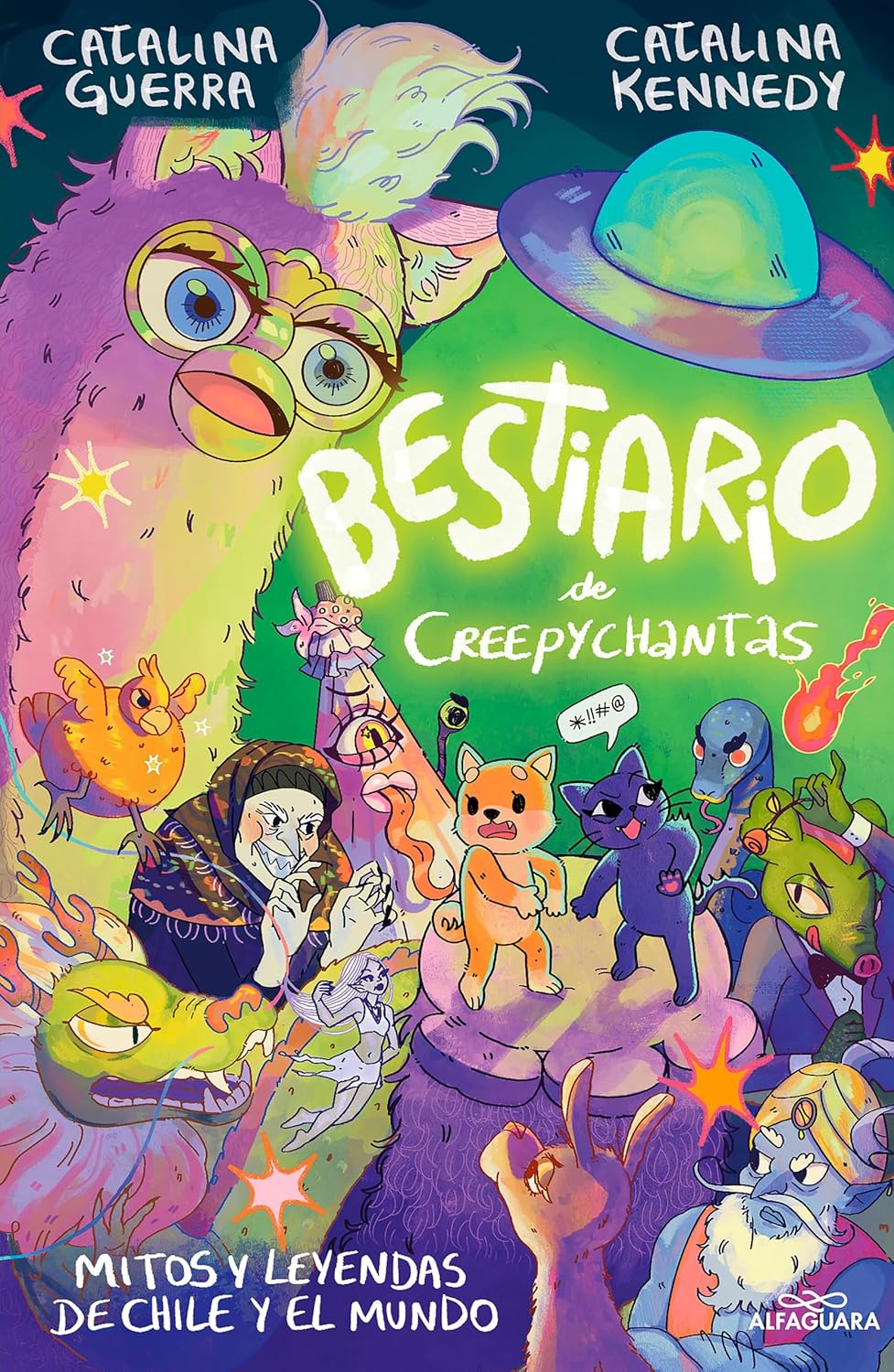
The expectation built by these mechanisms was answered when the Catalinas announced the publication of Bestiario de Creepychantas. Mitos y Leyendas de Chile y el Mundo [Creepychantas’ Bestiary. Myths and Legends from Chile and the World] with Alfaguara, a subsidiary of Penguin Random House. The book, as the title indicates, is a compilation of descriptions of beasts and supernatural beings from Chile, Latin America, Europe, Africa and Asia. Of course, each of the chapters is written and illustrated in a humorous manner, full of banter and pop-culture references, plus the pertinent bibliographical revision and source citation (because one thing is being funny and interested in particular topics, and the other is to spread fake information). My favourite chapter? The remake of the vampire’s podcast episode in the chapter “Vampiros esisten”, which blends Edward Cullen from Twilight, el Zancudo Draculón from Cachureos (80s-00s Chilean children’s show), Nosferatu and other stories related to the blood-sucking beings. I even learnt that in Chile there is a hematophagous bat by reading it. Very cultural and educational, as Spotify would say.
The publication of the book brought with it the corresponding marketing strategies, which prompted the Catas to appear in a national spread newspaper, give interviews and organise book signings. One of them was particularly popular, with fans travelling from different cities of Chile to queue outside a café shop for hours to be able to get their copies signed and be able to take photos and speak with the two hosts.
Almost five years after beginning the project, and after obtaining much more recognition, profits and opportunities that the Catalinas initially had in mind when recording the first chapter, the podcast came to an end with a heartfelt message from the hosts. Though creating the different kinds of content was entertaining, as well as building a safe space to discuss and share about their interests, the most precious outcome of Creepychantas was the people that gathered around the podcast and the community that subsequently was formed. The different modalities in which the content was shaped, as well as the constant effort put into the adaptations and derivatives of the initial project, created a varied multimedia mix that keeps appealing to a portion of their fan-based community even after the podcast ceased to be updated. Until today, their Instagram account receives comments and messages asking for their comeback to keep people laughing (and maybe learning) with their conversations about monsters, supernatural experiences and other mysterious things.
 SLIDING MAGAZINE
Leave a comment