

This article examines Diwali’s diverse celebration, its mythological roots, and regional practices across India. It highlights stories of Rama and Krishna, and observances from Hindu, Jain, Sikh, and Buddhist traditions. The festival emphasises themes of light and renewal, while also exploring modern, eco-friendly practices and the importance of literature in preserving Diwali’s spirit across generations.
Table of contents
- Lighting the First Sparks
- More Than Lights: Understanding Diwali’s Heart
- A Thousand Lights, A Thousand Stories: Diwali Across India
- Shared Lights. Shared Faiths: Diwali Beyond Boundaries
- My Diwali: Fragrance, Flame and Family
- Stories That Keep the Lamps Burning: Diwali is Children’s and Young Adult Books
- Carrying the Light Forward
Lighting the First Sparks
Every year, as autumn deepens and the nights grow longer, homes across India and beyond burst into light, laughter, and festivity. Diwali—also spelt Deepavali or Dipavali—is often called the “Festival of Lights,” and it is one of the most cherished celebrations in South Asia and among diasporic communities worldwide. To someone unfamiliar, Diwali may first appear as a dazzling blur of fireworks, sweets, glowing lamps, and colourful decorations.
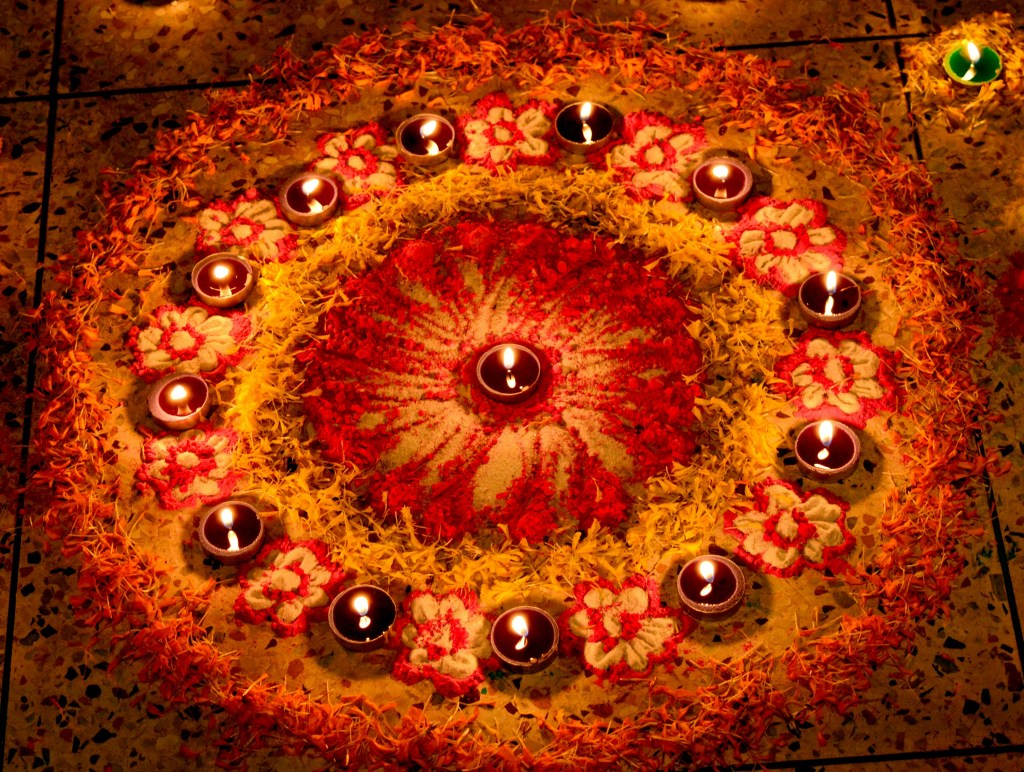
But beneath the sparkle lies a festival layered with meanings: mythological tales of courage and devotion, regional traditions as diverse as India itself, personal memories shaped by childhood and adulthood, and evolving debates about environmental responsibility and animal sensitivity. For me, Diwali has never been just one story or one ritual. Having lived in North India, South India, and Maharashtra, I have experienced its many forms, each carrying its own rhythm, flavour, and story.
More Than Lights: Understanding Diwali’s Heart
The roots of Diwali are tied to stories that embody the same essence: light conquers darkness, and good triumphs over evil. In North India, the most beloved tale comes from the Ramayana, an ancient Sanskrit epic. After fourteen years of exile and the dramatic defeat of Ravana, the ten-headed demon king, Rama returns to his kingdom of Ayodhya with his wife Sita and brother Lakshmana. To celebrate his homecoming, the people lit rows of diyas—small clay oil lamps with cotton wicks dipped in ghee or oil. That timeless act of lining paths with glowing lamps still forms the heart of Diwali, with homes today illuminated from doorstep to rooftop, guiding blessings inside. The sight is unforgettable: hundreds of flames flickering in unison, casting golden halos across courtyards and reflecting in the eyes of children waiting for sweets.
Though often spoken of as a single night, Diwali usually unfolds over five days, and even their names change across regions. The first day, Dhanteras (or Dhanatrayodashi in Maharashtra), is linked to wealth and prosperity, when people buy new silver coins, utensils, or jewellery, believing these purchases attract fortune. The second day is Naraka Chaturdashi, also called Chhoti Diwali or “Little Diwali,” especially celebrated in the South, where oil baths and lamps symbolise cleansing away darkness. The third day is the main night of Diwali, with Lakshmi Puja, rows of diyas, colourful rangoli, and abundant feasts.
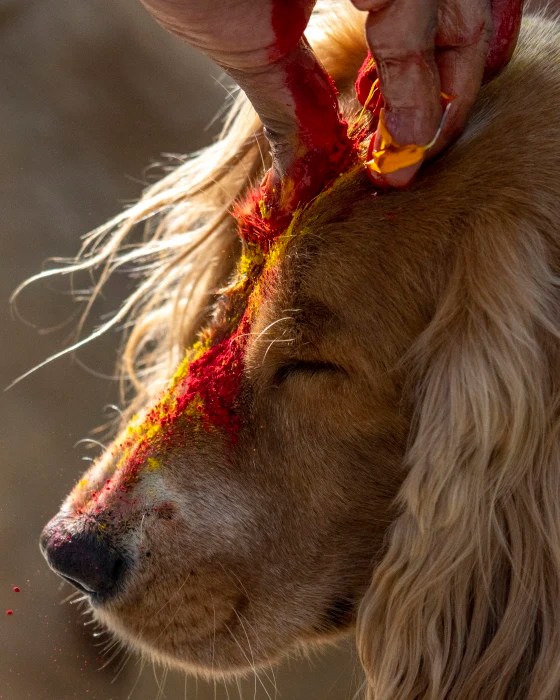
The fourth day varies: in North India, families observe Govardhan Puja, recalling Krishna lifting the Govardhan hill to shelter villagers from a storm; in Maharashtra, it is Padwa, celebrating the bond between husband and wife. The fifth day, Bhai Dooj (also called Bhau Beej in Maharashtra), is devoted to siblings, when sisters apply a protective tika—a mark of colored powder or paste—to their brothers’ foreheads, praying for their long life.
A Thousand Lights, A Thousand Stories: Diwali Across India
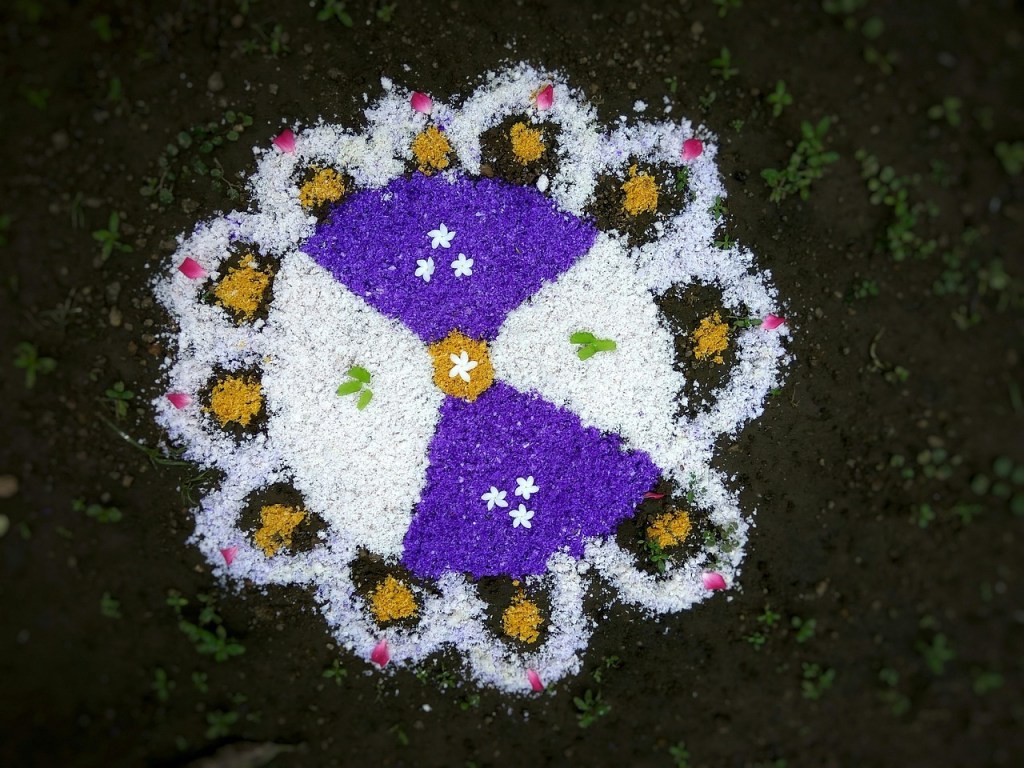
In South India, another myth takes precedence: the defeat of Narakasura, a tyrannical demon, at the hands of Lord Krishna. The day after his fall, known as Naraka Chaturdashi, begins before sunrise. Families rise in the dark, bathe in warm oils scented with herbs, and emerge refreshed to wear new clothes and eat festive breakfasts. The ritual oil bath, called Ganga Snanam in Tamil Nadu, is more than cleansing—it is believed to wash away negativity and start the year anew. Firecrackers crackle through the dawn sky, echoing the victory of good over evil, while doorsteps glow with kolam designs—intricate, geometric patterns drawn in white rice flour, sometimes dotted with bright powders or flower petals.
Further east, in West Bengal, Diwali coincides with Kali Puja, dedicated to the goddess Kali. Her imagery is striking: dark-skinned, wild-haired, adorned with a garland of skulls, she is both fierce and protective. While most of India prays to Lakshmi for wealth, Bengal spends the night in devotion to Kali, goddess of destruction and renewal. The air fills with the heavy scent of incense, the beat of drums, and the glow of oil lamps placed around temples. Families offer hibiscus flowers and sweets, praying for strength against obstacles. It is a Diwali less about gentle prosperity and more about fierce resilience.
In Gujarat and Maharashtra, the focus returns to Lakshmi, goddess of wealth and good fortune. Here, Diwali preparations begin with a thorough cleaning of the house. Every corner is scrubbed, furniture polished, and doorways decorated with strings of marigold flowers. At night, families perform Lakshmi Puja, placing lamps at thresholds and drawing rangoli patterns, colourful floor designs made from powdered pigments or rice flour, to guide the goddess into their homes. In Maharashtra, Diwali is inseparable from food traditions. Families prepare faral—a spread of snacks including chakli (spiral crisps of rice and lentil flour), karanji (crescent-shaped pastries stuffed with coconut and jaggery, a dark sugar), and shankarpali (diamond-shaped biscuits, crisp yet sweet).
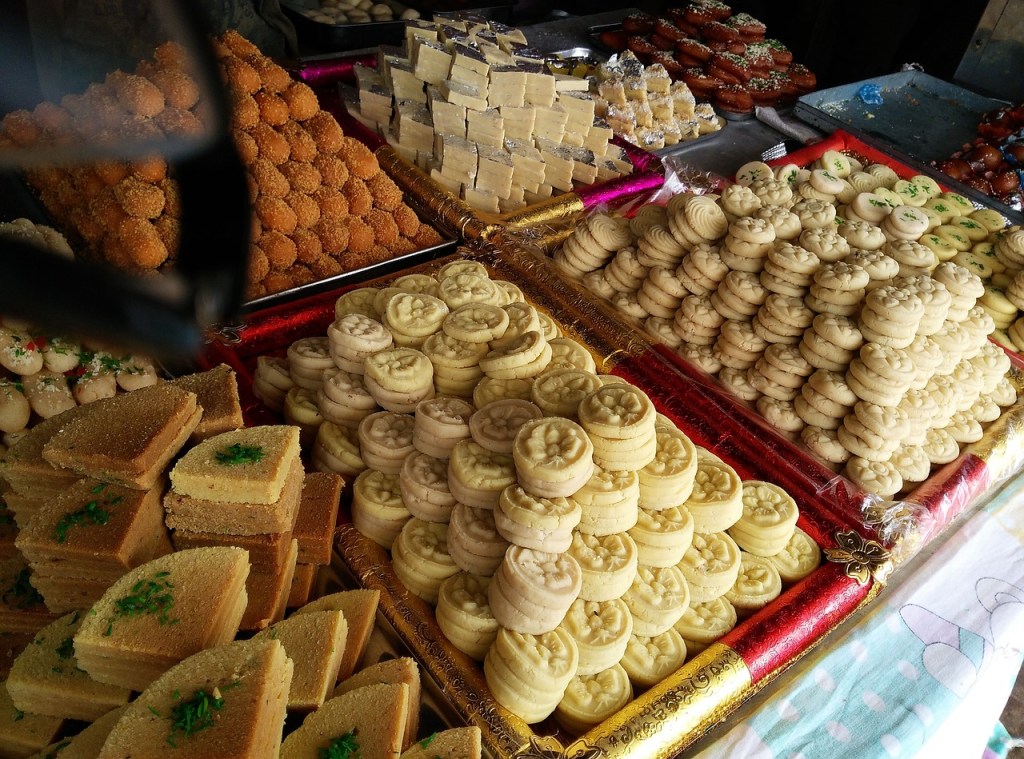
The kitchen fills with the buttery scent of frying dough and roasting spices. Sharing faral with friends is as important as lighting lamps. In some neighbourhoods, children and young people build bonfires out of the empty boxes of firecrackers, tossing them in until flames leap high, gathering together around the warmth and laughter.
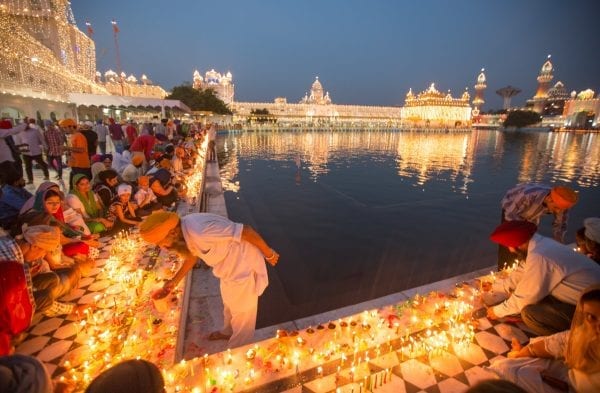
In Punjab, Diwali takes on another identity. Sikhs celebrate Bandi Chhor Divas, or the “Day of Liberation.” This marks the release of Guru Hargobind, the sixth Sikh Guru, from Mughal imprisonment, along with fifty-two princes who were freed with him. Legend tells that Guru Hargobind wore a cloak with fifty-two tassels, each held by a prince as they walked out together. The sight of lamps lit at Amritsar to welcome them home became enshrined in memory. Today, the Golden Temple shimmers with thousands of lamps and strings of fairy lights, reflected in the sacred pool surrounding it.
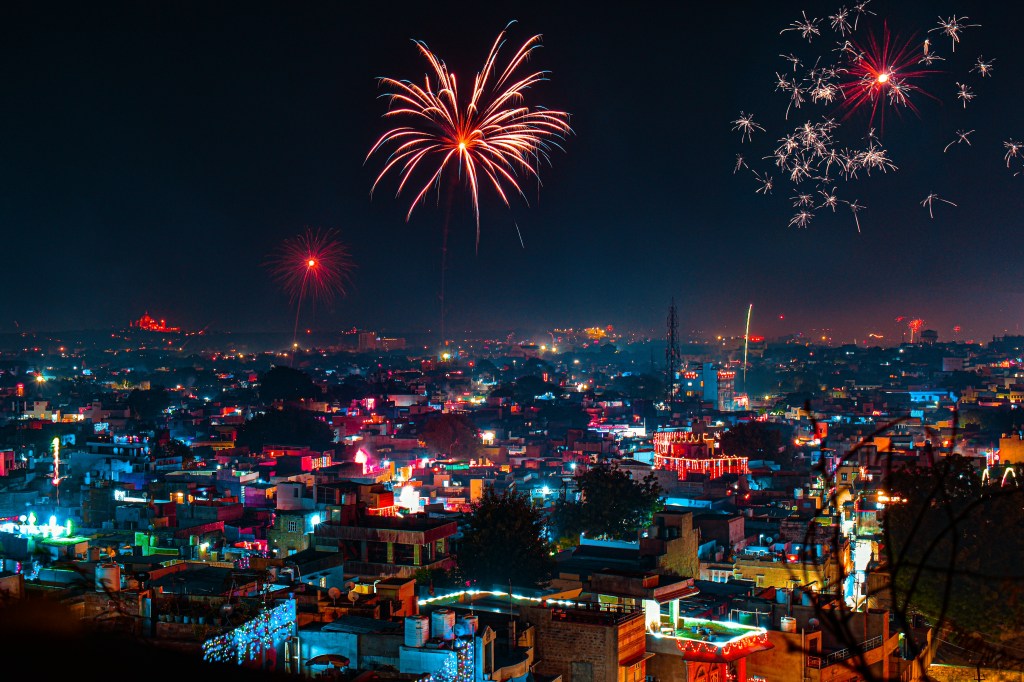
©Anirudh via Unsplash
In Odisha, Diwali night is used to honour ancestors. Families burn sticks of jute to send offerings to departed souls, connecting the festival not only with light and prosperity but also remembrance. Such variations remind us that Diwali is not one monolithic event, but a constellation of practices, each region shaping it in its own way.
Shared Lights. Shared Faiths: Diwali Beyond Boundaries
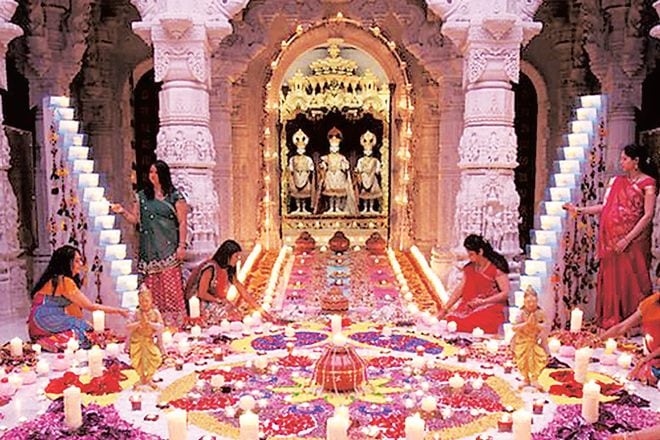
Beyond Hindu traditions, Diwali resonates across faiths. For Jains, the festival marks the nirvana—final liberation from the cycle of birth and death—of Lord Mahavira, their 24th and last Tirthankara, or spiritual teacher. This event, in 527 BCE at Pawapuri in Bihar, was commemorated with rows of lamps lit by his followers to symbolise the light of knowledge even after his passing. Today, Jains observe Diwali with prayers, meditation, and scripture reading, focusing on enlightenment rather than wealth or victory.
For Sikhs, the festival coincides with Bandi Chhor Divas, the “Day of Liberation.” In the 17th century, Guru Hargobind was released from imprisonment by the Mughal emperor Jahangir, but only on the condition that he leave alone. Guru Hargobind refused unless the fifty-two other princes imprisoned with him were also freed. The emperor relented, and Guru Hargobind emerged wearing a cloak with fifty-two tassels, each prince holding one. The lamps lit in joy at Amritsar to welcome them back merged into Diwali’s light. Today, the Golden Temple glows with thousands of lamps and fairy lights, shimmering in the sacred pool, a vision of resilience and freedom.
In Nepal, Newar Buddhists celebrate Tihar, a five-day festival overlapping with Diwali. Each day is dedicated to honouring beings that share life with humans. Crows are fed on one day as messengers of Yama, the god of death. Dogs are worshipped the next day with garlands and food for their loyalty. Cows are celebrated as symbols of prosperity. The final day, Bhai Tika, sees sisters blessing their brothers by applying a tika, a colored mark on the forehead, and offering prayers for their protection. Lamps are lit in courtyards and windows, echoing Diwali’s essence, but with a distinct emphasis on gratitude and harmony with both humans and animals.
What unites all these traditions is the imagery of light, knowledge, and liberation. Whether it is the eternal flame of Mahavira’s enlightenment, the golden glow of the Sikh Guru’s return, or the animal-honouring rituals of Tihar, Diwali’s themes extend far beyond Hindu practice. They remind us that festivals can cross boundaries of faith and geography, becoming shared expressions of humanity’s longing for renewal and hope.
My Diwali: Fragrance, Flame and Family
My own memories of Diwali are vivid. As a child, the excitement began days before the festival, with visits to bustling markets. Shops overflowed with brightly painted diyas, boxes of sweets wrapped in silver foil, and sparklers bundled in newspapers. On Diwali night, friends and I rushed outside carrying packets of firecrackers. Sparklers hissed in our hands, flowerpots spun fountains of colour, and rockets shot into the air with a whistle before bursting in dazzling blooms. We piled the empty boxes into bonfires, gathering around them until late into the night, faces glowing in the warmth. But as I grew older, I began to notice the haze of smoke that lingered for days. The air turned heavy, throats dry, and the stray dogs in the neighbourhood cowered from the noise. Cats darted under cars, and birds vanished from the trees. Slowly, conversations about pollution and animal safety shifted my own practices.
Now my Diwali looks different. I still celebrate with friends, but I have stepped back from fireworks. Instead, I light rows of diyas along the windowsill, hang strings of fairy lights across balconies, and draw rangoli in bright blues, reds, and yellows at the doorstep. The gentle glow feels just as festive, and perhaps even more so, because it aligns with responsibility toward the environment and animals. It is not about losing joy, but about transforming it—choosing beauty that sustains rather than harms. That evolution mirrors Diwali itself: a festival that has always been about renewal, rethinking, and resilience.
As I’ve grown older, my celebration of Diwali has changed—quieter, gentler, and more mindful—but my fascination with its stories has only deepened. Every diya I light feels connected to the many tales that shape the festival: from Rama’s return to Ayodhya to Krishna’s victory over Narakasura, from Kali’s fierce protection to Mahavira’s enlightenment. Yet these stories don’t just belong to temples or television reruns; they live on most vividly through books.
Stories That Keep the Lamps Burning: Diwali is Children’s and Young Adult Books
Festivals do not survive on rituals alone; they thrive through storytelling. One of the most enduring ways to pass the spirit of Diwali on to younger generations is through children’s and young adult literature. Stories have always been the heart of Diwali, and books ensure that the festival continues to live not only in rituals but also in imaginations across the world. These stories help children and teenagers understand Diwali as more than just lights and sweets—they illuminate courage, kindness, diversity, and renewal in ways that stay long after the lamps are put away.
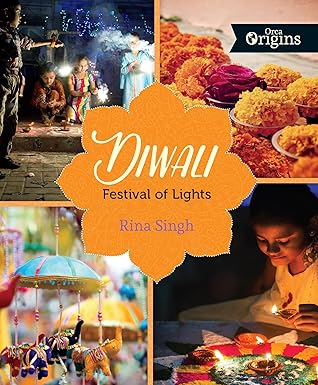
Rina Singh’s Diwali: Festival of Lights (2016) is a perfect starting point for young readers. With its blend of photographs and clear explanations, it captures the joy of the festival as it is celebrated by families in India and abroad. The book’s visual storytelling bridges continents, showing how Diwali belongs not just to one country but to a global community of families united by light.
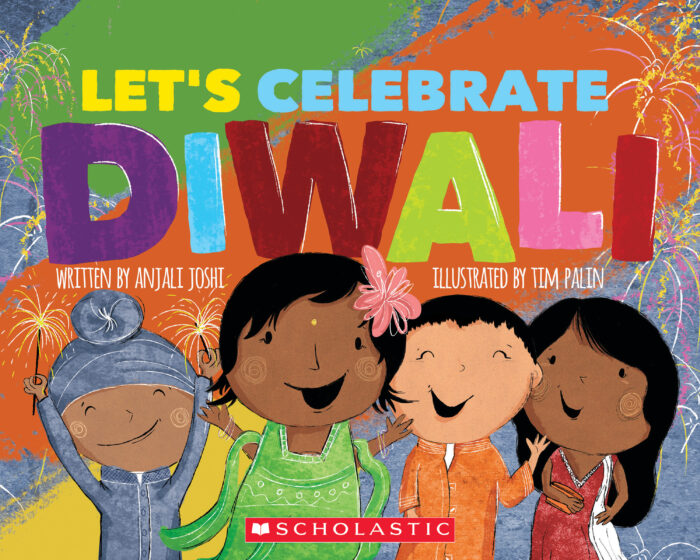
Similarly, Anjali Joshi’s Let’s Celebrate Diwali (2016) reminds us that even within one culture, Diwali is never uniform. Through the eyes of children from diverse Indian families, Joshi depicts different ways of celebrating—some lighting diyas and praying, others hosting parties, sharing sweets, or setting off fireworks. Her book affirms that diversity is not a deviation from tradition but a vital part of it.
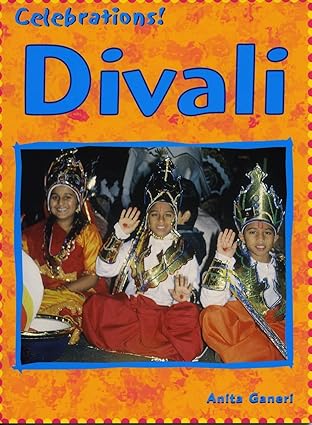
Anita Ganeri’s Celebrating Diwali (2009) takes a more educational approach, weaving together myth, history, recipes, and rituals into a lively overview. Its accessible tone makes it ideal for classrooms, offering teachers and parents a way to introduce the festival’s layers of meaning.
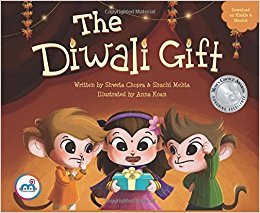
Shweta Chopra and Shuchi Mehta’s The Diwali Gift (2013), on the other hand, is pure delight for younger readers. In it, three monkeys eagerly await a surprise package from their grandmother, discovering along the way the warmth and wonder of the festival. With its bright illustrations and cheerful rhythm, it invites playfulness while gently imparting cultural details—perfect for early childhood audiences.
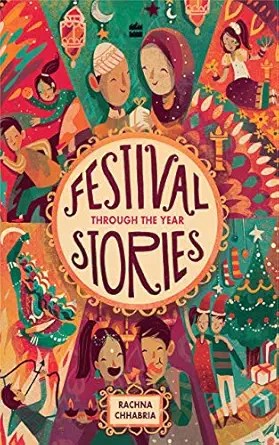
Madhurima Dhar’s Festival Stories Through the Year (2019) expands the frame further by gathering myths from across India, including the story of Rama and Sita, and retelling them with vivid illustrations. The book’s inclusive approach makes it perfect for primary school readers, who encounter not just Diwali but the rhythm of India’s many festivals and their interconnected values. For older readers, even those far from childhood, Diwali appears in fiction as a cultural backdrop that shapes characters’ emotional worlds.
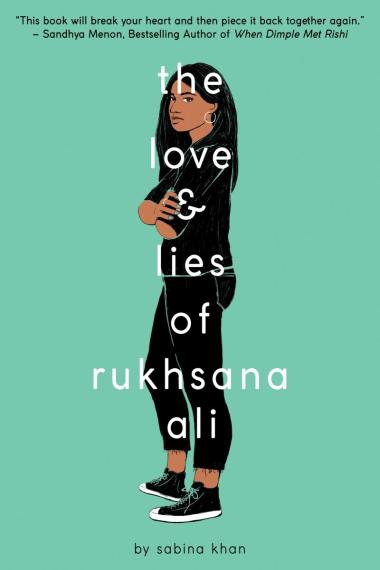
In Sabina Khan’s The Love and Lies of Rukhsana Ali (2019), for example, Diwali becomes a setting through which a young woman navigates identity, belonging, and family conflict. Here, the festival is no longer merely described; it becomes part of a dialogue about growing up between cultures—how light and shadow coexist in the search for self.
Each of these books captures a different facet of Diwali: its mythology, its diversity, its fun, and its relevance to contemporary readers. They prove that festivals are not static; they evolve with each generation’s voices and interpretations. By reading and sharing such stories, children learn empathy and connection, while adults rediscover traditions through fresh eyes. Together, these books form a literary constellation—one that mirrors the diyas glowing across balconies and streets, each light telling its own story.
Diwali is, after all, a festival of stories as much as it is of lamps. Whether read aloud to a child, discussed in a classroom, or revisited by adults seeking a return to wonder, these works ensure that the spirit of Diwali endures. They remind us that even as our ways of celebrating change, the essence of the festival—its light, its warmth, and its storytelling—continues to guide us, connecting past and present, home and world, ritual and imagination.
Carrying the Light Forward
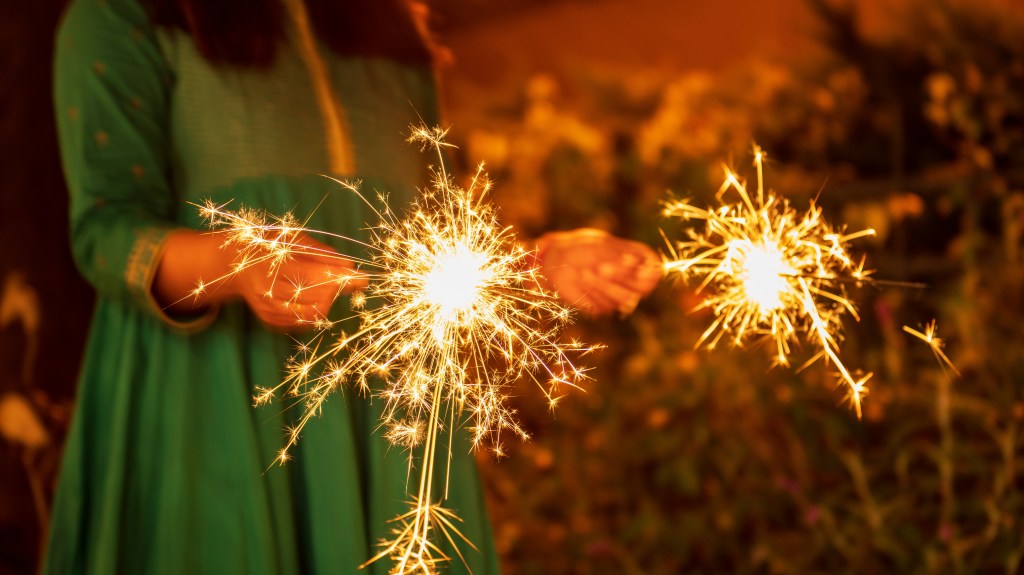
Diwali is not just a festival of lamps. It is a festival of stories, flavours, colours, and evolving practices. From Rama’s return to Ayodhya to Krishna’s victory over Narakasura, from the sweets of North India to the oil baths of the South, from Lakshmi Puja to Kali worship, it mirrors the vast imagination of India. My own journey has transformed from noisy nights of fireworks to quiet evenings of diyas, fairy lights, and rangoli. Yet the joy remains unchanged. Diwali’s beauty lies in its adaptability. Traditions evolve as awareness grows—whether about pollution, animals, or inclusivity—but the essence endures. In a world shadowed by conflict, climate change, and uncertainty, Diwali reminds us that renewal is always possible. It asks us to choose light, not only for ourselves, but for the generations to come. Whether celebrated in Ayodhya, Chennai, Kolkata, Amritsar, or in homes anywhere across the globe, the glow of Diwali carries a timeless truth: light will always find its way back.
 SLIDING MAGAZINE
Leave a comment