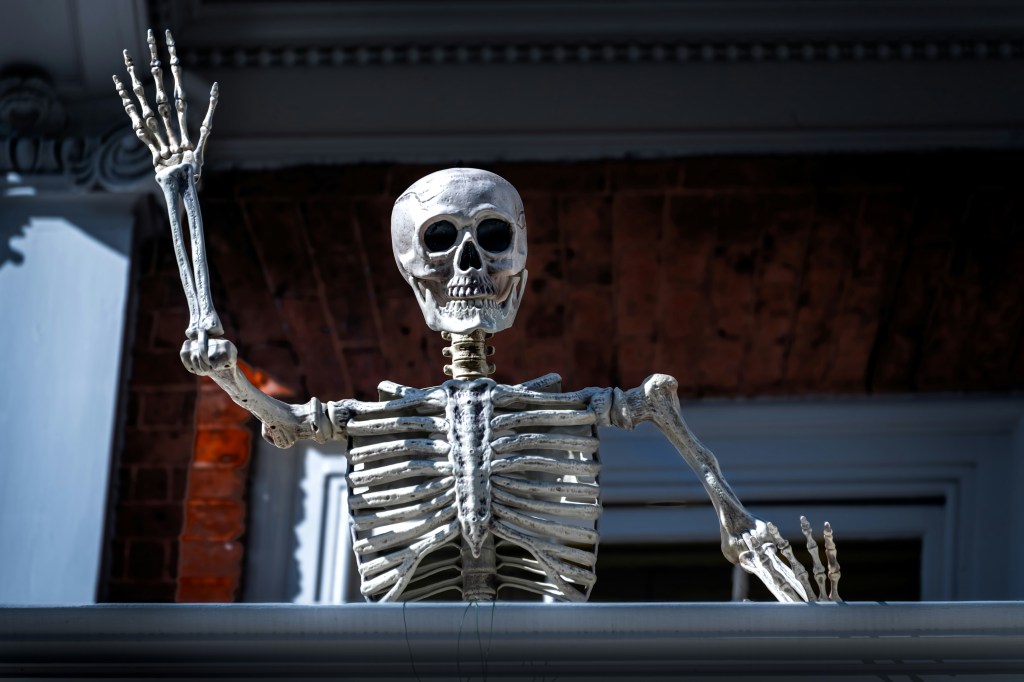

Scared yet? In our second issue, we dive into all kinds of spooky, witchy, and supernatural stories – and we reveal why horror has more to do with children’s literature than you might think.
Nina Auerbach famously said that “every generation gets the vampire it deserves” (qtd. in Bacon, 2020, p. 1) – a perfect reminder that horror is both enduring and ever-changing. Looking back at the last decades of children’s literature, we can certainly see a wide variety of Gothic influences reflected. Be it Edward Cullen, Marceline, Angel, or Nosferatu (as seen in a memorable SpongeBob SquarePants episode), the vampire we grew up with shows that the Gothic is firmly established in children’s culture. And while many argue that books for children have no business being scary, the genre has been haunted by the uncanny from its very beginning. Penny dreadfuls, supernatural chapbooks, and a long oral tradition of telling scary stories and urban legends all testify to this history.
But Auerbach also reminds us that monsters are, in fact, man-made. They are born when the unknown or the uncanny is othered, often reflecting the fears of a generation. In that sense, children have something in common with the monsters of horror: they, too, are often othered. As Guoping Zhao argues, “[c]hildren’s supposed different phenotypes and natures are seen as deficiencies and are made to justify the need to subdue and exclude them, thus it justifies the exclusion of children’s voices from many domains of social and private life” (2011, pp. 249-250).
“Horror for children might be the most controversial subgenre of all”
It comes as no surprise, then, that horror for children might be the most controversial subgenre of all. In 1826, a society devoted to the erasure of the Gothic genre was founded in London, believing that such literature would corrupt children (cf. Townshend, 2008, p. 33). Similarly, the American Library Association (ALA) reports that the Goosebumps books, while very popular with children, have been headliners in the 100 most frequently challenged books of the 1990s. Books like Bridge to Terabithia are regularly contested “for being too frightening for young people” (“Harry Potter series tops list”), and inclusion of supernatural elements is often deemed unsuitable for children. Such critiques reproduce the construction of children as innocent and in need of protection from the big, scary adult world. They also demonstrate the long scrutiny that both the Gothic and children’s literature have been under. Even though they have often been represented as opposites, the horror genre and children’s literature occupy similarly marginal positions.
As the examples above show, horror takes many different forms. In this issue, we explore some of them, as we go from literature to video games to podcasts and beyond. We cast a wide net to ask what happens when children are allowed to be scared, when the monsters are your friends, and when the uncanny becomes familiar. After all, every generation may get the vampire it deserves, but in children’s literature, those monsters do more: they show what we believe about childhood itself. Just as horror has long been marginalised, so too has children’s literature, and in their meeting they reveal as much about our fears as it does about our hopes for the next generation.
Bibliography
- American Library Association (ALA) (2003) Harry Potter series tops list of most challenged books four years in a row. Available at: https://www.ala.org/Template.cfm?Section=pressreleases&template=/contentmanagement/contentdisplay.cfm&ContentID=9404
- Bacon, S. (2020) ‘Introduction’, in Bacon, S. (ed.) Monsters: A Companion. Oxford/New York: Peter Lang, pp. 1–11.
- Townshend, D. (2008) ‘The haunted nursery: 1764–1830’, in Jackson, A., et al. (eds.) The Gothic in Children’s Literature: Haunting the Borders. New York: Routledge, pp. 15–38.Zhao, G. (2011) ‘The modern construction of childhood: What does it do to the paradox of modernity?’, Studies in Philosophy and Education, 30, pp. 241–256
 SLIDING MAGAZINE
Leave a comment