

Graphic Medicine, through the multimodality of the comic medium, opens the discussion about healthcare representation. Patients, caregivers, procedures and treatments are shown from a myriad of perspectives. This plurality of voices can support the development of health literacy skills in young readers to make them active agents in their own health processes and general well-being.
Assisting at a doctor’s appointment or a medical procedure in a practice, hospital, or clinic can be quite a daunting experience. Most of us do not interact with a medical context on a daily basis. Some of the people reading this article might not even go to a healthcare centre unless they feel like Pippi without her strength.
One of the reasons to avoid hospitals is the state of vulnerability in which people are when they seek medical attention. Not only do you feel sick, something in your body is aching, and you do not know how to make it better, but you also understand less than half of what is happening. The healthcare setting is unsettling due to the specific practices that take place there, to which the common public usually does not have access to and, therefore, lacks the skills to engage confidently within it. The vocabulary used, the unfamiliar relation with our own body, the standardised interactions between health professionals and patients, the unknown procedures and treatments, and even the layout of intricate buildings (with not enough signs and indications) may exacerbate the discomfort of the public.
Health literacy, or the knowledge and abilities necessary to engage in a meaningful, critical and agentic manner in health-related situations, is central to tackling this issue. Access to continuous educational resources and free of judgment discussions is a must for people in the community to improve their health literacy and, in consequence, to be able to play an active role in taking care of their own health. It is not about reading a pamphlet about an illness, understanding vaccination statistics, or following the instructions in a building to arrive at the department you were looking for, but about having the information and the ability to engage resolutely with your own health processes.
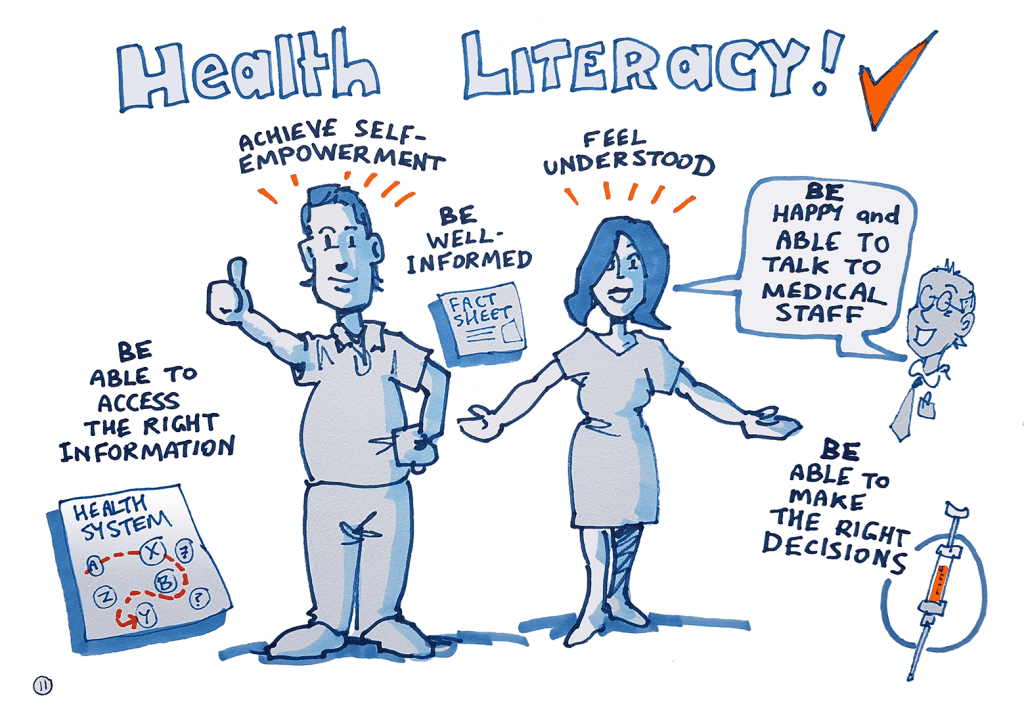
According to WHO, “[e]ven in economically advanced countries in Europe, many children, adolescents and adults have limited health literacy skills” (2024). Since young people are already in a vulnerable position in adult-centred societies, it is extremely important to promote their agency in settings where they could be stripped of their confidence and influence once more. Being able to speak up about their own body and health in healthcare settings is crucial for their well-being. This is where Graphic Medicine, a movement rooted in the need for the humanisation and democratisation of the health practice through graphic narrative, comes into play.
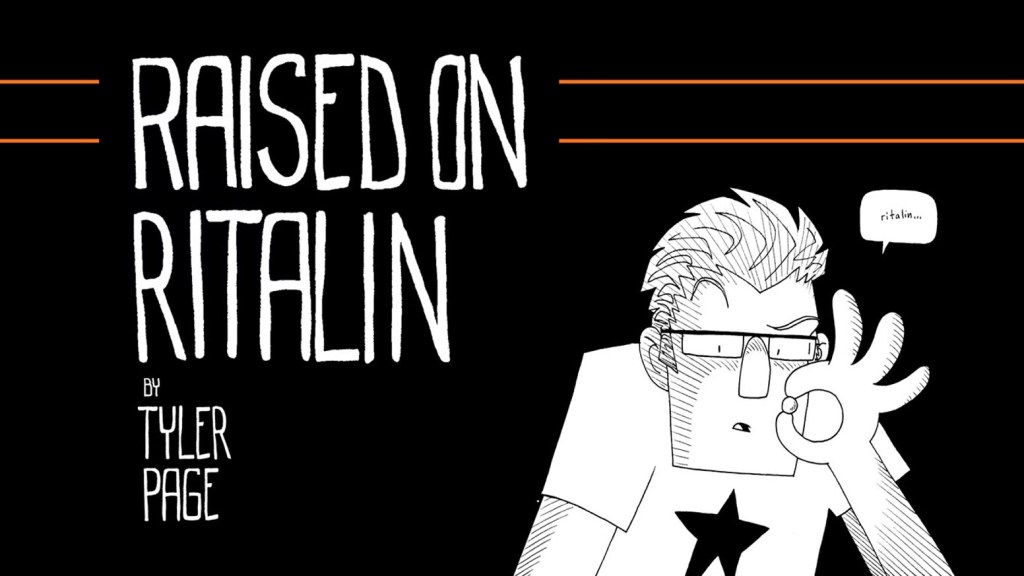
Graphic Medicine refers to the graphic texts that explore and reflect on the practice of healthcare. According to Halsall (2023), the term refers to the multimodal (visual and textual) representation of the medical intertext. Comics, graphic novels, picturebooks, and zines, among others, can show different aspects of health, making different experiences related to health more accessible (Myers and Goldenberg, 2018). Graphic Medicine can explain concepts, illustrate procedures and treatments, communicate different perspectives and experiences of healthcare, among others, positively impacting the relationship between people and their health. An example? Raised on Ritalin by Tyler Page is a graphic memoir (webcomic first, now published!) that explores the author’s ADHD diagnosis as a child and as an adult. It shows accurately his symptoms, the medication he was prescribed, its effects and, overall, the process of interacting with the healthcare institutions and his daily life with an attention disorder.
Apart from aiding in understanding concepts that seemed alien before, Graphic Medicine also has the potential to prompt change in a system that should be more focused on people. Through comics, doodles and drawings, it is possible to challenge the power imbalance in the practice of healthcare to give space to those experiencing illness and disability (Czerwiec, M.K. et al., 2015).
Particularly, it is crucial for children and adolescents to be acquainted with the specifics of the medical context to educate and empower them as readers and users. Improving their health literacy from a young age can support their development and agency not only related to their health, but also about their body autonomy and overall well-being.
For this article, a list of Graphic Medicine books specifically written for young people was curated. It includes non-fictional informative books, as well as graphic narrative about different illnesses and disabilities. If some of you picked an interest in the genre (hurray!), on the webpage https://www.graphicmedicine.org/, you can find a vast list of reviews about different books for all ages and from different perspectives (patients, caregivers, healthcare professionals, external narrators, among others).
“Improving their health literacy from a young age can support their development and agency not only related to their health, but also about their body autonomy and overall well-being”.
Books that explain concepts
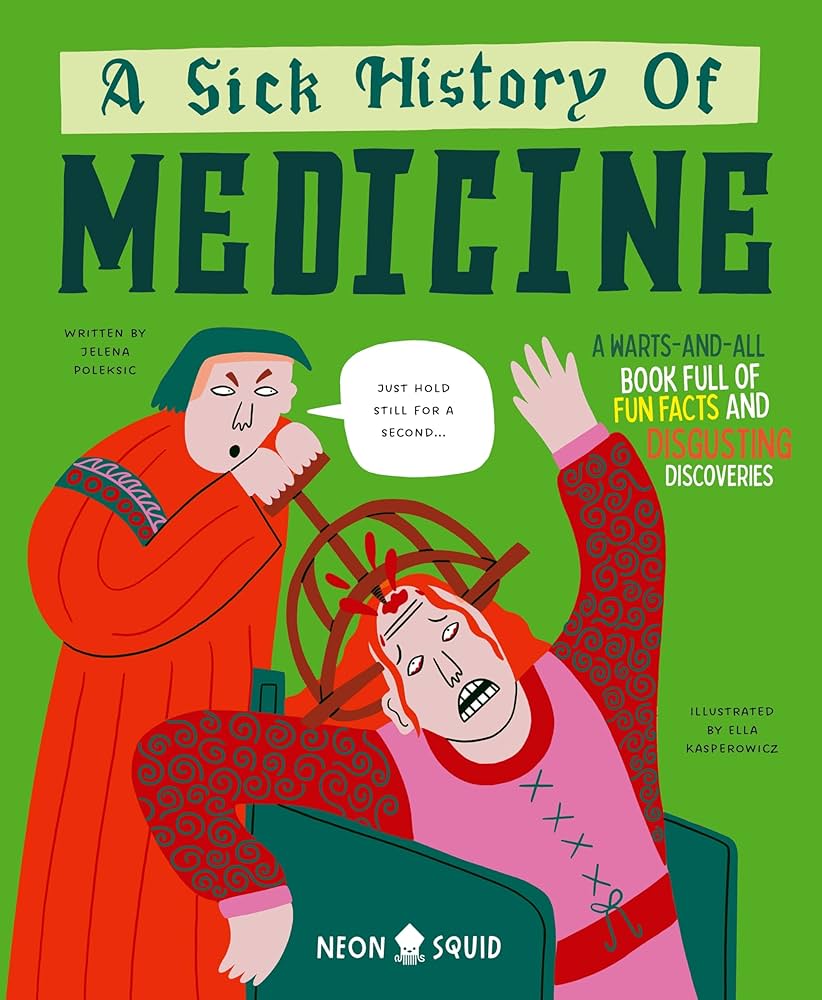
From biology to the history of medicine, these books portray in a straightforward and interesting manner basic concepts about the human body, illnesses and medical procedures. A Sick History of Medicine (2025) is a non-fiction informative picturebook that addresses the disgusting facts of the evolution of medicine through the millennia. Double-spread pages about ancient remedies, plagues, childbirth, mental illness, scientific facts and technological improvements are all mentioned along with some humorous comments by the characters in the pages. Something great? It includes a glossary at the end so the reader can check the words they are not familiar with.
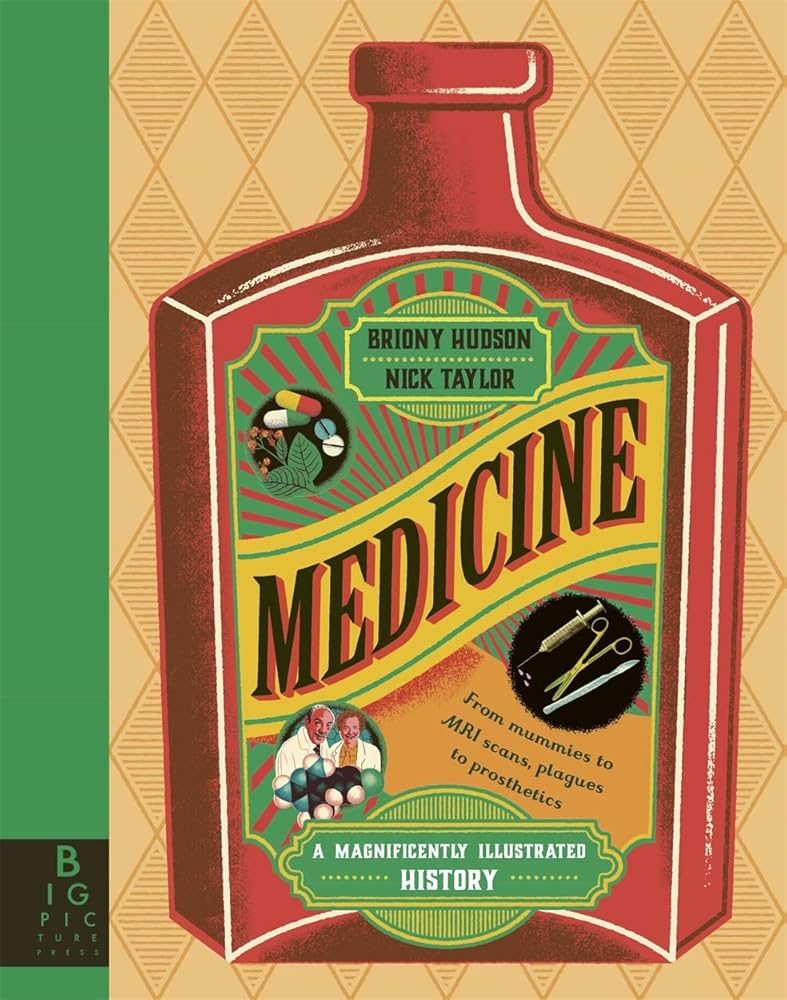
Medicine. A Magnificently Illustrated History (2022), with a more realistic illustration than the cartoon style of the previous book, explores in detail medical history from a global perspective. It includes descriptions of supranatural approaches to health, indigenous knowledge about health and disease, mini-comics with interesting stories about some of the topics (the stealing of bodies in Edinburgh for anatomy classes, for example), scientific research that led to modern medicine, sociological remarks about the role of marginalised groups in healthcare (medicine IS human, after all), among others. The vocabulary used is also more specific (ex.: pathogens, MRI, enzymes), so the existence of a glossary in the end is quite handy for the reader.
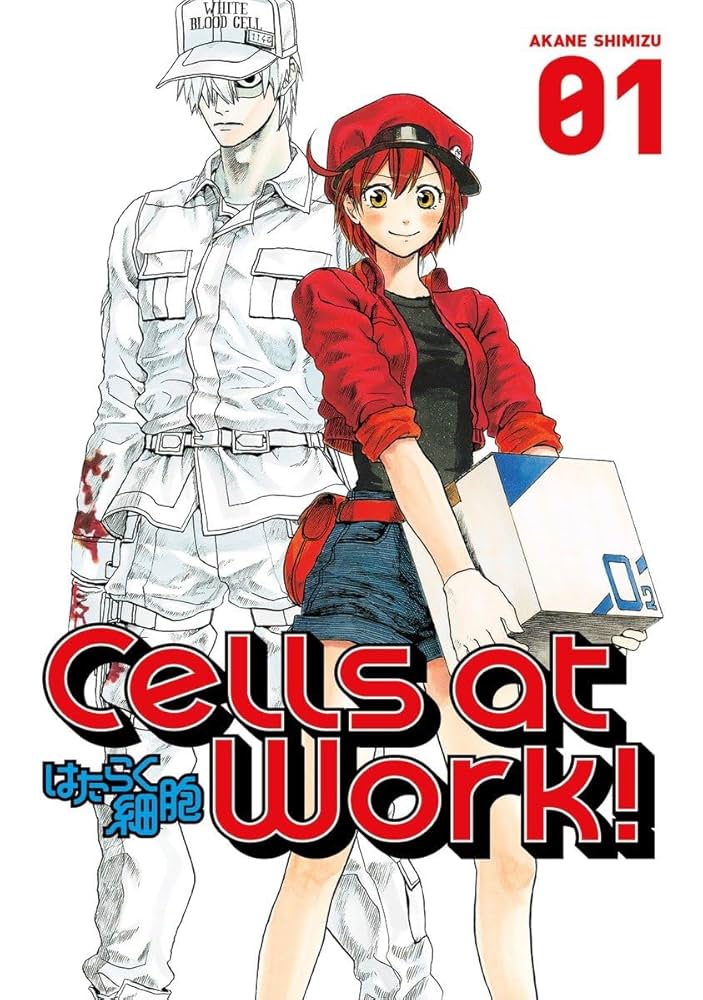
Lastly, for this section, Cells at Work! (2015-2021) is the compilation of the six volumes of the original manga series that explains the functions of the human body through anthropomorphised cells. The reader follows the misadventures of a red blood cell while delivering oxygen: she encounters bacteria, diseases, and allergic reactions. During her adventures, she is constantly helped by a white-blood cell that enjoys (maybe too much) getting rid of any threat to the body. The panels, filled with action, also include accurate descriptions and explanations relevant to the plot of the episode. The series was adapted into an anime (of which you can read more here), as well as used as the base for several spin-offs showing the adventures of other cells in other bodies.
Books that illustrate procedures and treatments
Taking blood tests, going for an echography, and being admitted to the hospital they are all experiences that are not usually embedded in our daily routines. Even if you pay attention to the medical professional or read the documents that are given to you before a procedure takes place, there is a high chance that you do not understand what is being explained. Not only because of the vocabulary (try to decipher an X-ray report on your own if you are not a health practitioner, I dare you), but because you might not be feeling your brightest in between the pain, confusion and fear. Graphic Medicine may be a tool to facilitate this process through the visual portrayal of procedures and treatments.
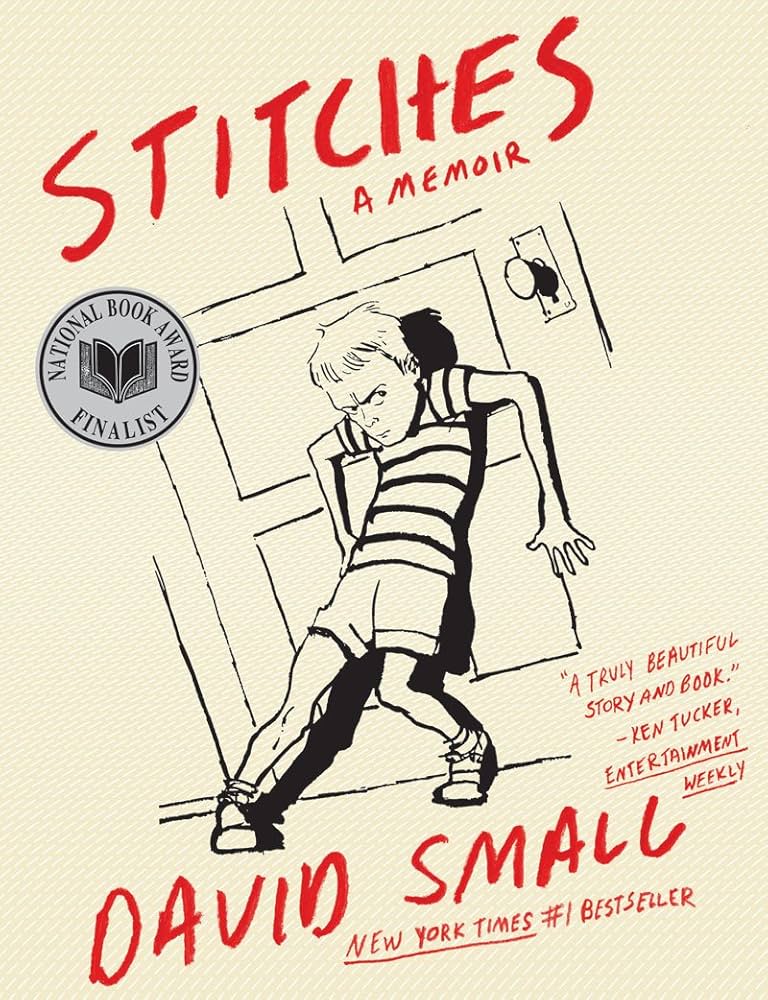
Stitches (2009) is one of the many graphic novels that explores the impact of cancer on an individual, in this case, thyroid cancer in a 14-year-old. Besides the other complex themes present (like parental abuse), the book is accurate when representing the procedures which David goes through to treat his cancer. Not only is the surgical procedure shown in the panels, but also his journey through physical and psychological recovery.
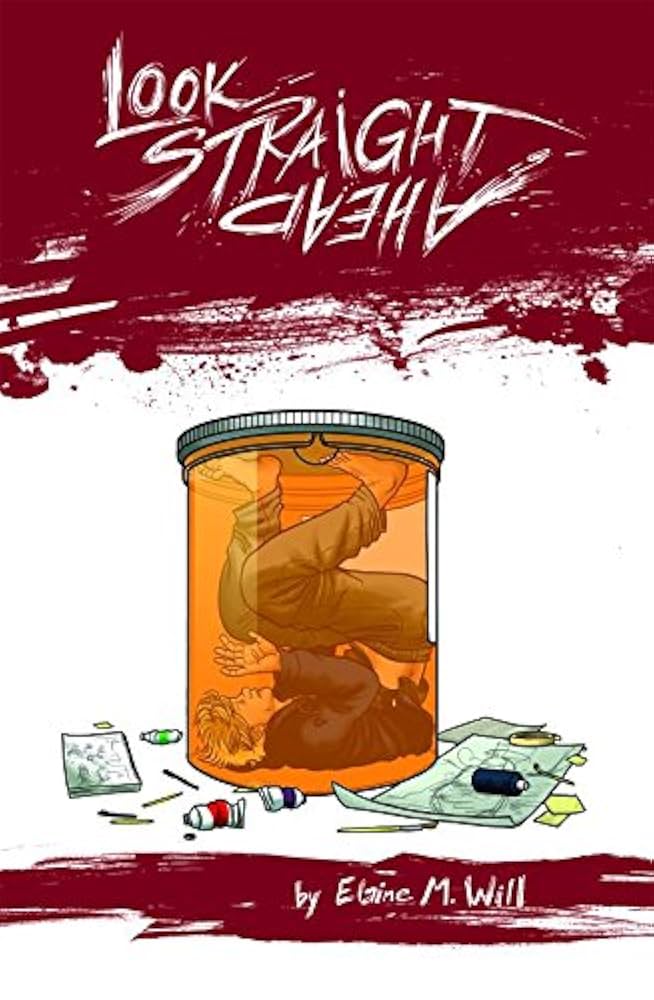
Look Straight Ahead (2013) narrates the story of Jeremy, a teenager diagnosed with schizophrenia. The reader is presented with a first-person explanation of his symptoms, psychological and pharmacological treatment and, more importantly, the non-linearity of the therapeutic efforts. The social impact of his diagnosis is also widely reflected on, as well as the importance of empathetic healthcare providers, whether it is as an ambulatory or institutionalised patient.
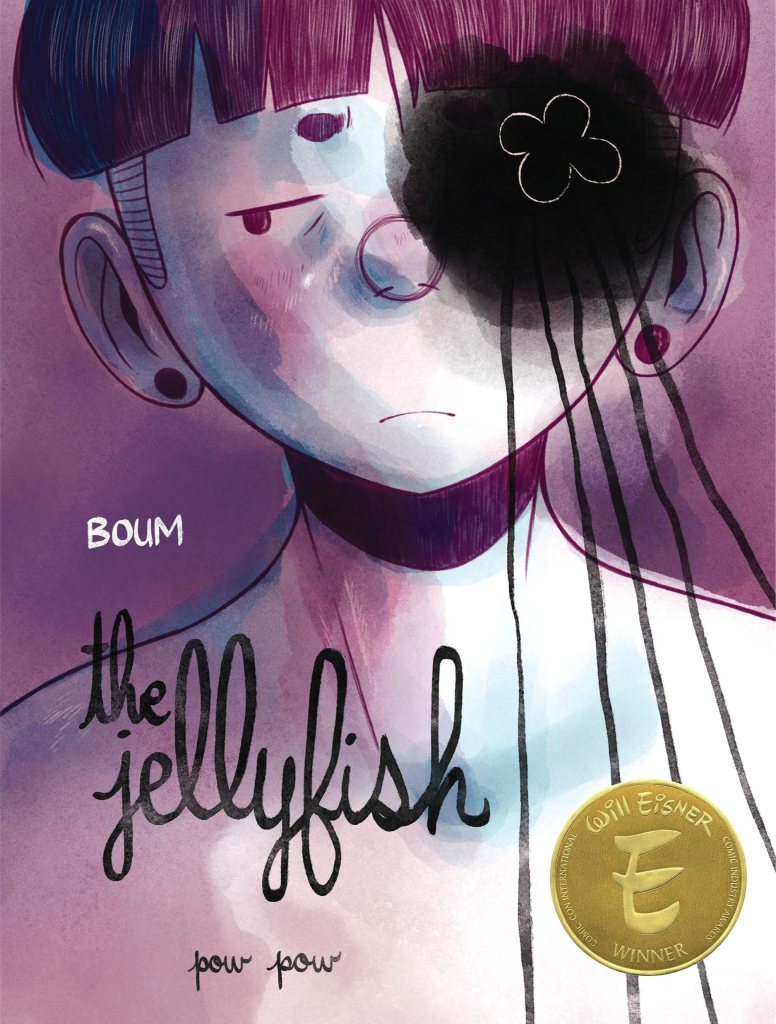
The Jellyfish (2024) presents Odette, a young woman whose day-to-day is disrupted by a blot in her vision that leads to several visits to the doctor. The visual exams to which Odette is subjected to are shown in detail in the pages, as well as the interaction with the doctors and their final assessment and prognosis: blindness. Besides the procedures portrayed in the pages, this book also discusses the impact of a diagnosis on the identity of the person, as well as the changes in their relationships and ways to navigate the world.
Books that explore different healthcare experiences
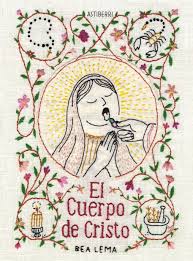

Patients, caregivers, relatives and health professionals are all involved when a person is diagnosed and has to begin treatment. Their experiences, even if close, are not the same. Graphic Medicine is the perfect medium to explore their particularities and differences. For example, El Cuerpo de Cristo (2024) portrays the experience of Vera, who, since her childhood, has observed her mother’s psychotic episodes. As her daughter, and the only other female in their household, she is entrusted with taking care of her mum. The delusions and hallucinations are deeply rooted in her catholic beliefs, which delays the search for help. The autobiographical reflection of the mother and daughter relationship highlights the impact of caregiving on people without support networks.
In Tyranny (2009), the reader encounters the internal world of Anna and her battle with the personification of anorexia, Tyranny. From the analysis of the possible causes (pressure of media, family, friends and colleagues, among others) to the impact on her life, this graphic novel offers a nuanced analysis of how she is living with an eating disorder.
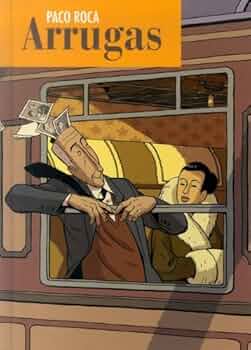
Arrugas (2007) explores the life of Emilio, a 72-year-old man who is admitted to a retirement home after being diagnosed with Alzheimer’s. There, the reader is presented with diverse realities of other older adults who also live in the institution. In between melancholic and humorous situations, it is possible to dismantle the pitiful narratives that often surround elderly people. This graphic novel was adapted into a short film in 2011, available for free on the web.
All the books above mentioned have a little bit of the three categories in which I organised them (it is difficult to categorise the human experience, isn’t it?). However, I situated them in the one that, according to me, is central to the development of the plot. This list is deeply personal and comes from my experience researching (and enjoying) Graphic Medicine. Feel free to discuss, recommend and share your personal selection in the comments. Through dialogue, activism and books, we can aid in improving the health literacy of our communities, especially by empowering our children and adolescents about their own health and well-being.
Bibliography:
Graphic Medicine
- Boum (2024). The Jellyfish. PowPow
- Fairfield, L. (2009). Tyranny. Walker Books.
- Hudson, B. (2022). Medicine: A Magnificently Illustrated History (N. Taylor, Illus.). Templar Books.
- Lemas, B. (2024). El Cuerpo de Cristo. Astiberri.
- Page, T. (2011/2016). Raised on Ritalin. Dementian Comics.
- Poleksic, J. (2025). A Sick History of Medicine. A Warts-and-All Book Full of Fun Facts and Disgusting Discoveries (E. Kasperowicz, Illus.). Neon Squid.
- Roca, Paco (2007). Arrugas. Astiberri.
- Shimizu, A. (2015-2021). Cells at Work! Vol. 1-6. Kodansha USA Publishing.
- Small, D. (2009). Stitches. W.W. Norton.
- Welsh, C.H. (2020). The Tide. (A. Lindsay, Illus.). Little Tiger Press.
- Will, E.M. (2013). Look Straight Ahead. Cuckoo’s Nest Press.
Secondary Sources
- Czerwiec, M.K. et al. (2015). Graphic Medicine Manifesto. Pennsylvania State University Press.
- Halsall, A. (2023). Growing up Graphic: The Comics of Children in Crisis. Ohio State University Press.
- Myers, K., and Goldenberg, M. (2018). “Graphic Pathographies and the Ethical Practice of Person-Centered Medicine”. AMA Journal of Ethics, 20(2), 158-166.
- World Health Organization (2024, August 5). Health Literacy. https://www.who.int/news-room/fact-sheets/detail/health-literacy
 SLIDING MAGAZINE
Leave a comment