


Film literacy may sound like an intimidating skill to learn, but it can be crucial in this age, with an overwhelming amount of fictional video content being produced every day. In this article, I propose five easy activities to improve a child’s film literacy.
Starting at a very young age, children’s play is influenced by the films and television shows they consume. I remember endless hours of school breaks arguing which of my friends could play Bloom in our Winx Club fantasy (not me). And for a school performance, my friend and I were set on dancing to “You’re the One That I Want” from the movie Grease. Nowadays, children reenact scenes from Miraculous: Tales of Ladybug & Cat Noir (2015-), Gabby’s Dollhouse (2021-), and Bluey (2018-). This playful interpretation of film is the beginning of learning a new skill: film literacy.
Screen time for children is highly criticized by traditional and social media, as well as by many adults. While I am not arguing that we should all throw away our books and only consume short, fast-paced video content, I do believe that the quality and educational potential of film and television is too quickly dismissed. Teaching film literacy goes beyond simply watching a film for entertainment. Film literacy is a concept that was coined in the 1960s, and it allows a viewer to interpret different aspects of film, including production, reviewing, social and historical context, and understanding narrative structures (Glotov and Kotilainen, 2019; Taylor and Bulman, 2019). In this article, I introduce five very simple but effective activities to playfully improve a child’s film literacy, suitable for both group and individual screenings. They will each include examples of well-known films and series, but I encourage you to try out some others as well.
1. Playing with Expectations
Every viewer has expectations when they start playing a movie. Sometimes these are caused by reading a summary or reviews, studying a film poster, or seeing the cast and creators. However, expectations are also sparked by the introduction of a film. For this activity, play the first one to five minutes of a film and ask the viewing child what they expect from the movie and why. Some guiding questions are: Who is the main character? What genre do you think the movie will have? What will happen next?
Example: The Seabeast (2022)
Guiding questions: Who is the main character? Or, where do you think the girl is going?
2. Reading Emotions
With even the youngest viewers, the emotions of the film characters can be discussed. Find and print some stills of a film or television character who shows various emotions. Go through the prints one by one and discuss the character’s emotions. Ask: How do you think the character feels? And why do you believe that? Which facial features or body language suggest that the character feels this way? Try to work with characters or situations the child does not know, so the emotions will not be filled in from memory.
Example: Bluey (2018-)
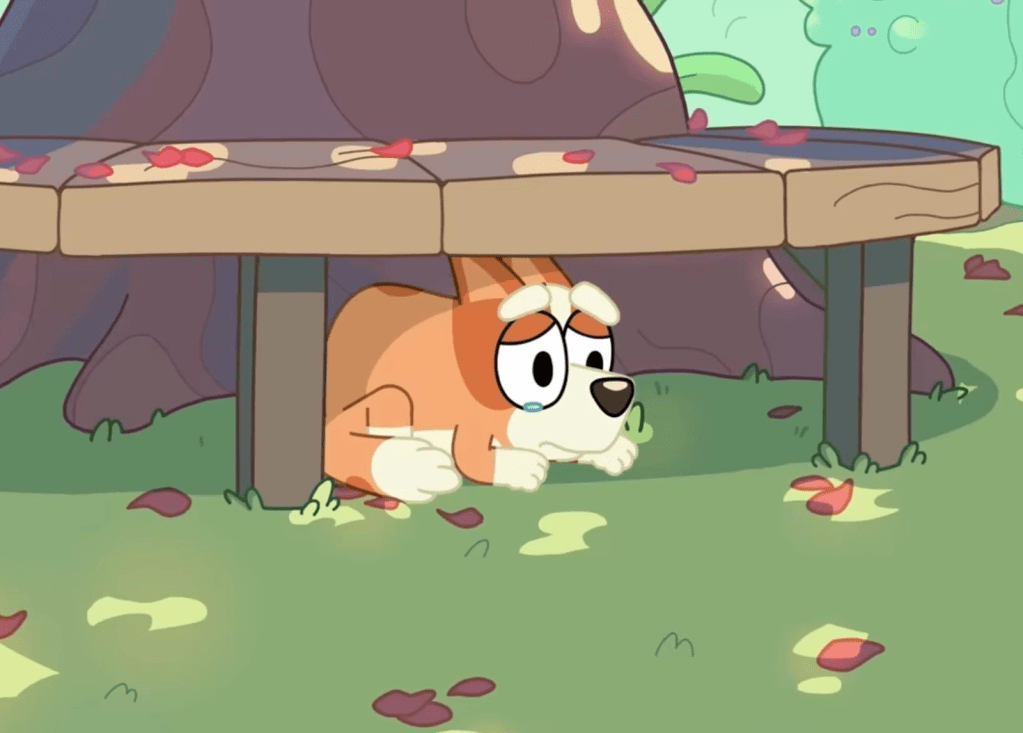
Guiding questions: How do you think Bingo feels? And why do you believe that? What do you do when you feel this way?
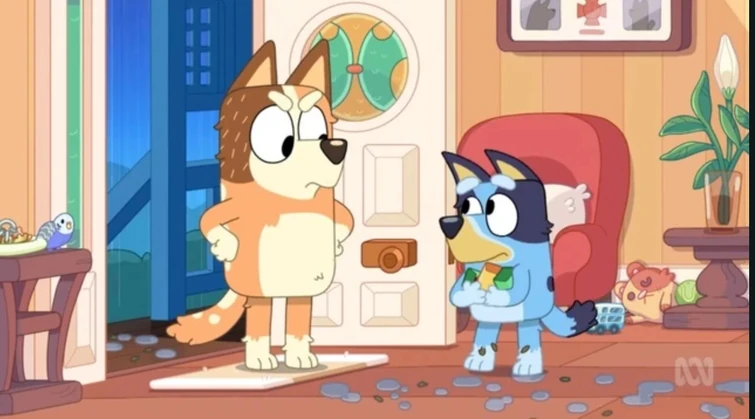
Guiding questions: How does Chili feel? How do you believe that makes Bluey feel? Why do you thing they feel this way?
3. Setting the Scene through Contextualization
Context can highly influence the understanding and reception of a film. For this activity, you need a short clip of the setting of a film, or a screenshot will work too. Discuss what the setting says about the context of the film. In what time and location does the movie take place? Can we say something about the inhabitants of this place? Try to ask questions related to the movie in question.
Example: The Little Mermaid (2023)
Guiding Questions: Does the move take place in our time and/or world? Why yes/no? Who are the main characters in this scene?
4. Continuity: Mind the Gap
Films do not show every second of the main character’s existence. If this were the case, most films would be endlessly boring. Connecting the full story depends on viewers mentally filling in the gaps between shots and scenes. This understanding can be trained through educational activities. For instance, you could show the viewer the beginning and end clips of a scene and ask them to fill in the gap. The answer can help the child understand continuity as well as spark creativity. If stuck in the possibilities, try asking guiding questions: how did the main character get here? Why does the main character feel [insert emotion]? Or simply, what happened?
Example: Moana (2016)
Guiding questions: The song in Moana is built of a compilation of moments while Moana is growing up from a toddler to a teenager. How do we know that Moana is growing up? What may have happened in between the scenes?
5. Worldbuilding: Fantastical Differences
Historical and fantastical story worlds can get incredibly complex to decode. Different people, different culture, different clothes, and possibly even a different language. Watch a short (or long if you are up for it) film set in a world other than our own. Ask what stood out to the young viewer. Who lived in this world, and what did they look and sound like? How did the land look different than the one we live in? What do we know about the time the film takes place in?
Example: Wonka (2023)
Guiding questions: How is this world different from our own? What do the people look like, and what do they wear?
Bibliography
- Glotov, S., & Kotilainen, S. (2021). Teaching Intercultural Film Literacy. Media Education Research Journal, 10(1&2), 1-18. doi: 10.5281/zenodo.5763781
- Taylor, L., and Bulman, J. (2019). Children’s Literature on Screen: Developing a Model of Literacy Assets. In Hermansson, C., and Zepernick, J. (Eds.), The Palgrave Handbook of Children’s Film and Television (pp. 417-434). Palgrave Macmillan
 SLIDING MAGAZINE
Leave a comment