
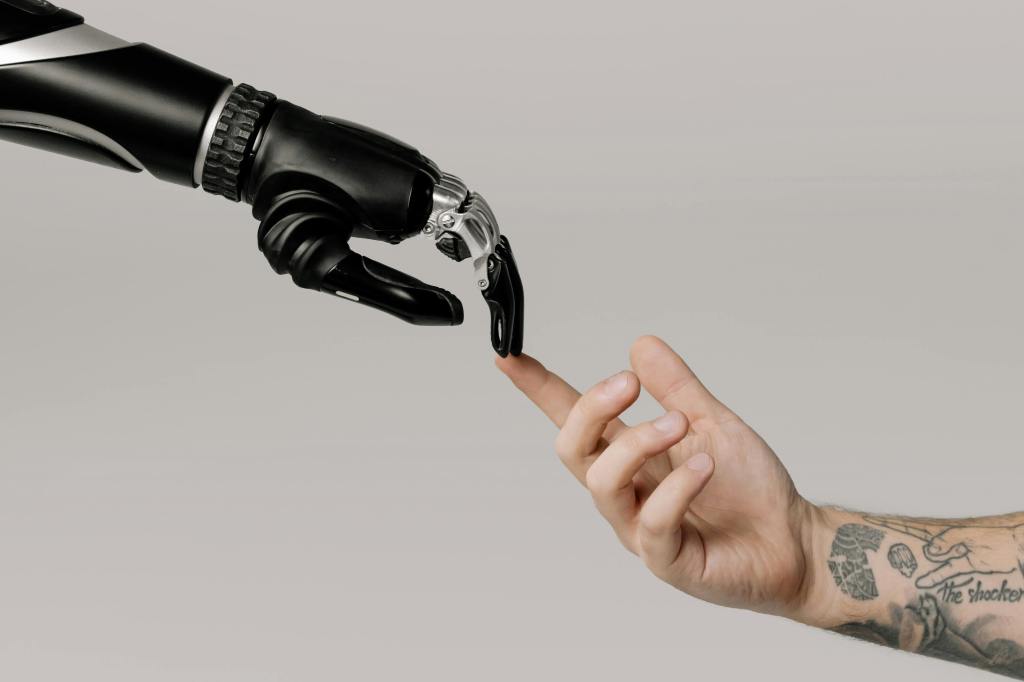

While AI itself isn’t new, what is new is how accessible it has become. This technology is evolving at a rapid speed, and keeping up isn’t easy. My aim is to encourage you, reader, whether you’re a parent, a caretaker, or just merely interested in AI, to be curious and learn about it – not fear it – since we now have a generation growing up not just digitally native, but AI-native.
When it comes to AI, many of us like to think we have the upper hand, either by not using it at all and feeling slightly superior or by believing we can easily detect when it has been used. However, chances are that most of us have already fallen for, or even fallen in love with, an AI-generated video or image.
A few months ago, I came across the “emotional support kangaroo” video, where a service kangaroo was denied boarding on a plane. I couldn’t help but love it. It was too cute and goofy not to share. Looking back, the premise itself was hard to believe, but I’m not sure if I was being overly indulgent with Australians and their quirky pet choices, or if the AI-generated video simply did such a good job by emotionally appealing with cuteness that I didn’t bother to question its authenticity. Either way, I was a bit heartbroken when I found out it was fake. Not just because I wanted it to be real, but because I felt tricked. Tricked by AI. Isn’t it only old people who get tricked by AI? But me? Someone who considers herself literate on the matter? I should have known better.
The truth is, this technology is evolving at a rapid speed, and keeping up isn’t easy for anybody, regardless of age. This might sound intimidating, but it is time for us, the people, to take part. My aim is to encourage you, reader, whether you’re a parent, a caretaker, or just merely interested in AI, to be curious and learn about it – not fear it. As adults, we have a responsibility to be literate in AI to learn how this technology can intersect with our lives. That way, we can help younger generations navigate its uses and potential risks in a mindful and conscious manner.
It’s natural to fear what we don’t understand. Especially when it feels like AI has more control over us than we do over it. However, becoming literate in artificial intelligence opens up new ways of seeing and understanding the world, a world that is already undergoing change. While AI itself isn’t new, what is new is how accessible it has become. We now have a generation growing up not just digitally native, but AI-native.
What is AI, and how can I develop my AI literacy?
To start, it’s important to differentiate between artificial intelligence and generative artificial intelligence, which is the focus of this article. According to Microsoft, AI refers to systems or machines that can perform human-like tasks by using models that identify and mimic patterns. Generative AI, on the other hand, goes further because it creates original content, whether it’s text, images, music, or code. AI became a trendy term with the release of ChatGPT, and since then, the terms AI, generative AI, and ChatGPT are often used interchangeably in everyday conversation.
It’s natural to fear what we don’t understand. Especially when it feels like AI has more control over us than we do over it. However, becoming literate in artificial intelligence opens up new ways of seeing and understanding the world, a world that is already undergoing change.
As a first step, I recommend familiarizing yourself with the platform ChatGPT, which is one of the most popular and accessible on the market. It has a free version, and it doesn’t require a user account to get started. Learn how it works through hands-on practice. Discover what it can do with and for you. For instance: try to start a conversation, ask general questions, or request it to simplify complex concepts to you. Additionally, you can ask it to generate pictures or videos with very specific elements, for example, ask ChatGPT to “generate a cute cartoon illustration of a cat wearing a wizard hat in the middle of an ice desert”. It is random, I know. But it works. Now, after doing that, keep in mind the ethical implications of its usage, like the environmental impact it has. Be responsible of both your own education and the resources you employ for it. Remember you’re not the only one using it.
Next, explore other types of AI tools. ChatGPT is far from the only platform capable of generating content. In fact, there are many others, some even more specialized or precise. Here’s a list of platforms worth checking out.
The third and final step is to educate yourself through reliable sources about the benefits and risks of AI use by children. There’s a growing body of research that deals with this, for instance the work of Stupple-Harris, Smith and Gibson from 2024 that examines the impact of AI in early-childhood development and education. Additionally, multiple AI tools that are both fun and educational for children of all ages are available for the public. You can find some of them here.
The importance of staying informed – examples of existing research and the concerns it raises
I also want to bring your attention to a few other sources that deal with the impact of AI on childhood. This UNICEF article, for example, explores how AI affects student learning. It raises concerns that many algorithms are developed without accounting for the diverse educational needs of children. For instance, AI personalized learning systems might fail to asses the level of a child correctly if its algorithms are developed and tested only in neurotypical children, leaving aside students who have different ways of learning (ADHD, dyslexia or autism).
This can unintentionally reinforce existing inequalities and biases, especially when such technologies are widely deployed without oversight. There is also this study made by the Netherlands Institute for Human Rights which has shown that AI personalized learning content gave students from low-income and immigrant families easier assignments, regardless of their performance. We may think we understand the risks of children learning with AI, but the broader implications of this technology are still being unpacked.
Another concern related to generative AI and children is the misuse of children’s images. According to a 2024 report from the National Center for Missing & Exploited Children (NCMEC), over 7,000 reports were filed related to AI-generated child exploitation. The report warns that generative AI enables the creation of fake nude images of children. But it doesn’t stop there. AI-generated text and images can also be used by predators to cyberbully, groom, or exploit child victims. It’s terrifying and very real.
Keeping yourself informed is the best way to contribute to risk prevention. One expert I follow on social media is Fareedah S. Shaheed, a cybersecurity educator who frequently shares cases of digital risk and vulnerability affecting children and teens. A recurring topic she addresses is the rise of deepfakes made from images parents themselves post online. I highly recommend following her to better understand how to protect children from these emerging threats.
A call to stay open, curious, and critical
We need to be reasonable and mindful gatekeepers of AI. Not out of fear, nor avoiding missing out, or being judged for what we don’t know, but out of genuine curiosity and responsibility. We need to set aside pride and explore with open minds. That curiosity will help us understand how the world is shifting and what those changes reveal about ourselves.
We need to be reasonable and mindful gatekeepers of AI. Not out of fear, nor avoiding missing out, or being judged for what we don’t know, but out of genuine curiosity and responsibility
But to end on a more hopeful note: yes, generative AI raises serious concerns, and it can be intimidating and even dark at times. But the power to face it, learn from it, and use it for good is in our hands. Maybe this article is your first step in understanding AI, or maybe you’re already a few steps ahead. Either way, you’re not on the wrong path. Knowledge, or even just curiosity, is always a virtue.
Bibliography:
- Di Placido, D. (2025, May 28). ‘Emotional Support Kangaroo’ Video Goes Viral–But It’s Completely Fake. Forbes. https://www.forbes.com/sites/danidiplacido/2025/05/28/emotional-support-kangaroo-video-goes-viral-but-its-completely-fake/
- Infinite Unreality [@infiniteunreality]. (2025, May 25). No kangaroos on the plane [Video]. Instagram. https://www.instagram.com/reel/DKFkqenMph3/
- JetLearn. (2025, May). 10 Best AI Tools for Kids in 2025 (Fun, Safe & Educational). https://www.jetlearn.com/blog/10-best-ai-tools-for-kids-in-2025-fun-safe-educational
- Kanders, K. et al. (2024). Perspectives on the impact of generative AI on early-childhood development and education. Infant and Child Development, 33(4), 1-9. https://doi.org/10.1002/icd.2514
- Microsoft. (n.d.). Generative AI vs. other AI types. https://www.microsoft.com/en-us/ai/ai-101/generative-ai-vs-other-types-of-ai
- National Center for Missing & Exploited Children. (2024, December 13). The Growing Concern of Generative AI and Child Sexual Exploitation. https://www.missingkids.org/blog/2024/the-growing-concerns-of-generative-ai-and-child-sexual-exploitation
- Shaheed, F. [@cyberfareedah]. (n.d.). Posts [Instagram profile]. Instagram. Retrieved August 29, 2025, from https://www.instagram.com/cyberfareedah/
- UNICEF (2024, November 20). How AI can have negative impacts on children. https://www.unicef.ch/en/current/news/2024-11-20/how-ai-can-have-negative-impacts-children
- Urwin, R. (2022, February 11). Who Are Digital Natives And What Do They Want From The Workplace? Huler. https://huler.io/blog/who-are-digital-natives/
 SLIDING MAGAZINE
Leave a comment