
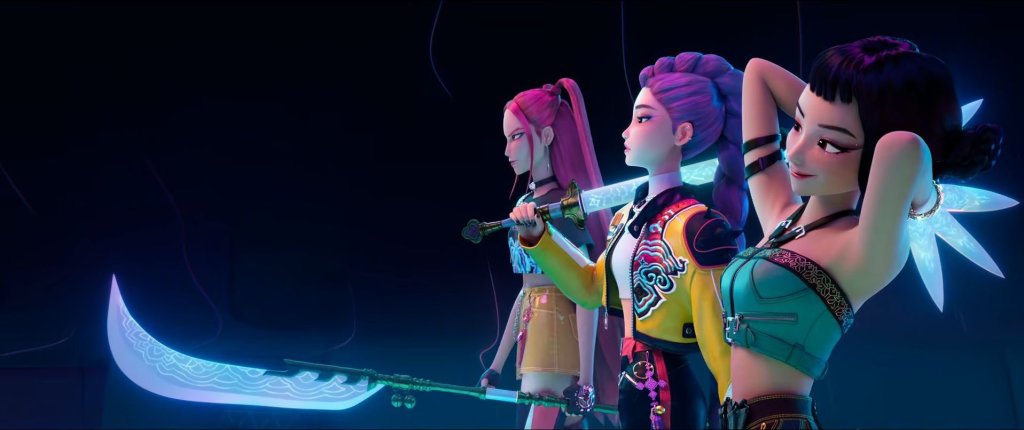

In K-Pop: Demon Hunters (2025), glitzy visuals and chart-worthy music cloak a powerful metaphor about fame, identity, and survival. This animated film cleverly fuses fantasy with reality, following a fictional K-pop girl group who battle literal demons, symbolising toxic fandoms, mental health struggles, and industry exploitation.
What happens when glitter meets the grotesque? K-Pop: Demon Hunters (2025) by Netflix© fuses glossy pop with dark fantasy in a story that asks: what does it cost to shine? In K-Pop: Demon Hunters (2025), viewers are handed more than just a dazzling action-adventure flick. Beneath the neon-drenched combat sequences and punchy beats lies a layered critique of the K-pop industry—one that shines a light on the glittery masks idols wear, the shadows that trail them, and the monsters they slay onstage and off.
SPOILER ALERT: Some details of the movie will be discussed from here, so you are warned! You can always come back later to read the article if you want to enjoy the movie first.
The story centers on Huntrix, a three-member K-pop girl group—Rumi (the fearless leader), Zoey, and Mira. By day, they dominate the charts; by night, they battle supernatural demons feeding on insecurity and fear. Their biggest enemy? Gwi-Ma, the film’s main antagonist, a demon feeding on fear and shame, the shadowy mastermind behind Saja Boys—a five-member K-pop boy group who are demons in disguise. Unlike Huntrix, these idols aren’t here to inspire; they’re here to steal fans’ devotion and harvest their souls, fueling Gwi-Ma’s rise to ultimate power. The clash between Huntrix’s hope and Saja Boys’ deception turns the stage into a battleground—where every beat could mean survival or surrender.
Directed by Maggie Kang and Chris Appelhans, this animated film follows a K-pop girl group who lead double lives: world-renowned pop stars by day, demon slayers by night. Personally, I loved how the film turns something so glossy into something layered—it feels like both a love letter and a warning. While the concept screams genre-bending fun, the film quietly unpacks the burdens K-pop idols carry in a tightly managed world, one where expectations are scripted, bodies are commodified, and fans walk a fine line between love and obsession.
A Commentary Wrapped in Pop Aesthetics
The demons in the film don’t just represent supernatural foes—they symbolise the invisible pressures idols face: anxiety, overwork, mental health struggles, and the ever-hovering eye of public scrutiny. This hit me because it echoes the real anxiety idols face—watching it, I couldn’t help but think of the real names we’ve lost to these invisible battles. In one striking moment, an idol fights a creature that echoes the voices of online trolls, reminding viewers how fragile self-image becomes in a hyper-surveilled space.
This resonates with the real-life K-pop ecosystem where artists are moulded to perfection. Contracts dictate behaviour, appearance, and public emotion. According to Choi and Maliangkay (2015), idol training systems in Korea often start in childhood and involve years of rigorous discipline, sometimes at the cost of mental and emotional well-being. K-Pop: Demon Hunters fictionalises this with flair but doesn’t shy away from its darker undertones.
Music, Magic and Mental Health
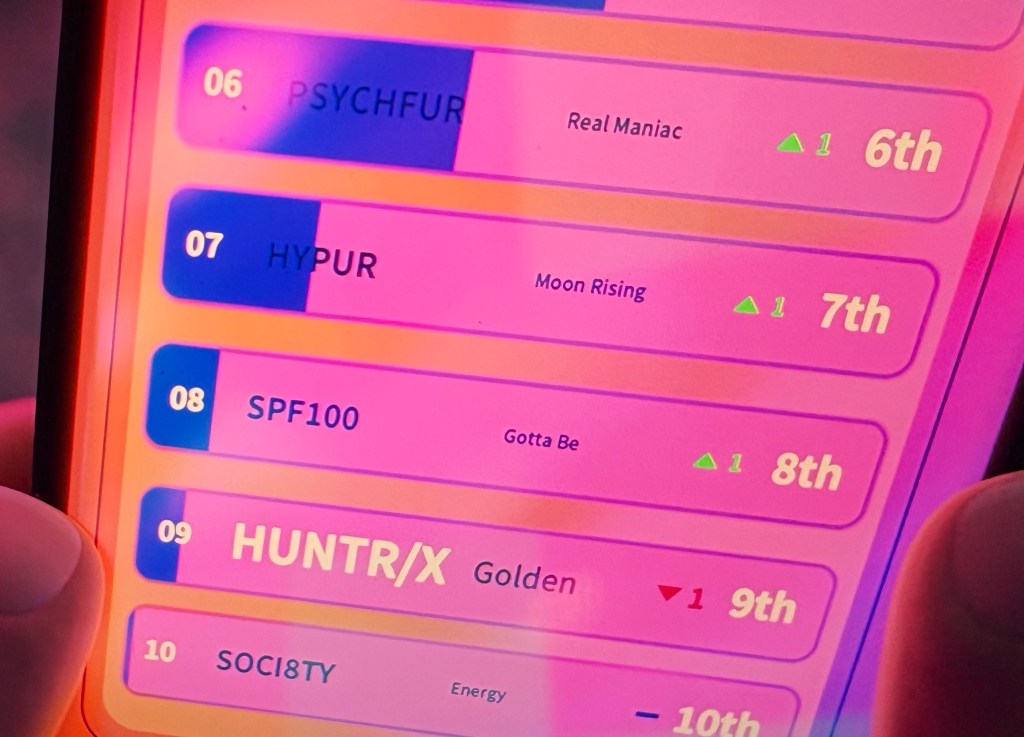
In this world, music is more than a performance—it’s protection. The girls’ songs don’t just entertain fans; they cast spells, defeat evil, and bring emotional healing. That’s not just fantasy. For millions around the globe, K-pop has become a form of emotional regulation, helping listeners cope with anxiety, loneliness, identity struggles, and even grief. It’s one of the most brilliant metaphors the film offers: music as a force that shields people from emotional collapse, negativity, and internal darkness.

Netflix©
The demons themselves don’t randomly appear—they feed off insecurity, fear, pressure, and self-doubt. In other words, they are manifestations of what many K-pop idols battle internally, from toxic beauty standards to suffocating public scrutiny. And who are the only ones who can fight them off? Those who turn their pain into performance—idols, artists, performers.
The film subtly honours that relationship, showing how fans draw strength from idols. One heart-tugging scene shows a young fan’s mental anguish soothed by the group’s music—a visual metaphor for what real-life K-pop does for so many. Research on media fandom highlights a continuum from casual to intense celebrity engagement: “Parasocial and social interaction with celebrities: Classification of media fans” outlines how fans form meaningful—but-often one-sided—bonds with public figures (Stever, 2009).
Music in K-Pop: Demon Hunters becomes an emotional compass, guiding both characters and viewers through joy, rage, exhaustion, and ultimately, healing. This was my favorite part—the metaphor feels so real if you’ve ever turned to music to get through something hard.
Something Children Should Watch
With its blend of action, heart, and epic sound design, K-Pop: Demon Hunters isn’t just for older teens or adults—it’s absolutely something children should watch. Why? Because it models female empowerment, teamwork, courage, and the idea that you are not alone in your fears or struggles. It opens a door to conversations about mental health, peer pressure, and compassion, while delivering it all in the most vibrant, entertaining way possible.
The female characters are brave, complex, and flawed—not flawless superstars, but artists learning to protect themselves and each other in a world that constantly demands more.
In a world where animated films often shy away from real-world symbolism, this one leans into it with confidence, while still remaining joyful, dazzling, and age-appropriate.
The Patterned Body: A Mark of Vulnerability and Power
Netflix©
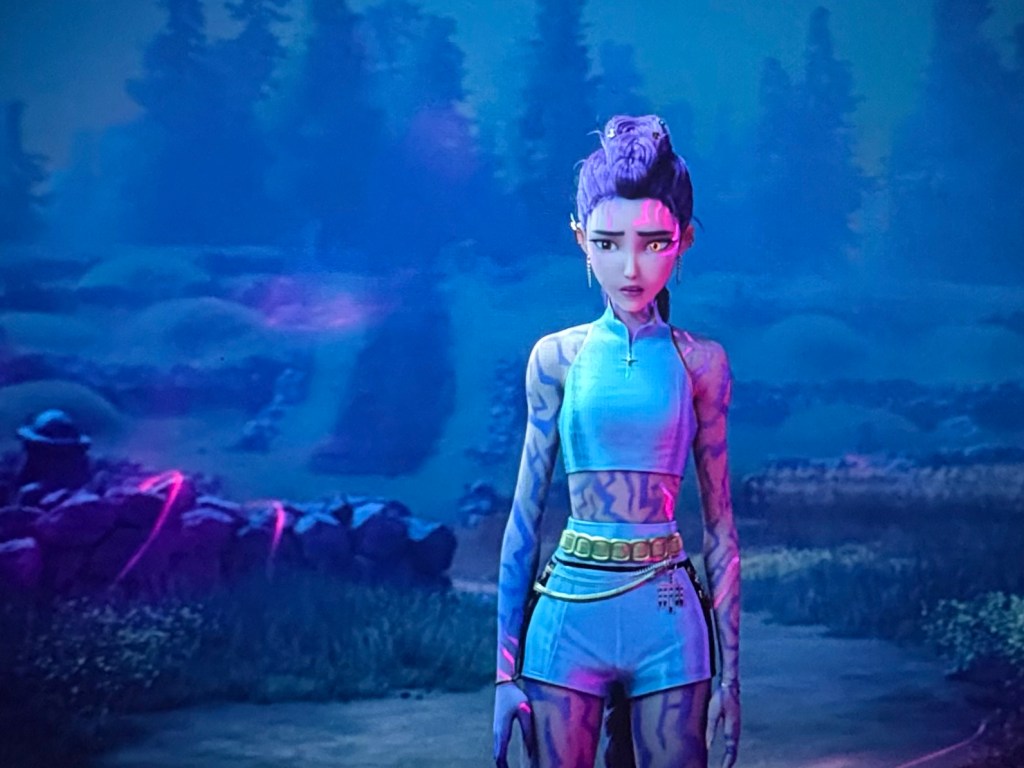
One of the film’s most subtle but symbolically rich elements is the use of patterns worn by the demon hunters. Each member of the group has distinct motifs embroidered onto their outfits—symbols of identity, unity, and magical function. But Rumi, the group’s leader, is different. Her patterns are not sewn into fabric—they’re etched onto her skin. This deliberate choice marks her as both powerful and painfully exposed. Where others wear their power like armor, Rumi’s is inseparable from her body, suggesting that her strength is born from internalised pain and emotional transparency. It visually embodies the idea that some carry their battles beneath the surface, while others have them inscribed in plain view. Pattern theory in design and semiotics often implies structure, repetition, and predictability (Barthes, 1972; Gombrich, 1984). Yet Rumi’s markings resist that—they’re organic, chaotic, even scarred-looking at times. This disruption of visual uniformity reflects her deeper flaw: the inability to separate who she is from what she must do. Her scars become her spells, her trauma becomes her power. In a world obsessed with polish and perfection, Rumi reminds us that real strength lies in embracing what makes us imperfect.
Silence as Sanctuary: Jinu and Rumi’s Bond
A powerful moment unfolds when Jinu reveals that, whenever he’s beside Rumi, he no longer hears Gwi‑Ma’s tormenting whispers (Koimoi; Pinkvilla; SoapCentral). For a demon strategist who once sold his soul for survival, this silence feels like freedom. This silence isn’t just absence—it’s a sanctuary. Rumi provides more than emotional comfort; she breaks a cycle of shame, guilt, and supernatural control. In her presence, Jinu begins to reclaim his voice and identity, making their connection feel like true liberation.
Jinu’s Soul, Restored and Reclaimed
Rumi doesn’t just silence the demon’s voice—she helps Jinu reclaim his soul. Her presence becomes a tether to his humanity, allowing him to feel whole again after being fractured by Gwi‑Ma’s manipulation. It’s no coincidence that once his inner torment quiets, Jinu is able to make the ultimate choice—not out of fear or duty, but from love and clarity. In the final confrontation, Jinu turns this restoration into protection, shielding Rumi from Gwi‑Ma’s final blow. The soul he regains isn’t just for himself—it becomes a weapon of grace. In that moment, he’s not a pawn, not a puppet, but a person making peace with his pain.
This moment may also hold clues to Rumi’s origin. If Jinu’s soul, reignited by love, could fend off the demon’s grasp, perhaps a similar act of protection once occurred between Rumi’s parents—a demon father and a mother touched by the supernatural. Only her mother didn’t survive to tell the tale. Rumi’s hybrid identity, both feared and powerful, could be the result of a soul preserved through sacrifice—an inheritance of love forged in shadow. This cyclical act of protection reframes Rumi not as a mistake or anomaly, but as a legacy.
When the Spotlight Burns: Real-World Parallels
The film’s significance becomes even more urgent when placed against the tragic backdrop of young K-pop idols lost to the pressure. The world has mourned the heartbreaking deaths of artists like Sulli, Moonbin, Jonghyun, and Hara, who struggled with depression, cyberbullying, and the exhausting performance of “perfection.” These artists were beloved, successful, and publicly adored—yet the burden of expectation became unbearable.
The film doesn’t exploit this tragedy, but it nods to it through its metaphor of demons, which whisper cruel thoughts, embody fan expectations, feed on fear and latch onto artists in moments of vulnerability. It’s a sharp but tender commentary on how mental health is still overlooked, even in a world that thrives on curated perfection. In this sense, K-Pop: Demon Hunters is both cathartic and educational. It says, “Yes, this world is magical, but don’t ignore the monsters hiding behind the glitter.” In this context, K-Pop: Demon Hunters feels like both a love letter and a warning—a stylised reminder that fame doesn’t shield pain and that mental health support in the industry isn’t optional, but vital.
The Dark Side of Devotion: Sasaeng Culture and Fandom Bullying
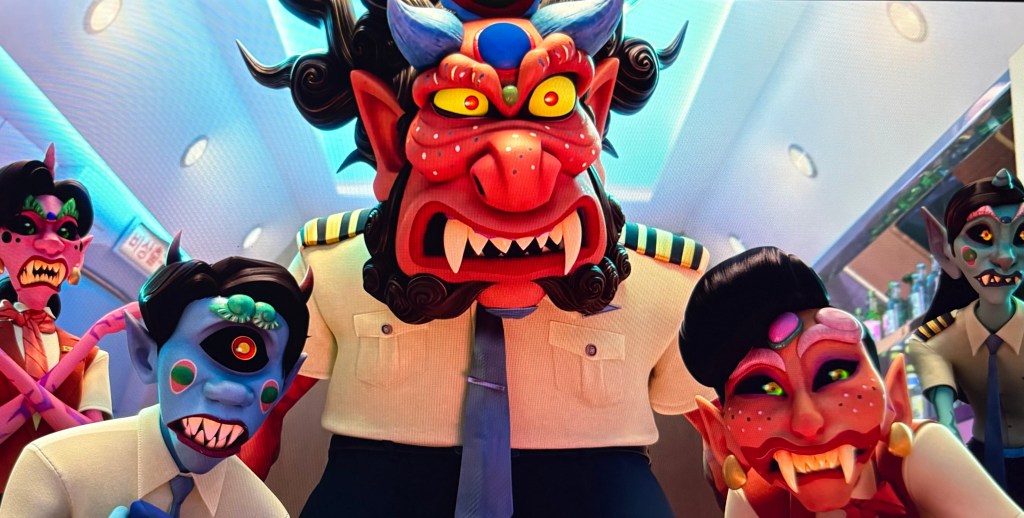
The film also reflects a darker turn in fan culture. While many fans genuinely support their idols, others become sasaeng fans—an extreme form of stalker fandom who invade idols’ privacy. Sasaengs go to disturbing lengths to intrude upon idols’ private lives, from hacking phones and booking flights to follow artists, to invading their homes. This dangerous obsession has been criticised not only for violating privacy but for creating constant fear among idols already under stress. In Korean pop culture, sasaengs are not merely overenthusiastic fans—they’re a toxic threat to artists’ well-being. The film cleverly disguises this element in the form of shapeshifting, intrusive demons who refuse to let the idols rest.
Netflix©
At the same time, fan communities—especially on social media—can turn hostile. The very people who claim to love an idol often weaponise their loyalty, bullying artists who date, gain weight, speak out, or show human emotion. Online witch hunts have targeted idols for minor “scandals,” causing them to withdraw from the public eye, and in some cases, spiral mentally. K-Pop: Demon Hunters reflects this in subtle ways, with demons that whisper insecurity, embody guilt, and swarm around characters when their self-worth falters. Through flashy battles and catchy choruses, K-Pop: Demon Hunters makes a quiet but firm plea: let idols be human.
Not All That Glitters is Gold—and Not All That Growls is Evil
One of the most profound messages in K-Pop: Demon Hunters is that not everything that looks like a demon is a villain, and not everything sweet is safe. Characters like the Bird and the Tiger, who initially seem threatening, are later revealed to be misunderstood, protective, or even guardians in disguise. Initially Jinu’s companions, Bird and Tiger later become Rumi’s fiercest allies—only after Jinu sacrifices his soul to protect her from Gwi-Ma. This turning point reframes them not as villains but as guardians bound by honor, proving that even demons can choose redemption.
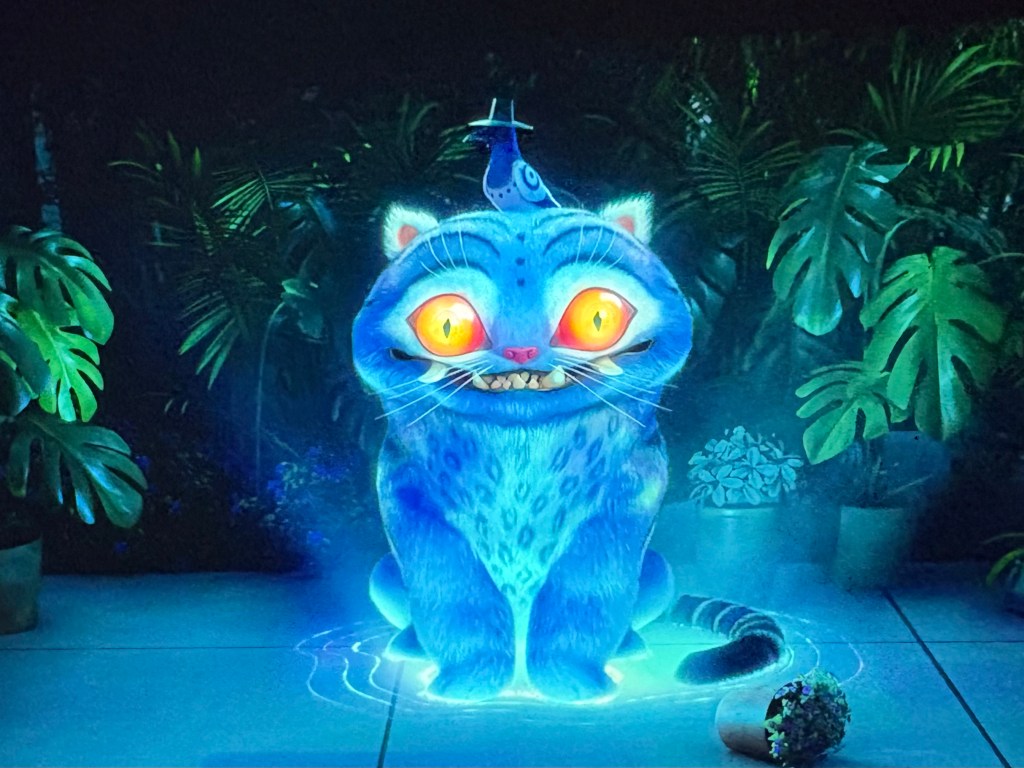
Netflix©
This subversion reminds us that perception is often shaped by fear and misinformation, and it speaks directly to the way both fans and the media paint idols in black and white. Are they angels or traitors? Perfect or problematic? The film pushes against this binary, asking us instead to recognise humanity in all its flawed, evolving glory.
In a particularly moving scene, a creature that once attacked the group becomes their unexpected ally, helping them unlock a deeper power in their music. It’s symbolic of the inner battles we must understand—not destroy—to grow.
Fans, Fandom, and the Soundtrack of Survival
An equally interesting layer of the film is how it mirrors the role fans play—not just in idol success, but in their survival. In the film, music literally wards off demons, functioning as a protective force. For many real-life fans, K-pop serves a similar purpose: a comforting, regulating presence in their lives.
Studies have shown that fandom can help people navigate loneliness, anxiety, or depression, providing community and connection through parasocial bonds (Stever, 2009). The film reflects this when a distressed fan finds healing in the group’s music—a subtle nod to the emotional labour artists unwittingly perform. Fans’ connections to celebrities range from light, entertainment-based interest to deeply personal attachments—these intense parasocial relationships are discussed in detail by Stever (2009).
In the film’s most emotionally charged climax, Rumi’s solo doesn’t remain solo for long. As she sings “Golden,” a powerful shift occurs—her fans join in, their voices rising in unison to strengthen the Honmoon barrier and push back Gwi‑Ma’s attack (Kang & Appelhans, 2025, 01:46:12). This isn’t just a fantasy battle tactic—it’s a metaphor for how fan engagement, even from afar, can become an act of healing and protection. Singing collectively becomes a form of solidarity.
Research in music psychology supports this symbolism: group singing is linked to emotional regulation, pain relief, and deepened social connection (Stever, 2009). Studies show that singing together releases oxytocin and boosts pain thresholds, while building communal trust and a sense of shared identity (Tarr, Launay, & Dunbar, 2014). In this way, K‑Pop: Demon Hunters reflects the real-world emotional labour fans contribute, not just as consumers, but as participants in an artist’s emotional journey.
The scene captures what many K-Pop stans already know: singing along is never just noise. It’s communion. It’s support. It’s survival.
Let’s not forget the music—because it’s fire. Each track feels authentically K-pop: polished, catchy, and full of emotional highs. Unlike many Western attempts to mimic the K-pop aesthetic, this film nails it. From the choreography to the visual styling, the fictional girl group feels like a real idol team you’d want to stan (a term K-pop fans use for deeply supporting an artist or group).
The soundtrack blends genres the way real K-pop does—EDM, synthpop, R&B, and hip-hop all merge with slick vocals and fierce hooks. It’s one of the few Western creations that doesn’t dilute the genre, but instead elevates it through careful collaboration and cultural respect.
Yet it also raises essential questions: What do we, as fans, expect in return? When does love become control? And how can we support our idols without consuming them?
A Western Take That Finally Gets It Right
Out of everything the West has tried to replicate about the K-pop world—from marketing gimmicks to viral dance challenges—K-Pop: Demon Hunters is hands-down the most respectful, accurate, and creative interpretation to date. It doesn’t just copy the aesthetics; it captures the spirit of K-pop—the power, the pain, the joy, and the resilience.
And of course—the music slaps. The film’s fictional girl group releases songs that feel real enough to trend on streaming platforms. From emotionally charged ballads to glittery dance tracks, the music is layered, polished, and deeply tied to each character’s arc. Every song is a message, a battle cry, or a moment of healing.
It feels informed, not appropriated. Celebratory, but critical. It doesn’t flatten K-pop into a trend—it recognises it as a complex cultural movement that deserves both praise and protection.
It’s one of the few Western productions that doesn’t mimic K-pop as a trend—it embraces the heart of it. The visuals, choreography, fashion, and even fandom behaviour are carefully stylised to reflect actual K-pop culture. No flattening. No parody. Just a sparkling, loving homage.
Why This Film Matters
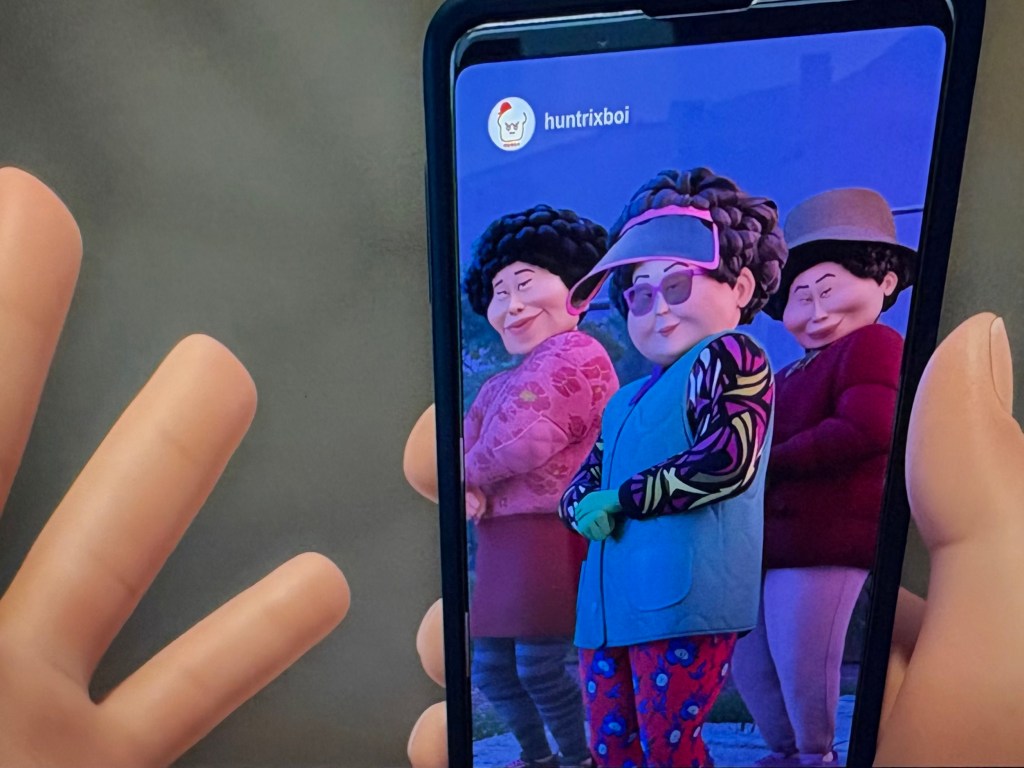
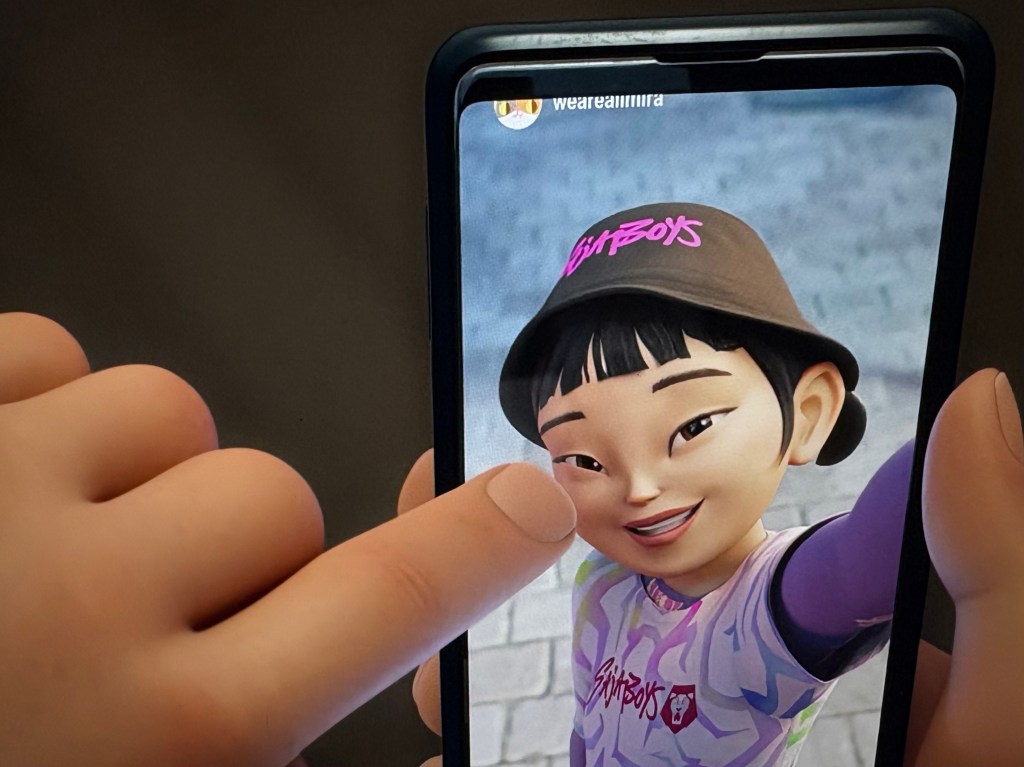
Netflix©
K-Pop: Demon Hunters is a colourful, stylised, and genre-rich experience—but it’s also a mirror. Through its metaphor-heavy storytelling, it invites audiences to rethink the reality behind stage lights and dance routines. Its greatest strength lies in how it weaves entertainment and critique seamlessly—never too heavy-handed, yet never trivialising.
This film isn’t just for K-pop fans. It’s for anyone interested in pop culture, performance, and the cost of perfection. If you’ve ever turned to music for comfort or caught yourself judging a celebrity’s smile, K-Pop: Demon Hunters asks you to sit with those feelings—and maybe, slay a few inner demons along the way. This is a film that belongs in classrooms, sleepovers, fandom forums, and film festivals. Whether you’re a hardcore stan, a cultural critic, or a parent curious about your child’s playlist, K-Pop: Demon Hunters gives you something to dance to—and something to think about.
K-Pop: Demon Hunters is more than a film—it’s a statement. One wrapped in sparkles, beats, and battle cries. It reminds us why we fall in love with music, but also why we must protect the artists who make it. It’s a film for fans, for families, for children, and for anyone who’s ever felt the pressure to be perfect.
Verdict: 10/10. Stylish, symbolic, and stunningly sincere—this is the K-pop film we didn’t know we needed.
Bibliography
- Barthes, R. (1972). Mythologies (A. Lavers, Trans.). Hill and Wang. (Original work published 1957). https://archive.org/details/mythologies00barth
- Choi, J. B., & Maliangkay, R. (2014). K-pop – The international rise of the Korean music industry. Routledge. https://doi.org/10.4324/9781315773568
- Gombrich, E. H. (1984). The sense of order: A study in the psychology of decorative art. Phaidon Press. https://archive.org/details/senseoforderstud0000gomb
- Kang, M., & Appelhans, C. (Directors). (2025). K-Pop: Demon Hunters [Film]. Sony Pictures Animation. Available on Netflix.
- Koimoi. (2025, June 22). K-Pop: Demon Hunters ending explained: What happens to Rumi & Jinu? https://www.koimoi.com/korean/k-pop-demon-hunters-ending-explained-what-happens-to-rumi-jinu/
- Pinkvilla. (2025, June 23). K-Pop Demon Hunters ending explained: Rumi’s secret and what it means for the sequel. https://www.pinkvilla.com/entertainment/hollywood/kpop-demon-hunters-ending-explained-rumis-secret-and-what-it-means-for-sequel-find-out-what-happens-to-jinu-1392013
- SoapCentral. (2025, June 25). K-Pop Demon Hunters: The character growth Jinu explored. https://www.soapcentral.com/entertainment/k-pop-demon-hunters-ending-explained-the-character-growth-jinu-explored/
- Stever, G. S. (2009). Parasocial and social interaction with celebrities: Classification of media fans [Research Report]. ResearchGate. https://www.researchgate.net/publication/263258092_Parasocial_and_Social_Interaction_with_Celebrities_Classification_of_Media_FansTarr, B., Launay, J., & Dunbar, R. I. M. (2014). Music and social bonding: “Self-other” merging and neurohormonal mechanisms. Frontiers in Psychology, 5, 1096. https://doi.org/10.3389/fpsyg.2014.01096
 SLIDING MAGAZINE
Leave a comment