
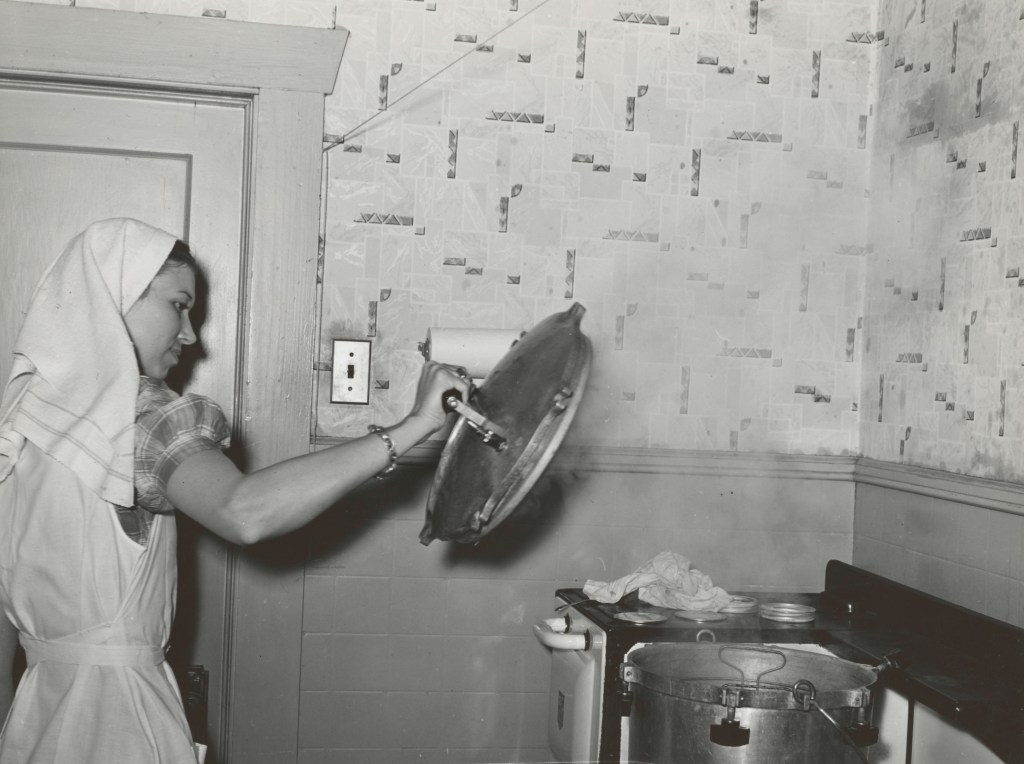

Picturebooks about food and the practices surrounding it often focus on the transmission of a nation’s rich cultural heritage. They do so through the intergenerational transmission of recipes, stories and symbols where the motif of the storyteller grandparent becomes a central part in guaranteeing the survival and continuity of a lineage in time.
Foodways, understood as the practices around food, its preparation and consumption (Canani, 2024), are ever-present in children’s literature. Cultural expressions related to food that children are familiar with play an important role in picturebooks about foodways. Be it to address an underrepresented group’s rich cultural heritage, discuss deeper political and sociocultural implications of migration, or offer a mirror in which children can see themselves – and their culture – represented.
However, many theorists agree that one of the primary functions of food in children’s literature is to civilise the fictional children and, in turn, the young readers (Keeling and Pollard, 2009). What to eat, when, and how much are decisions most often made by adult characters who aim to enculturate the child into appropriate ways of consuming food and belonging to a specific society (Daniel, 2006). Here, power dynamics between age groups are at play. Despite controlling children’s relation to food and sometimes restricting their agency (Spyrou, 2018), adults can also be depicted as transmitters of cultural heritage; guarantors of a nation’s survival through a culinary tradition that is passed on from generation to generation.
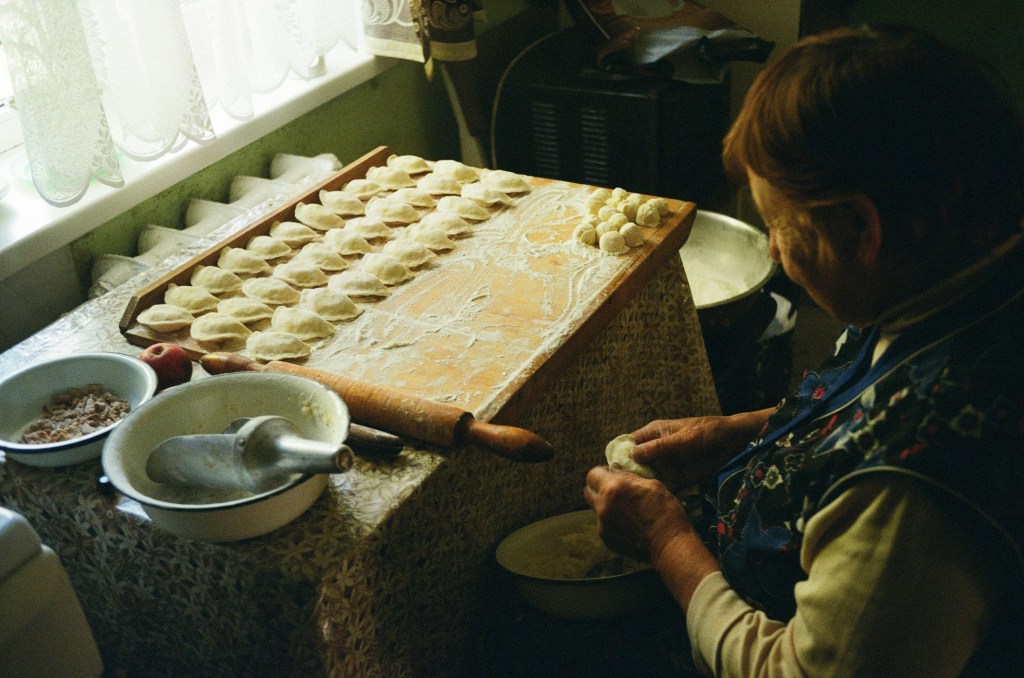
A common motif in children’s literature that exemplifies this role adult characters can adopt, is that of storyteller grandparents. Join me as I unpack how the figure of the storyteller grandparent is constructed in five picturebooks that depict different cultural heritages and ethnicities, despite them being published in the same geographical area: the United States. As of 2024, 14,3% of the population of the United States were immigrants, constituting itself as the country with the most immigrants (Batalova, 2025). It is no surprise then, that by focusing on this specific area, picturebooks featuring characters of varied cultural backgrounds arise. Ba Nois (maternal grandmother in Vietnamese), Babcias (grandmother in Polish), Tetas (grandmother in Arabic) and many other grandparent figures star in these narratives through their multiple approaches to foodways.
The elderly family member interweaves oral storytelling aimed at the younger generations of their family with the transmission of their cultural heritage – all whilst preparing a traditional dish from their ethnic background.
In children’s literature, grandparents can be represented as allies to their grandchildren’s adventures, guides to their life decisions or fall into ageist stereotypes that see them as devoid of life and agency outside of the family unit (Joosen, 2024). All three representations are in dialogue with each other in the analysed picturebooks. The motif of storyteller grandparents in picturebooks about foodways tends to follow a pattern: the elderly family member interweaves oral storytelling aimed at the younger generations of their family with the transmission of their cultural heritage – all whilst preparing a traditional dish from their ethnic background. The dish becomes more than nourishment for their hungry family. It acts as a cultural signifier – a vessel and vehicle of culture – that allows their family lineage to stay alive (Myers, 2024). Sometimes, a symbol makes the passing on of the culinary tradition tangible. A cookbook, apron or mortar and pestle being passed on from a grandparent to their grandchildren, for the cycle to continue long after the grandparents are gone.
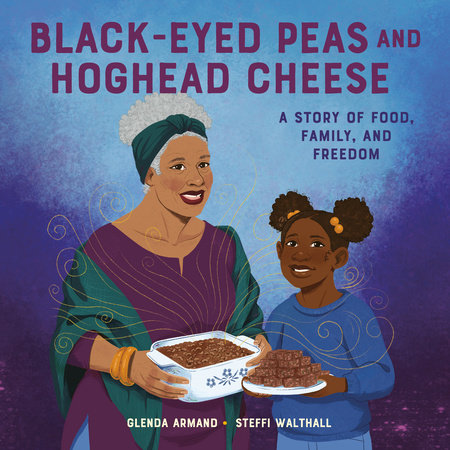
Black-Eyed Peas and Hoghead Cheese: A Story of Food, Family and Freedom (Armand, 2022) and Freedom Soup (Charles, 2019) are two prime examples of the motif of storyteller grandparents in picturebooks that revolve around foodways. In the former, a grandmother – Ti Gran for her granddaughter – recounts the Atlantic Slave Trade and the hardships her ancestors had to endure at a plantation in Louisiana, USA. Her granddaughter listens attentively, amidst preparations for a New Year’s Day feast. Food becomes a symbol of freedom and resignification of their ancestor’s past, whereby they had to make the most of what they had at hand – such as the rests of a hog by making hoghead cheese – or found comfort in foods that were familiar to them – such as black-eyed peas, symbols of good luck and prosperity from Africa.
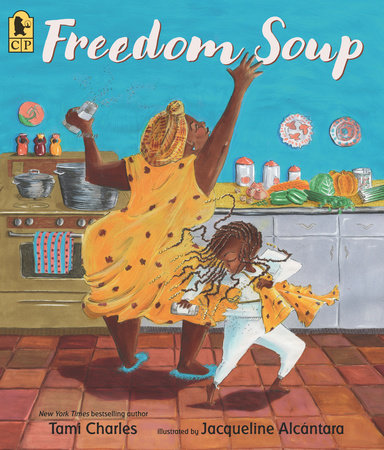
In Freedom Soup (Charles, 2019), a grandmother and her granddaughter embark on an imagined journey between past and present, kitchen and memory whilst the story of their ancestor’s experience of the Haitian Revolution is retold. The same story that is told year after year for New Year’s Day is accompanied by the preparation of joumou soup. Also known as freedom soup, this Haitian dish was prepared and fed to enslavers and repurposed after the Haitian Revolution as a symbol of their newfound freedom.
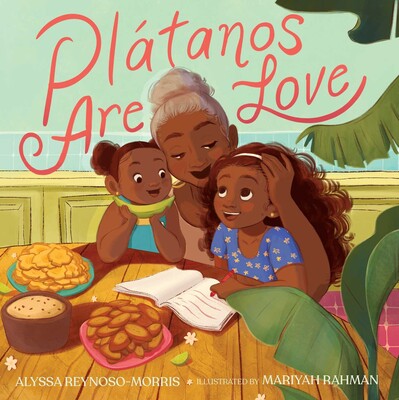
In Plátanos Are Love (Reynoso-Morris, 2023), the role of plantains in shaping Latinx culture is foregrounded. Abuela – meaning grandmother in Spanish – brings her granddaughter closer to their cultural heritage by telling stories about eating plantains when she was young and how their ancestors had to know the recipes by heart because they weren’t allowed to write or read. She uses metaphors to juxtapose the growth of plantains in tight bunches to their tight-knit family unit and compares plantains to stories seeing as both are made for sharing. Be it maduros, tostones or mangú, the newer generations help their Abuela cook anticipating the passing on of her ancestral recipes and cookbook.
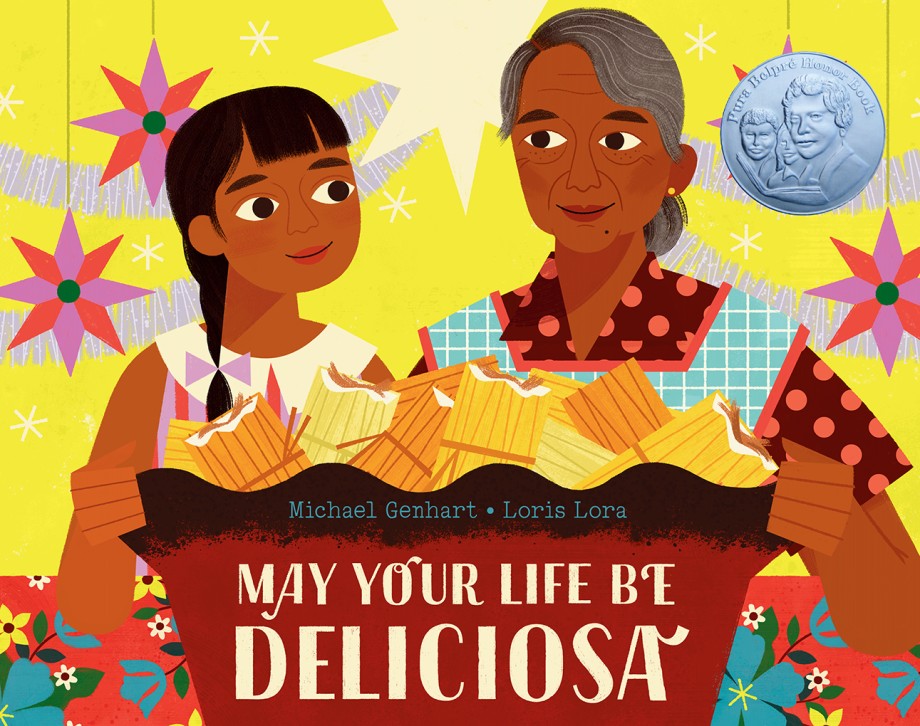
May Your Life Be Deliciosa (Gernhart, 2021), also references a Latinx background, but this time specifically a Mexican tradition. A grandmother is joined by the women of her family for a “tamalada”, a gathering to prepare tamales for Christmas. While everyone is focused on a task in order to accomplish this elaborate preparation, the grandmother shares life lessons with her family, advising them on how to live a fulfilled life. The corn husk utilised to wrap the tamale comes to symbolise flexibility, protection and security. Folding the tamale is compared to hugging, and placing the tamales in the pot stacked on top of one another embodies the support of their family and community.
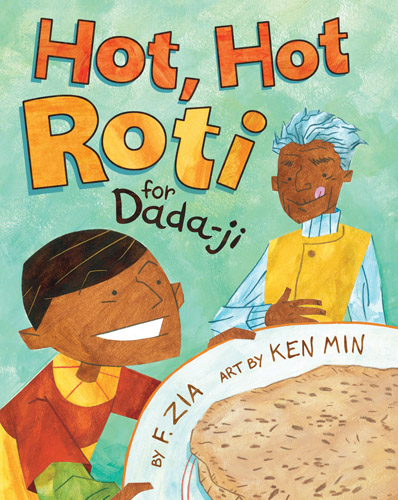
The only picturebook out of the selected five that features a grandfather taking on the role of storyteller is Hot, Hot Roti for Dada-ji (Zia, 2011). In this adventurous narrative, Aneel’s grandfather – Dada-ji, the name given to a paternal grandfather in Hindi – tells him a story of a “young lad”, reminiscing of his own childhood. However, fiction intersects with reality as the boy of the story is given supernatural powers by the consumption of roti, made for him by his mother. This prompts Aneel to try and replicate his great-grandmother’s roti recipe to see if it still brings special powers to his grandfather, and so he embarks on a culinary adventure with his grandfather’s unwavering support.
These picturebooks show how the recurring motif of storyteller grandparents can be utilised in many ways to illustrate the transmission of cultural heritage, through recipes, stories and cultural symbols, in picturebooks revolving around foodways. Despite the diverse ethnic backgrounds that the characters represent, they find common ground in intergenerational connection, kinship, and the sensuous experience of cooking.
Bibliography:
Picturebooks
- Armand, G. (2022). Black-Eyed Peas and Hoghead Cheese: A Story of Food, Family and Freedom (S. Walthall, Illus.). Crown Books for Young Readers.
- Charles, T. (2019). Freedom Soup (J. Alcántara, Illus.). Candlewick Press.
- Gernhart, M. (2021). May Your Life Be Deliciosa (L. Lora, Illus.). Cameron Kids.
- Reynoso-Morris, A. (2023). Plátanos Are Love (M. Rahman, Illus.). Atheneum Books for Young Readers.
- Zia, F. (2011). Hot, Hot Roti for Dada-ji (K. Min, Illus.). Lee & Low Books.
Secondary Sources
- Batalova, J. (2025, March 12). Frequently Requested Statistics on Immigrants and Immigration in the United States. Migration Policy Institute. https://www.migrationpolicy.org/article/frequently-requested-statistics-immigrants-and-immigration-united-states
- Canani, M. (2024). The “Toad in the Hole”: Food and Foodways in Sue Townsend’s “Adrian Mole” YA Saga. In A. Gasperini, B. Sundmark & L. Tosi (Eds.), Eating Cultures in Children’s Literature (pp. 15-29). Malmö University Press.
- Daniel, C. (2006). Voracious Children: Who Eats Whom in Children’s Literature. Routledge.
- Joosen, V. (2024). ‘What´s the point of grandpa?’: Grandparents in Children’s Literature. In Spencer, E. & Dillon Craig, J. (Eds.), Family in Children’s and Young Adult Literature (pp. 55-68). Routledge.
- Keeling, K. & Pollard, S. (2009). Introduction: Food in Children’s Literature. In K. Keeling and S. Pollard (Eds.), Critical Approaches to Food in Children’s Literature (pp. 3-20). Routledge.
- Myers, L. (2024). From Sardines to Sponge Cake: Culinary Nationalism and Cultural Heritage Preservation in Anna James’ Tilly and the Bookwanderers and Laura Walters’s Mistica Maëva e l’anello di Venezia. In A. Gasperini, B. Sundmark & L. Tosi (Eds.), Eating Cultures in Children’s Literature (pp. 30-38). Malmö University Press.
- Spyrou, S. (2018). What Kind of Agency for Children? In, Disclosing Childhoods. Research and Knowledge Production for a Critical Childhood Studies (pp. 117–156). Palgrave MacMillan.
 SLIDING MAGAZINE
Leave a comment